
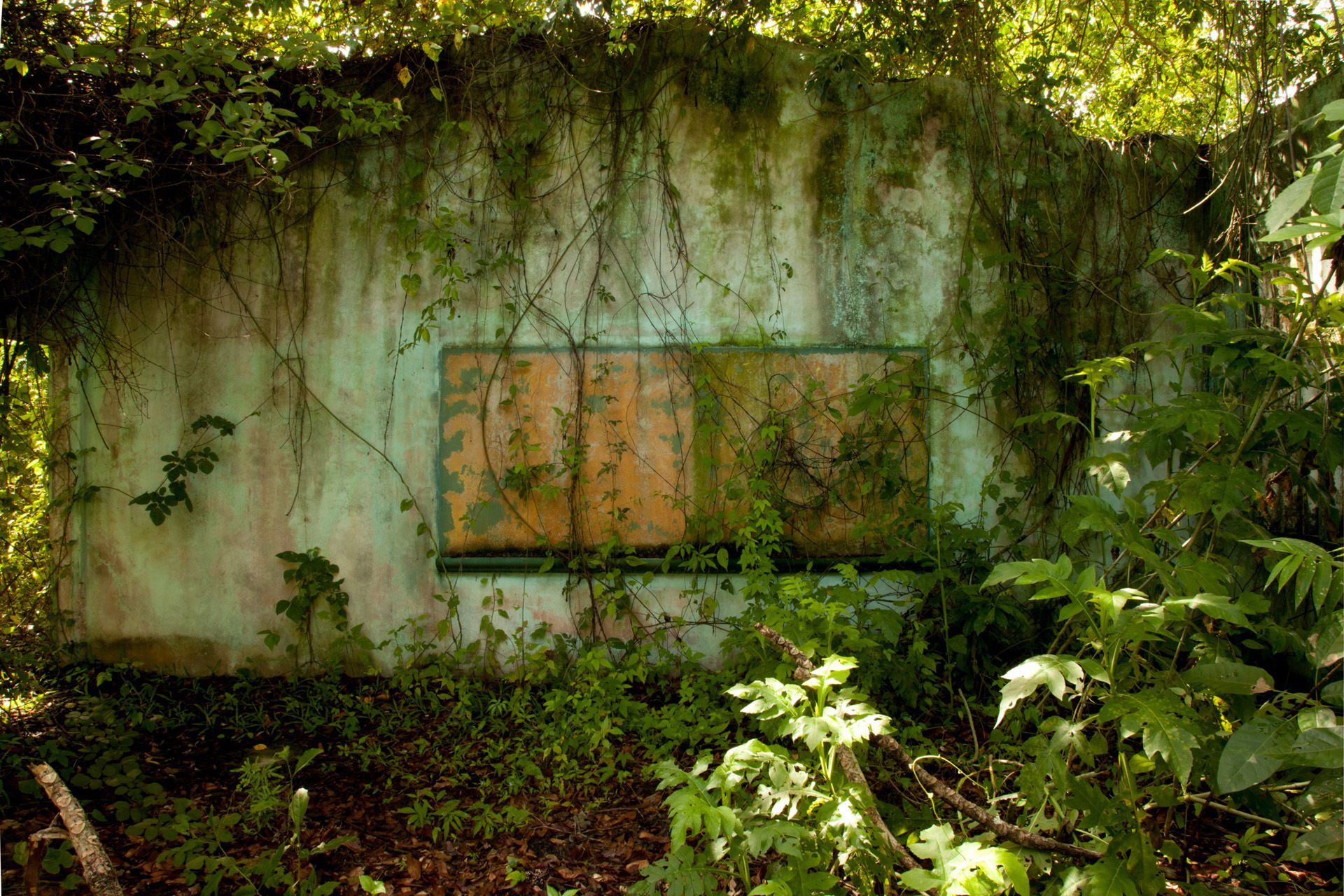
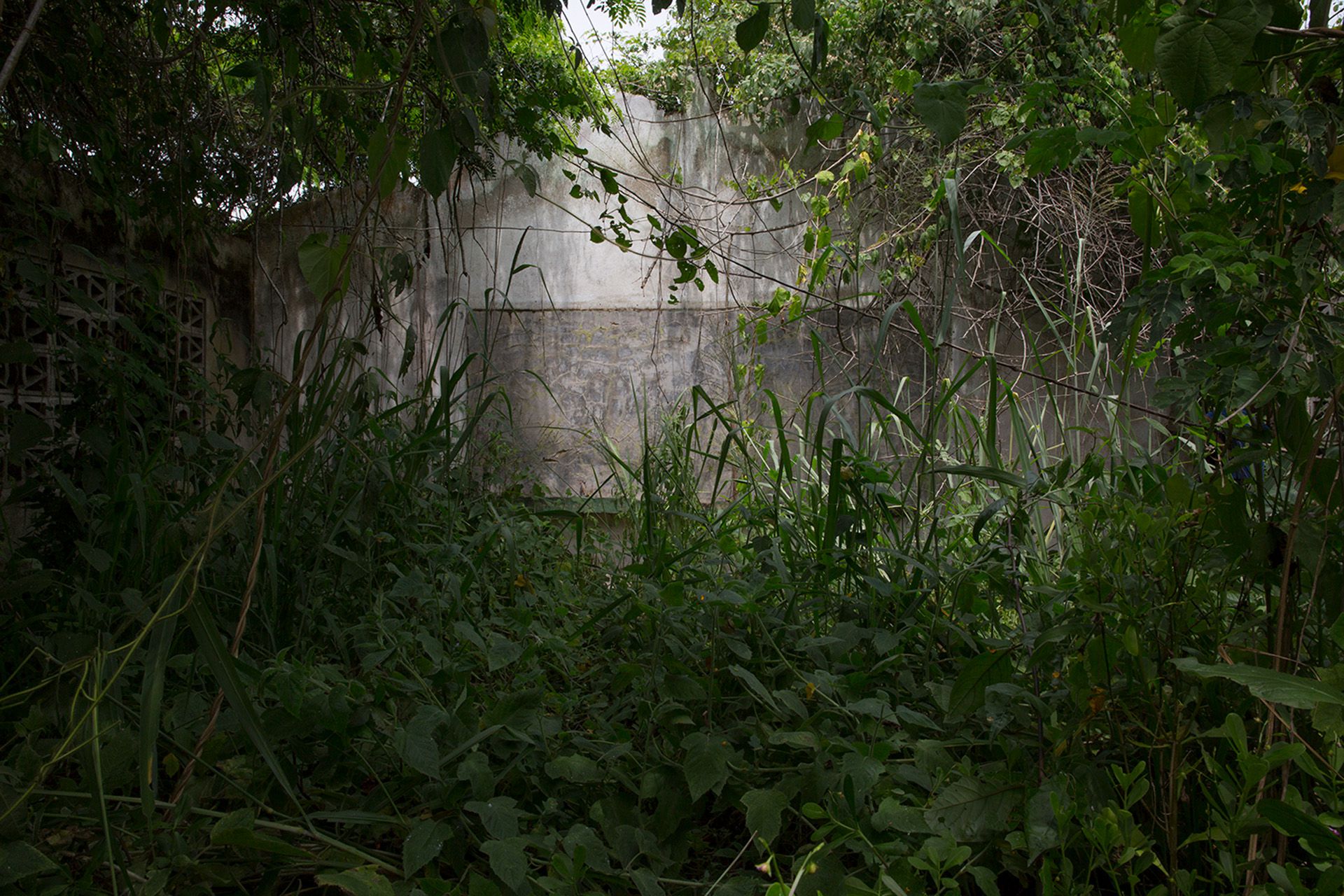
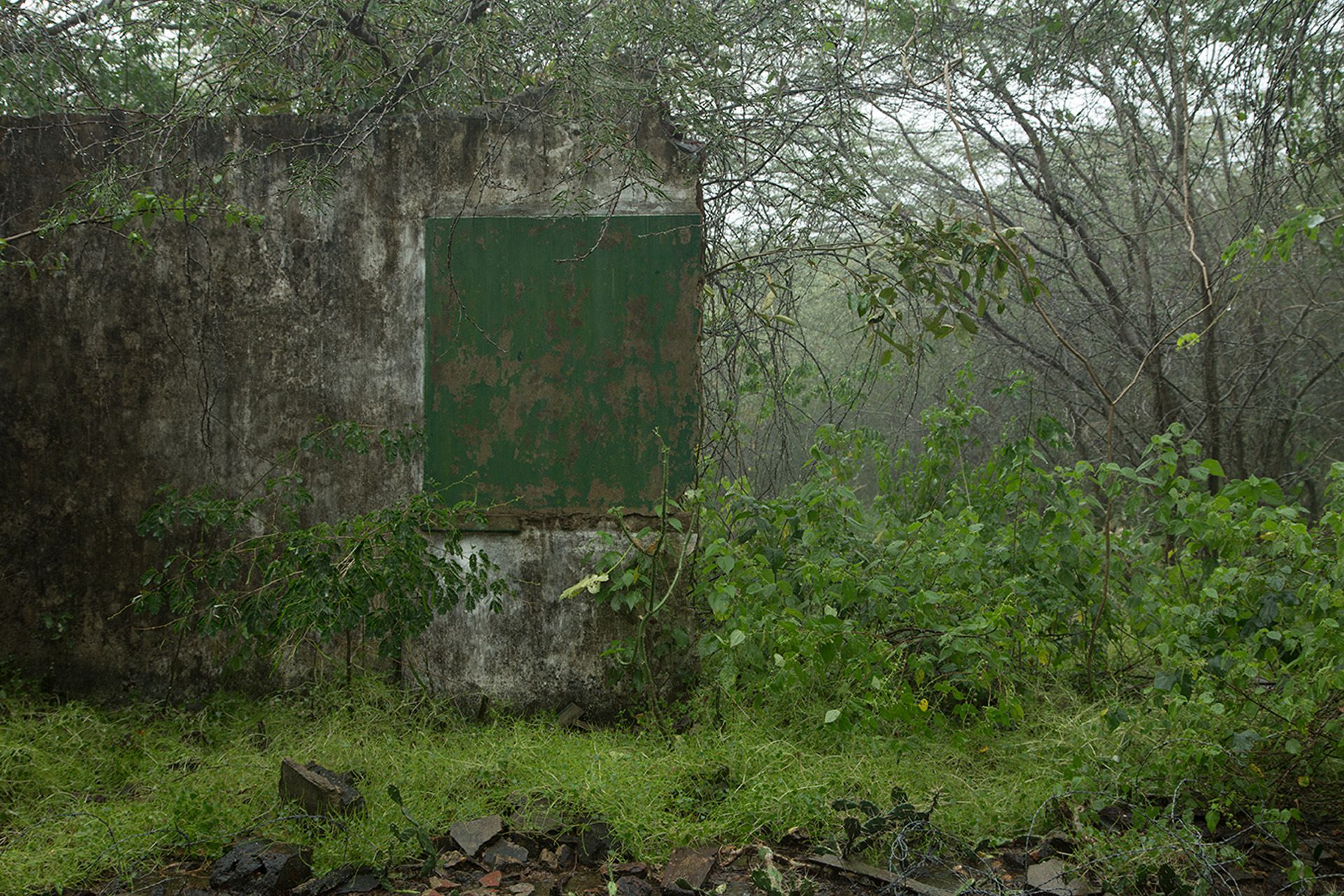
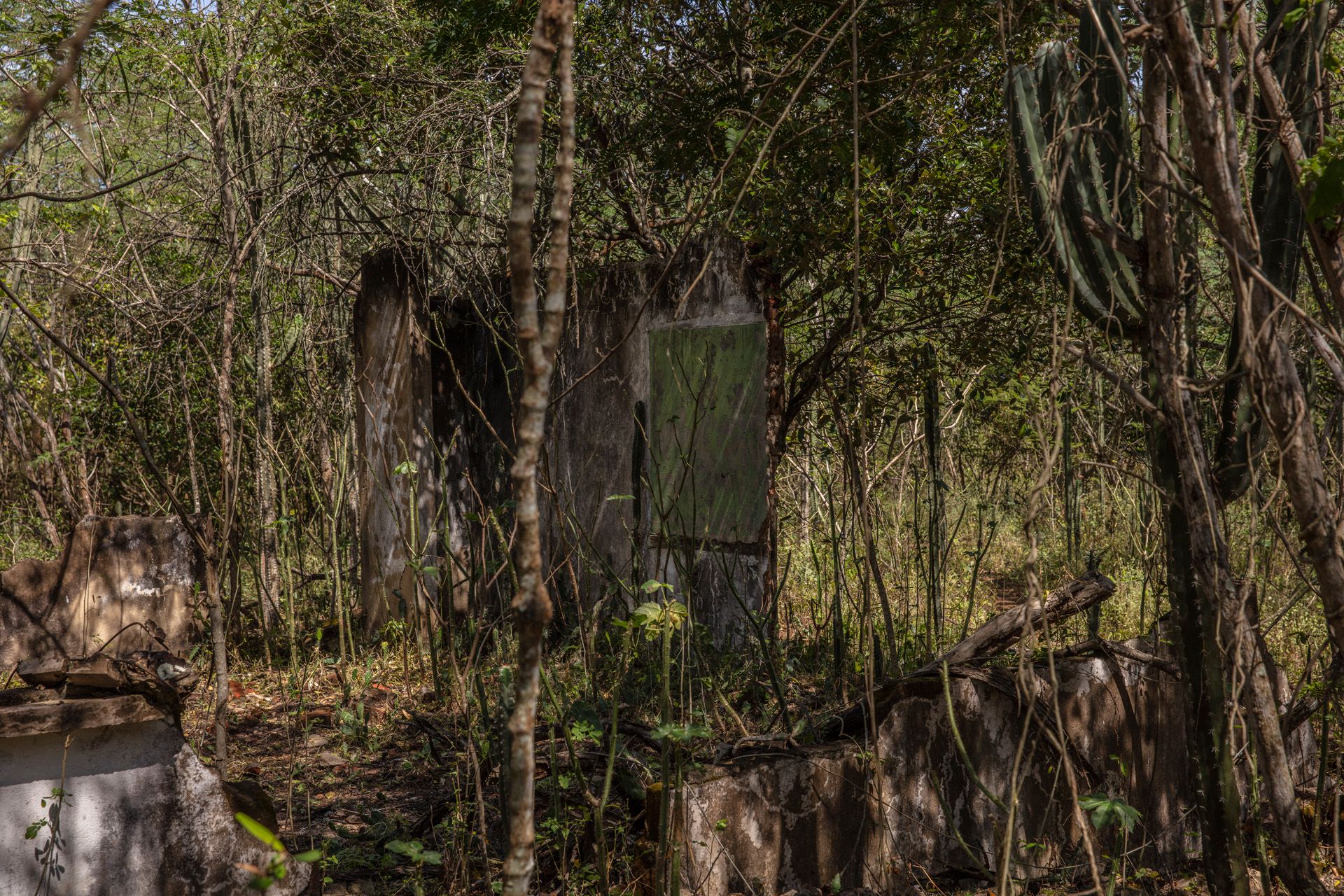

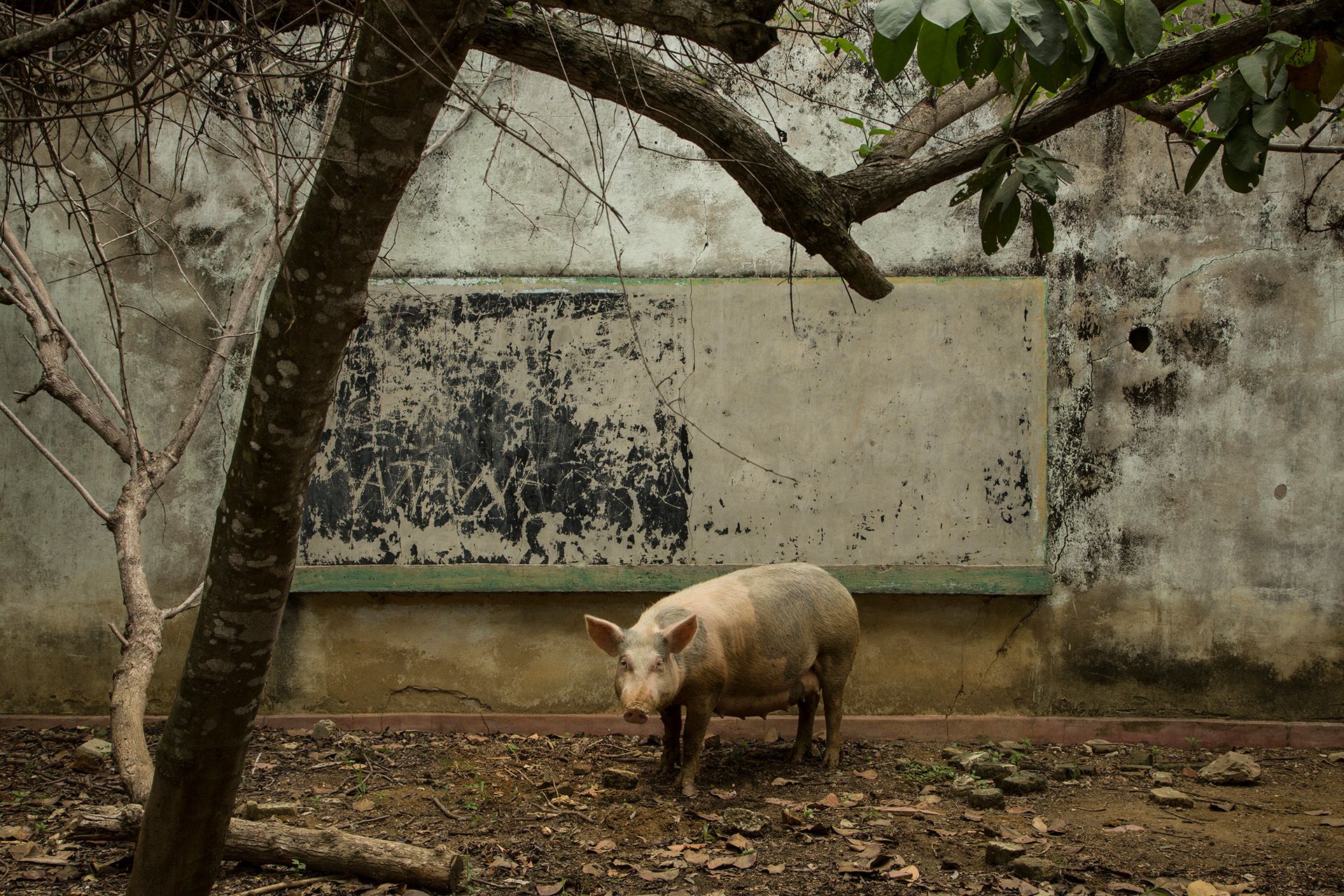
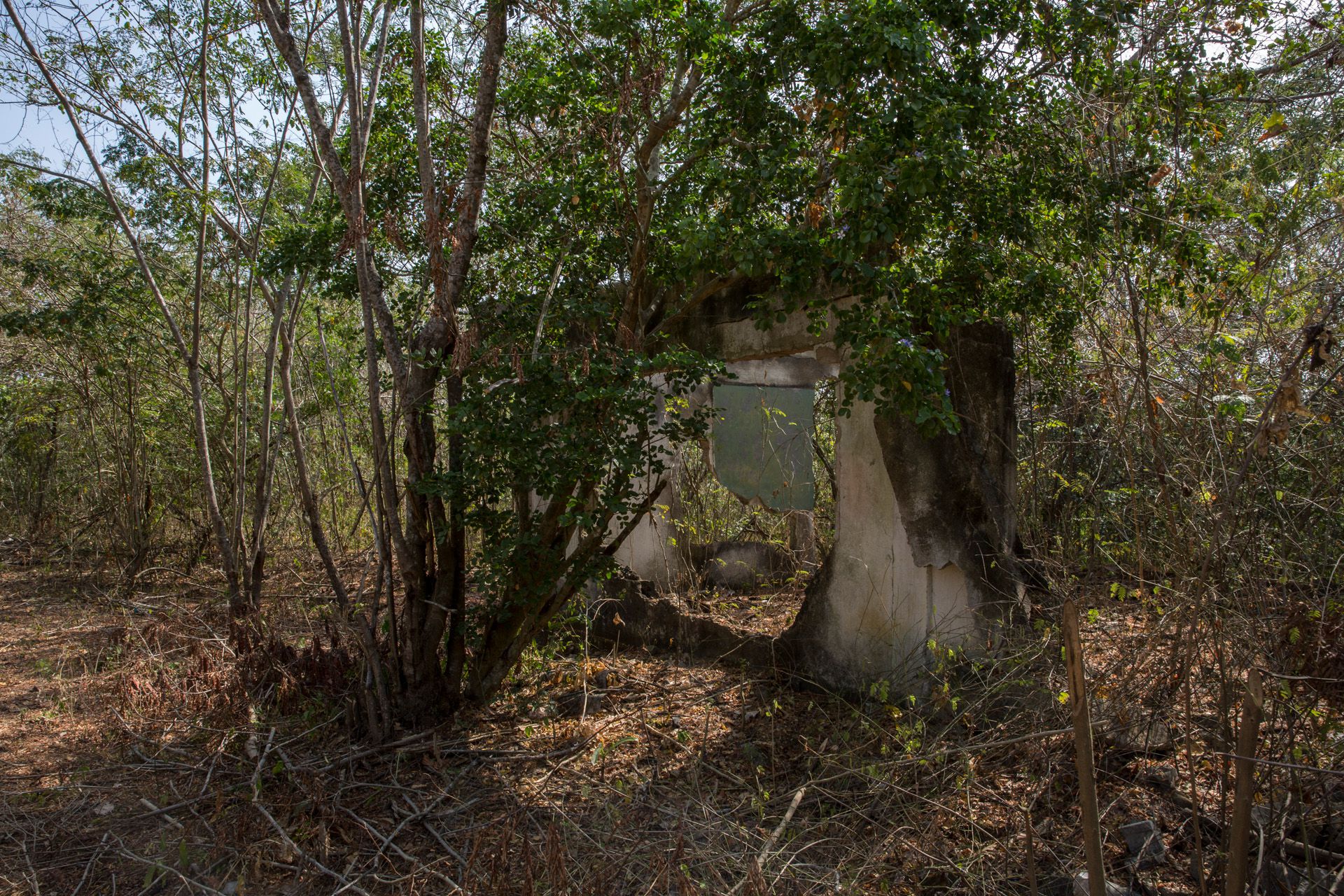
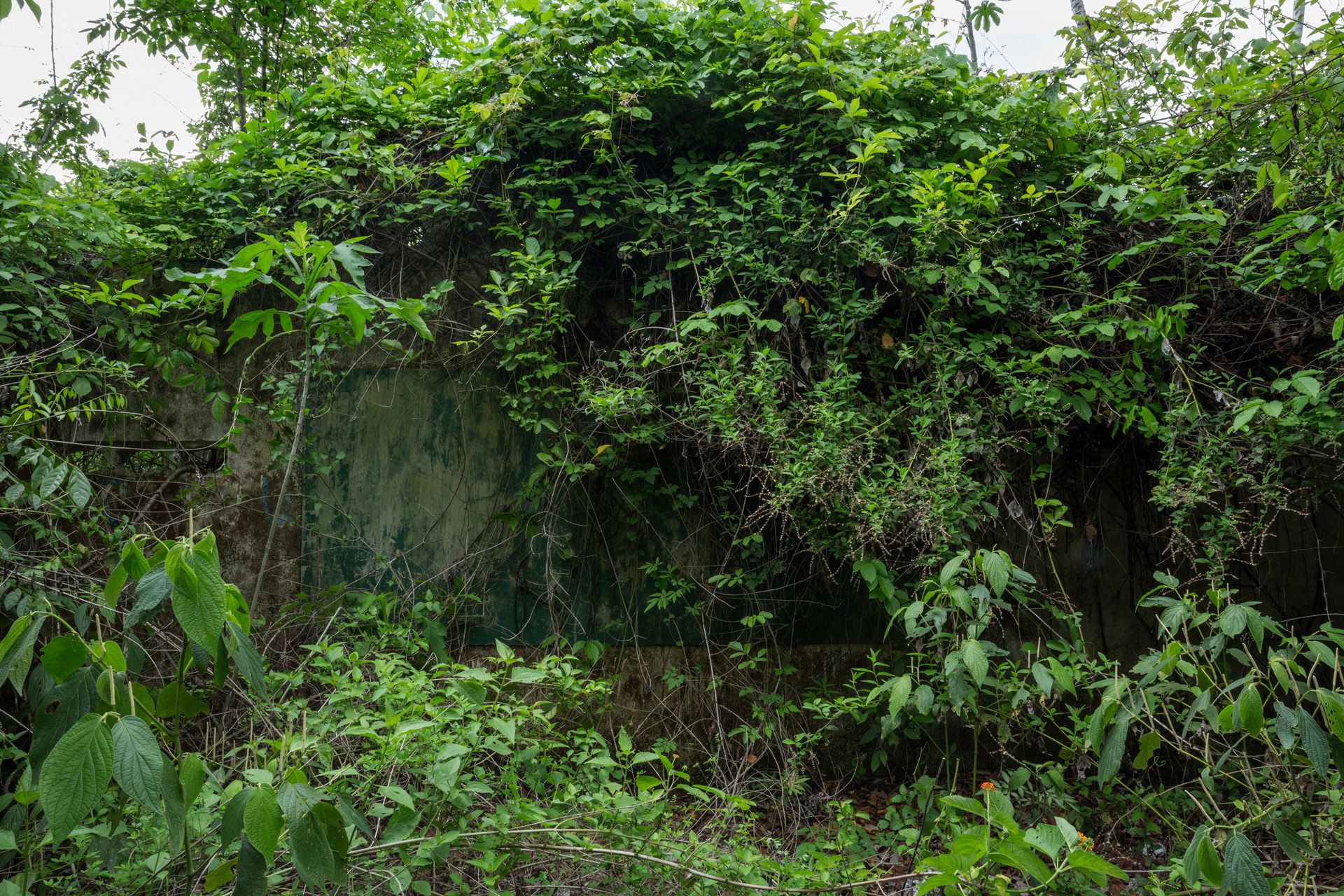
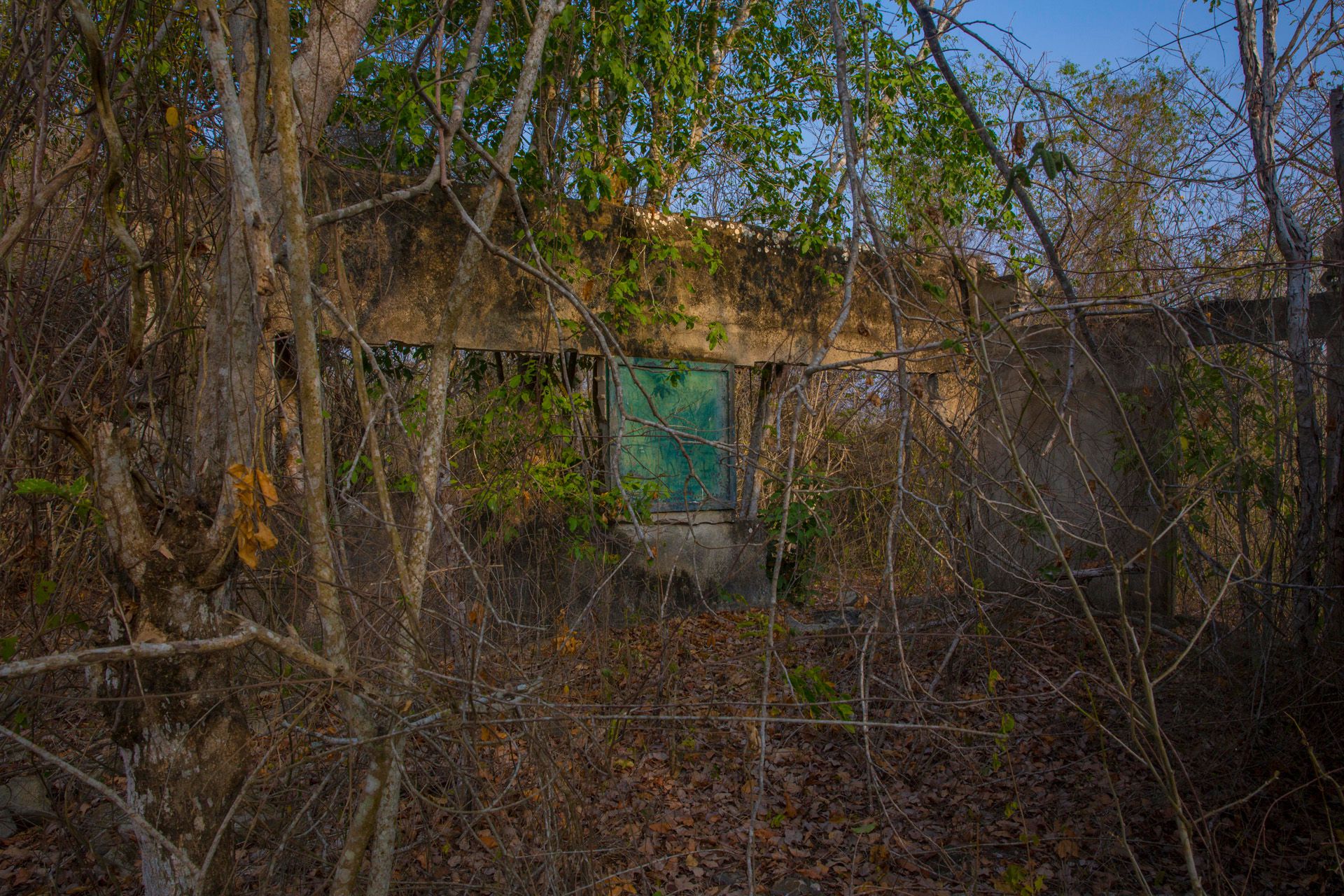


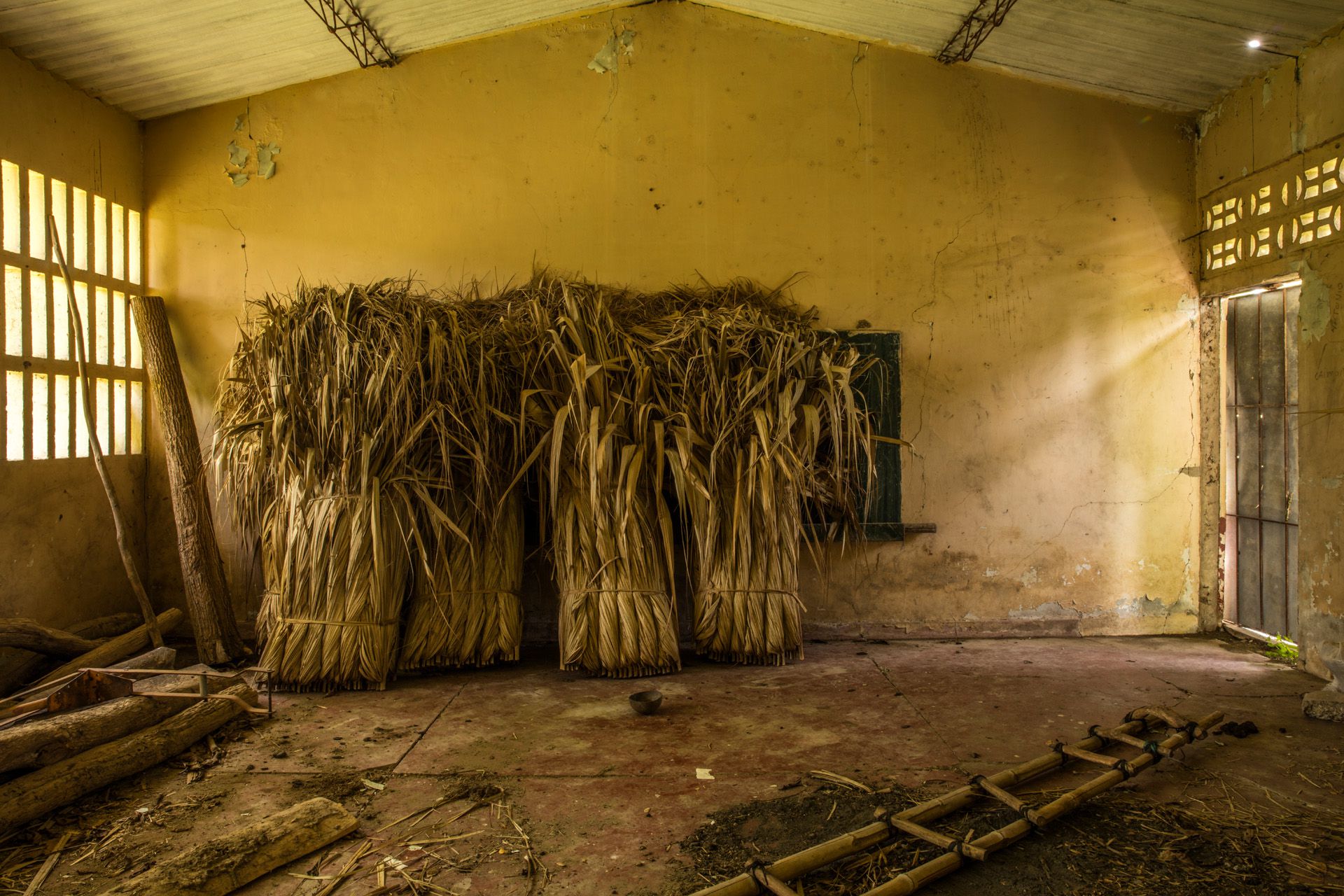
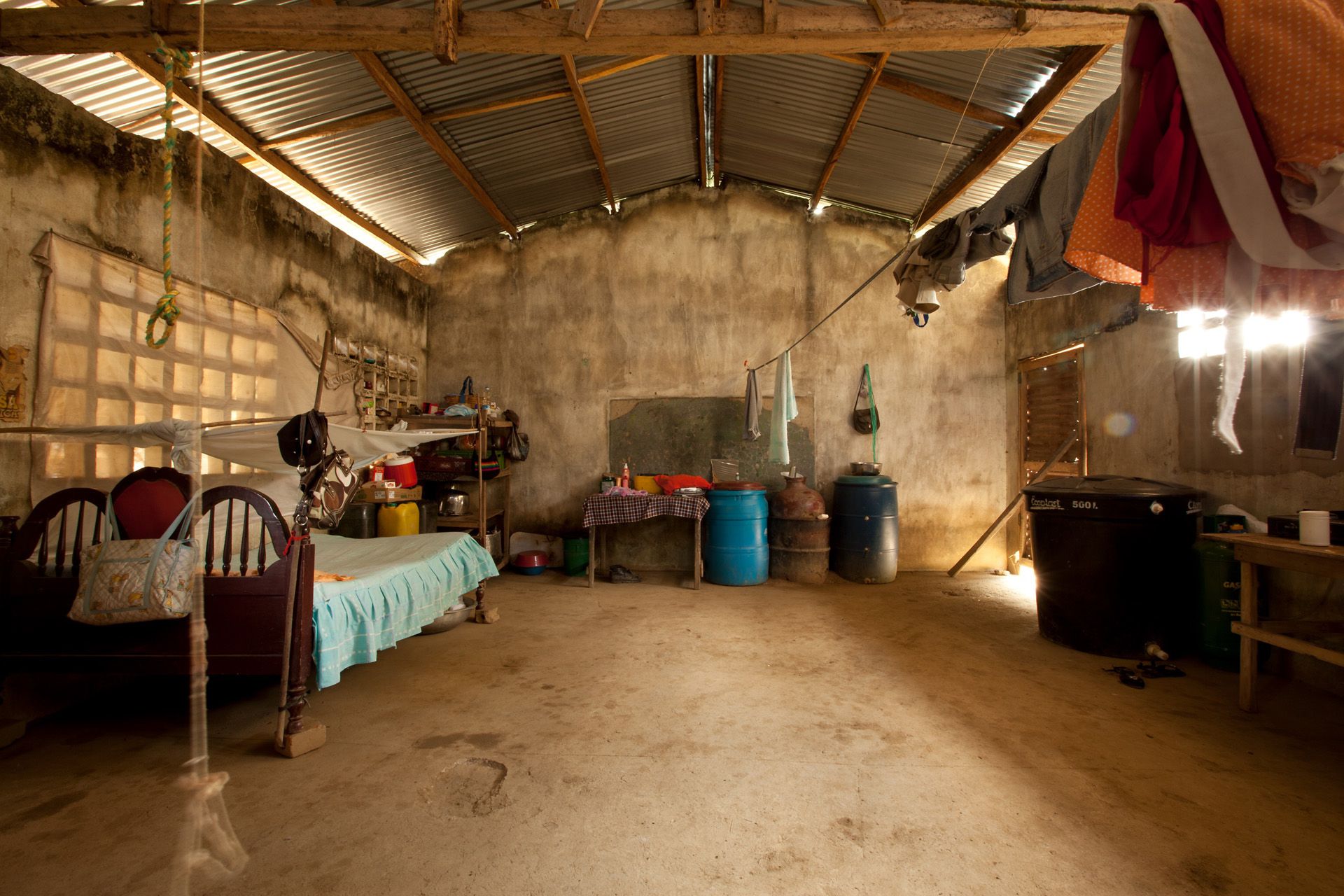
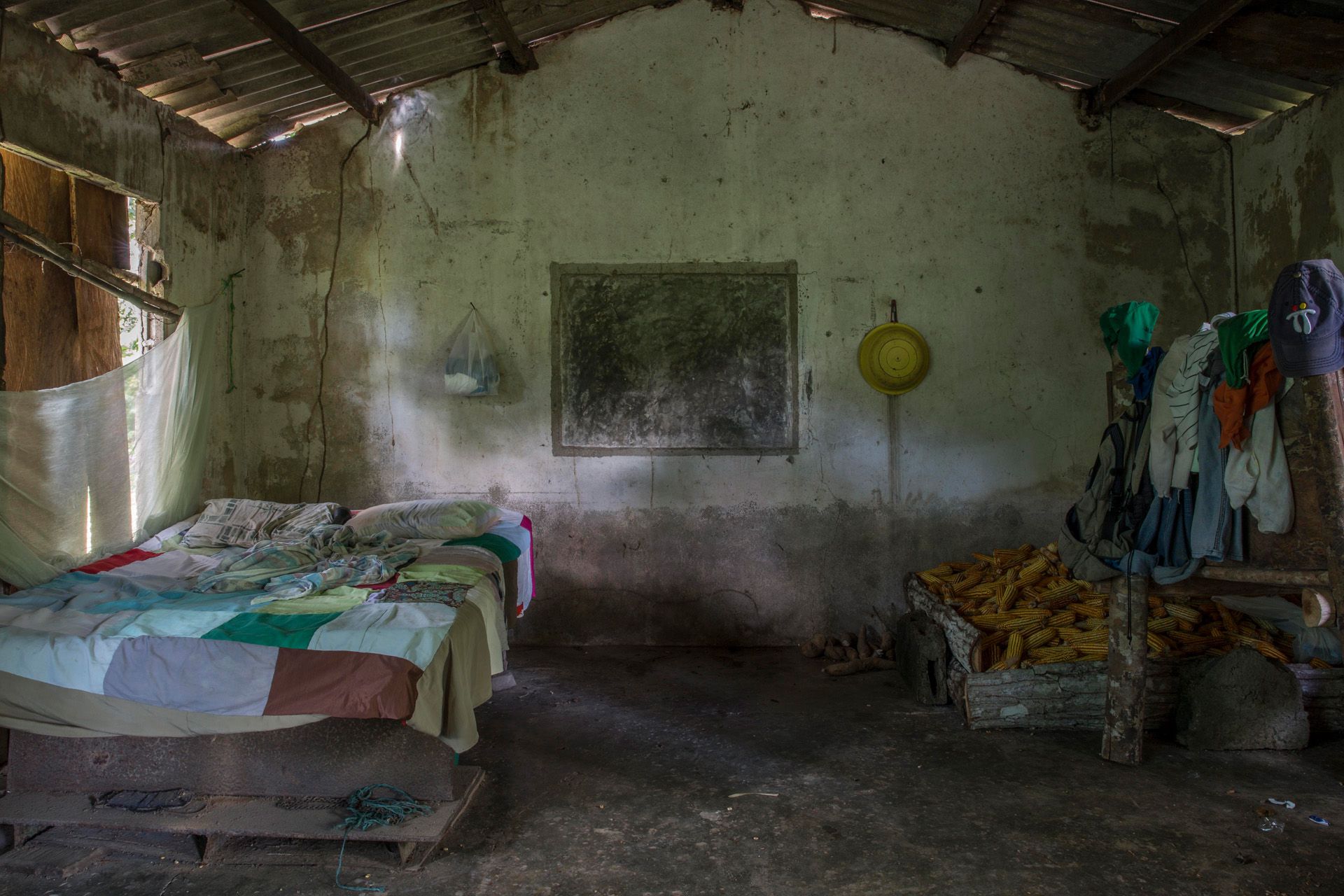
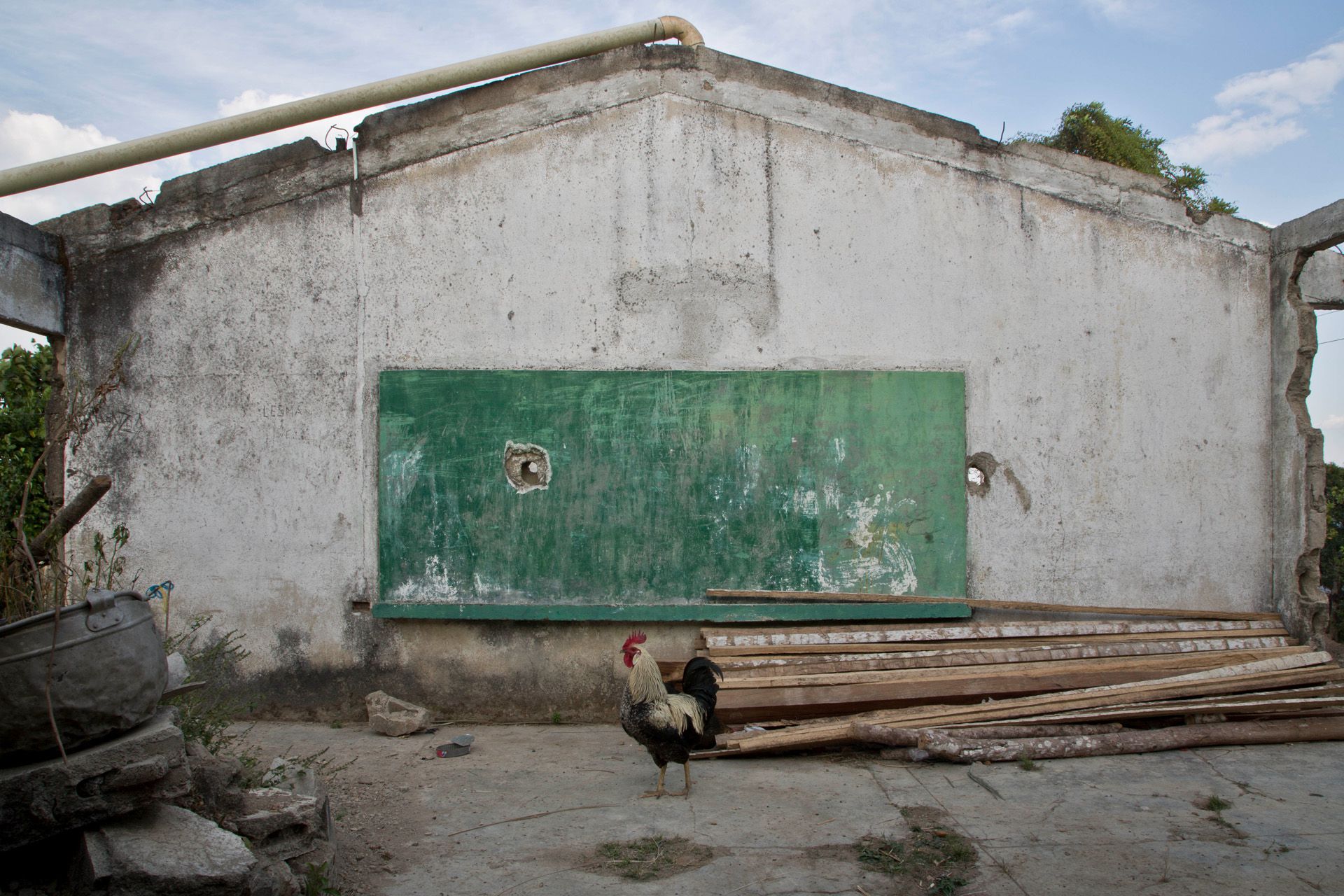

On March 11, 2010, I was invited to old Mampuján, a ghost town in the Montes de María, Bolívar. The community was commemorating the tenth anniversary of their forced displacement by the paramilitary group “Héroes de los Montes de María.”
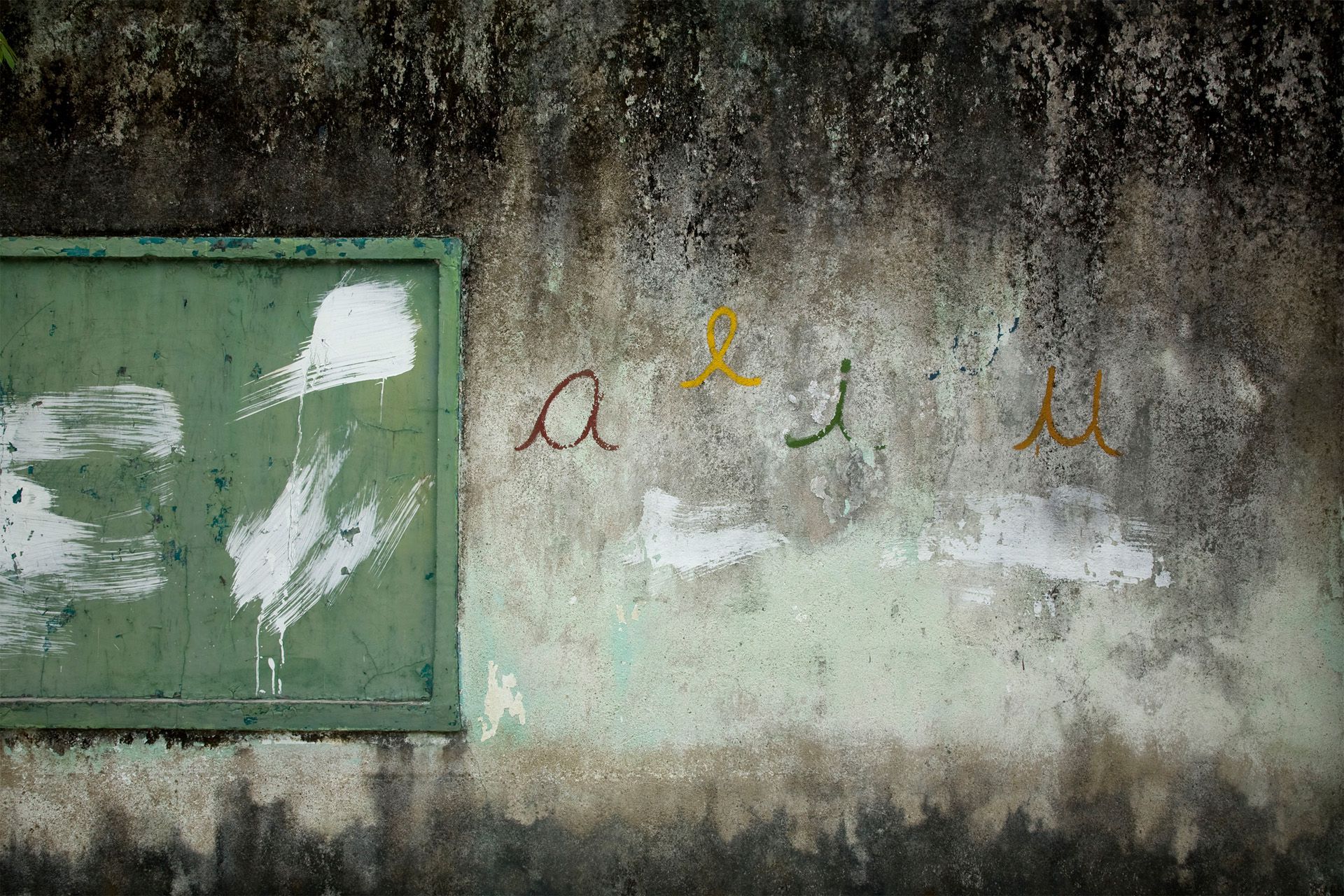
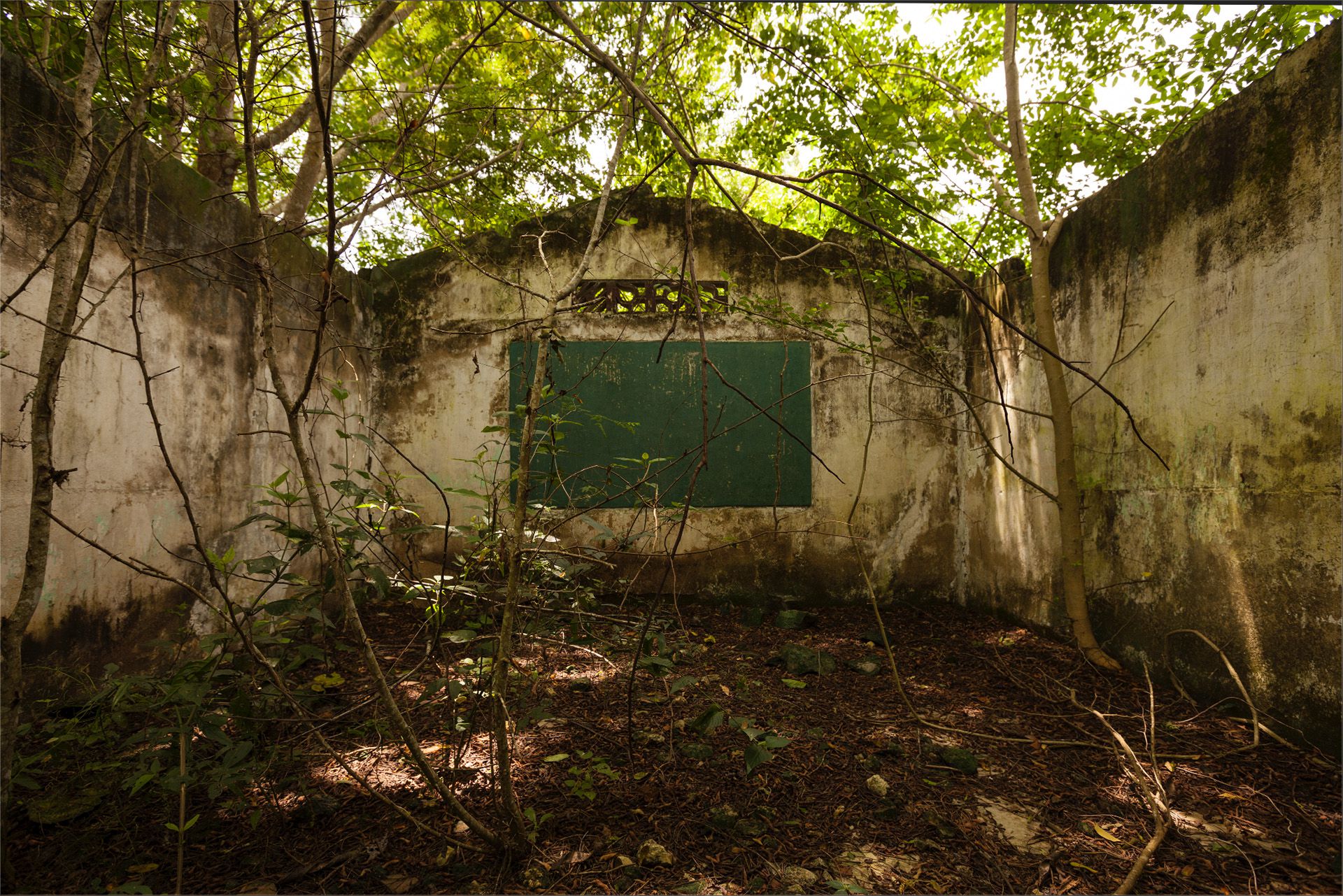
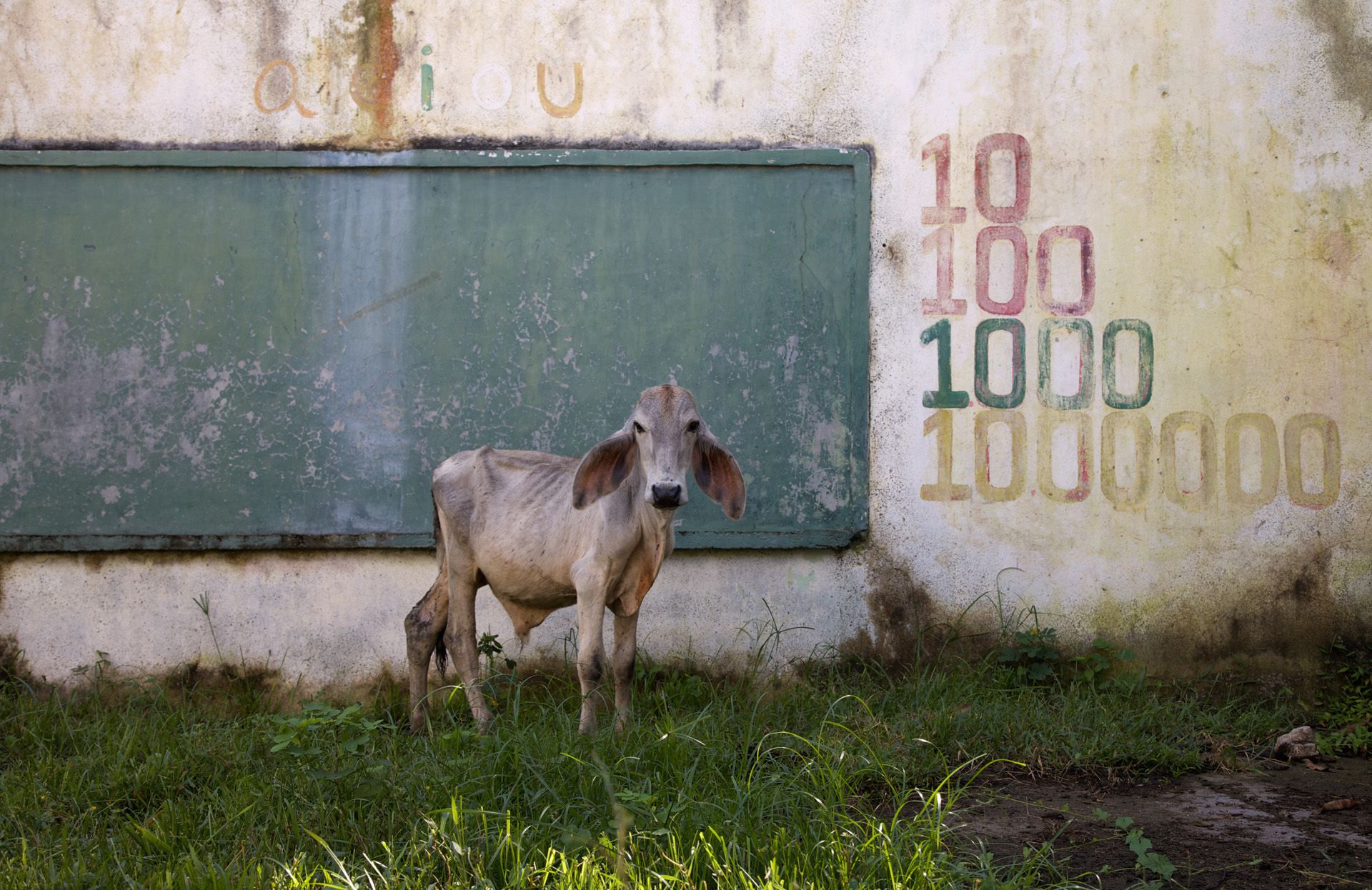
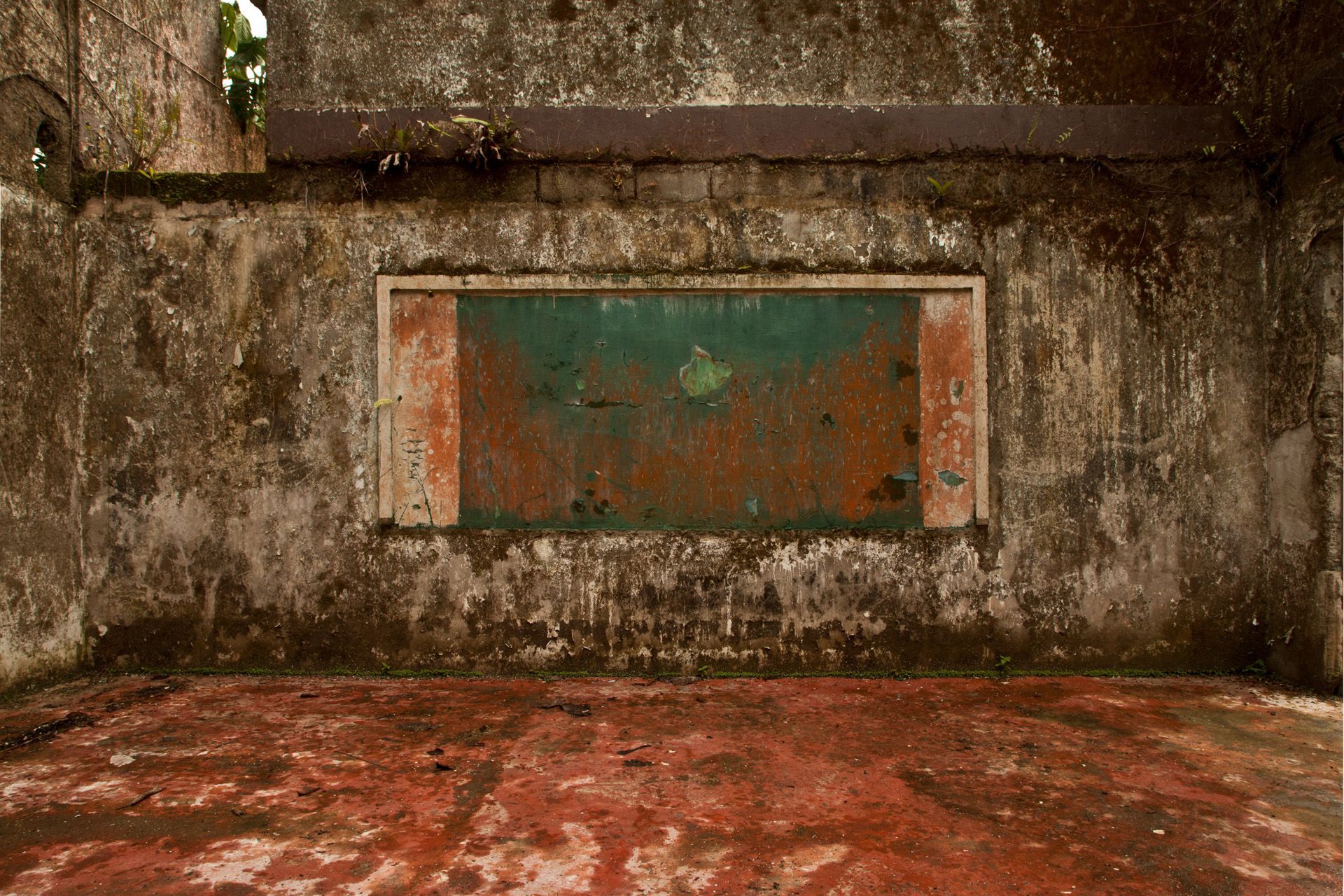
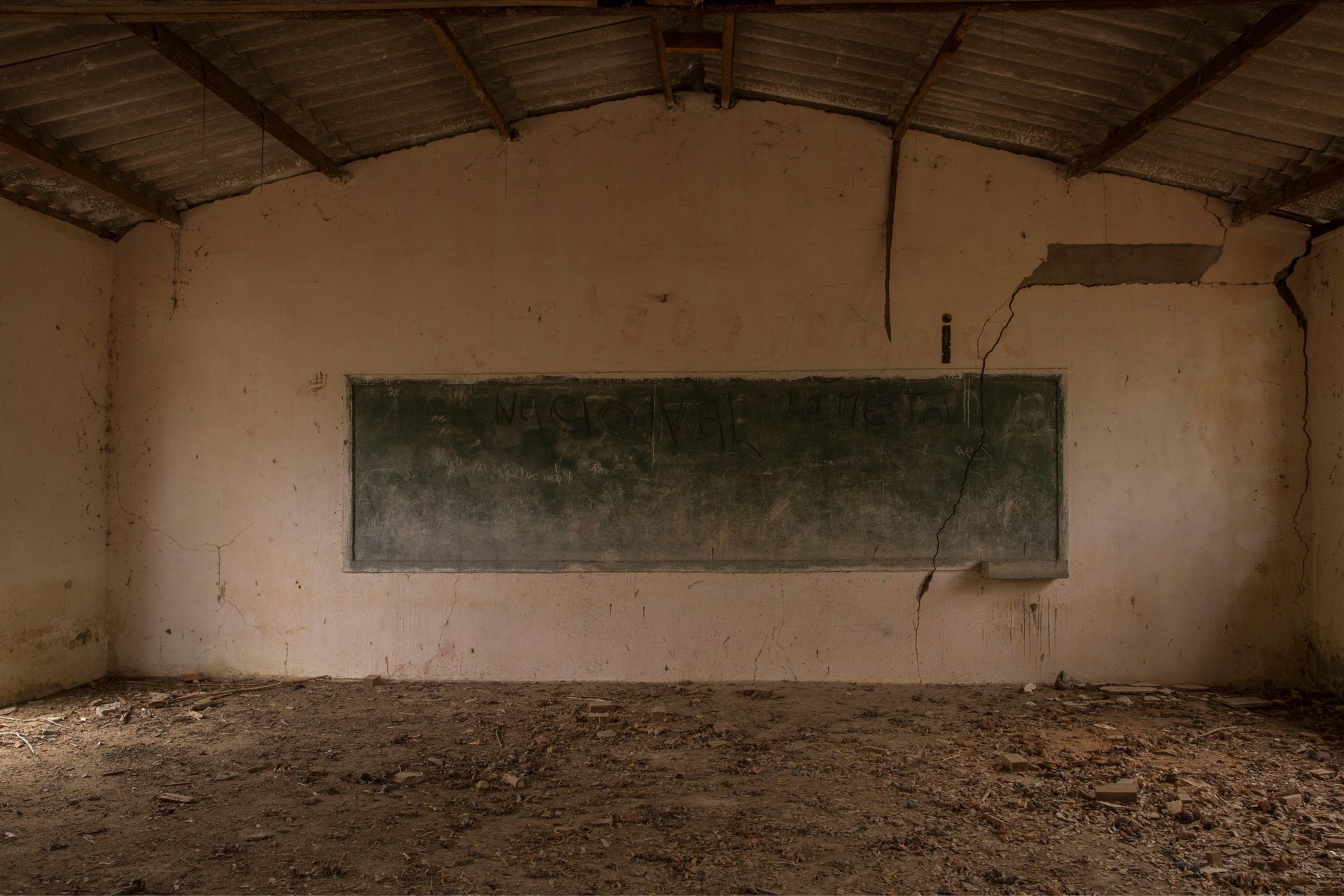
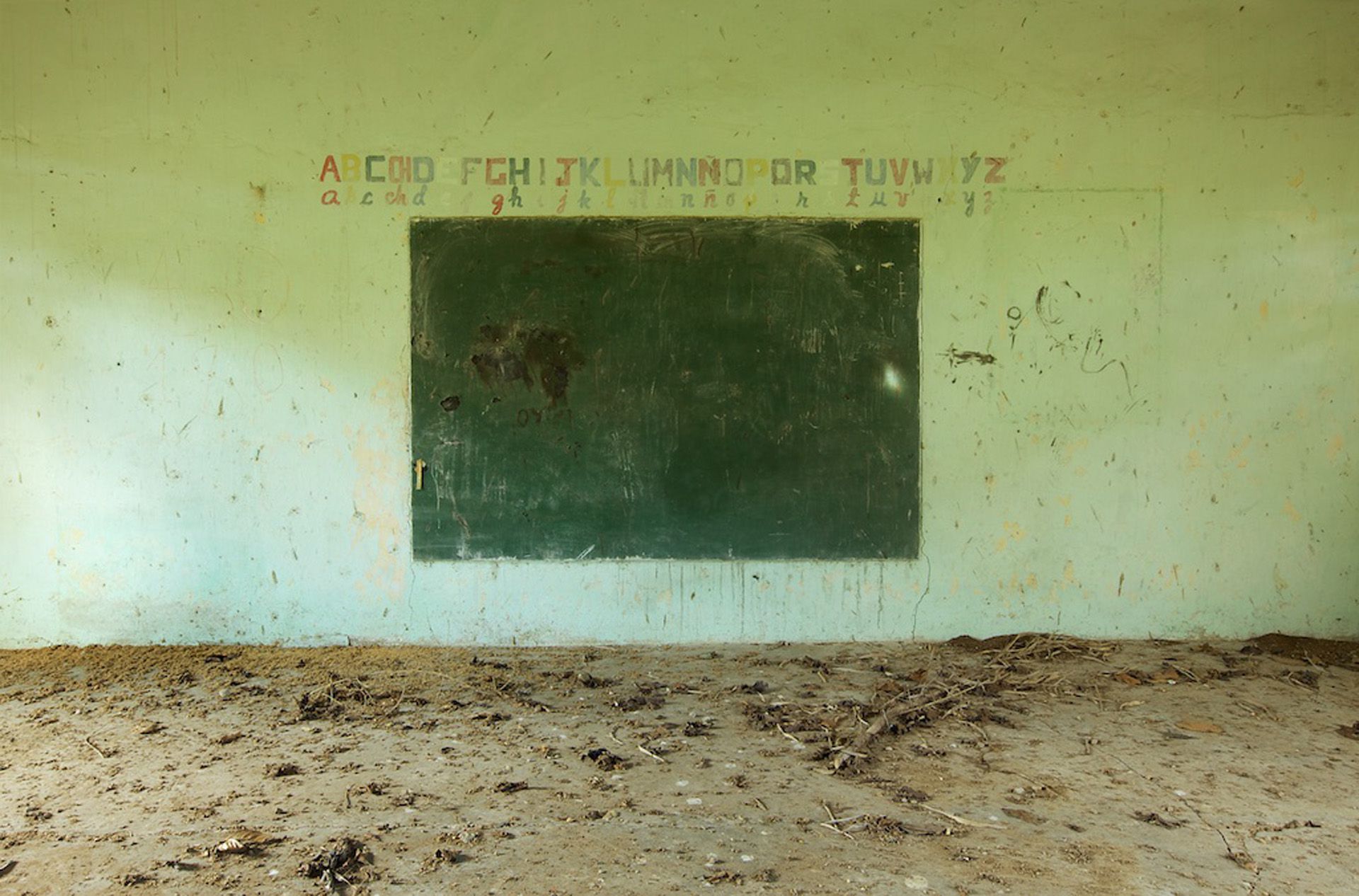
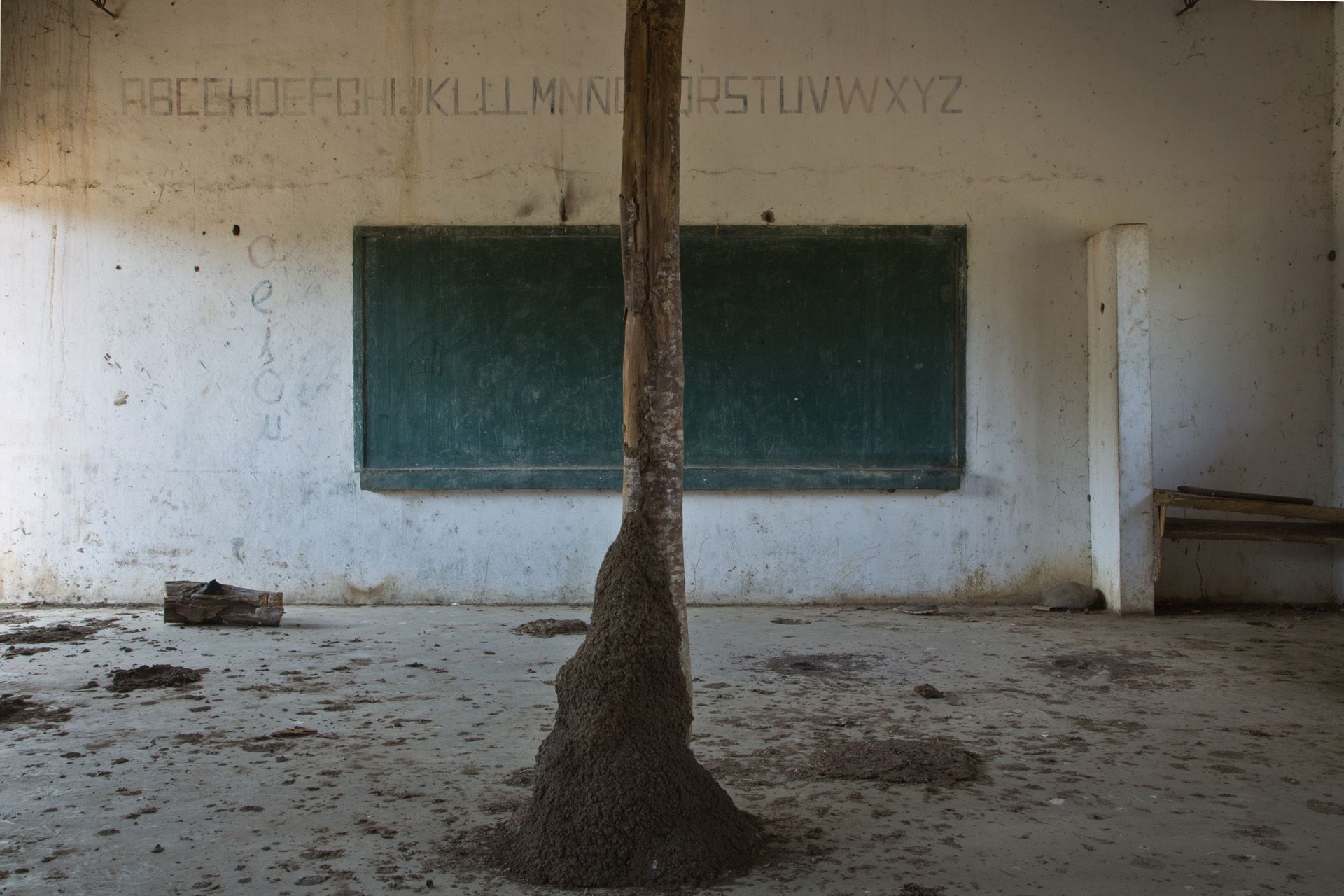
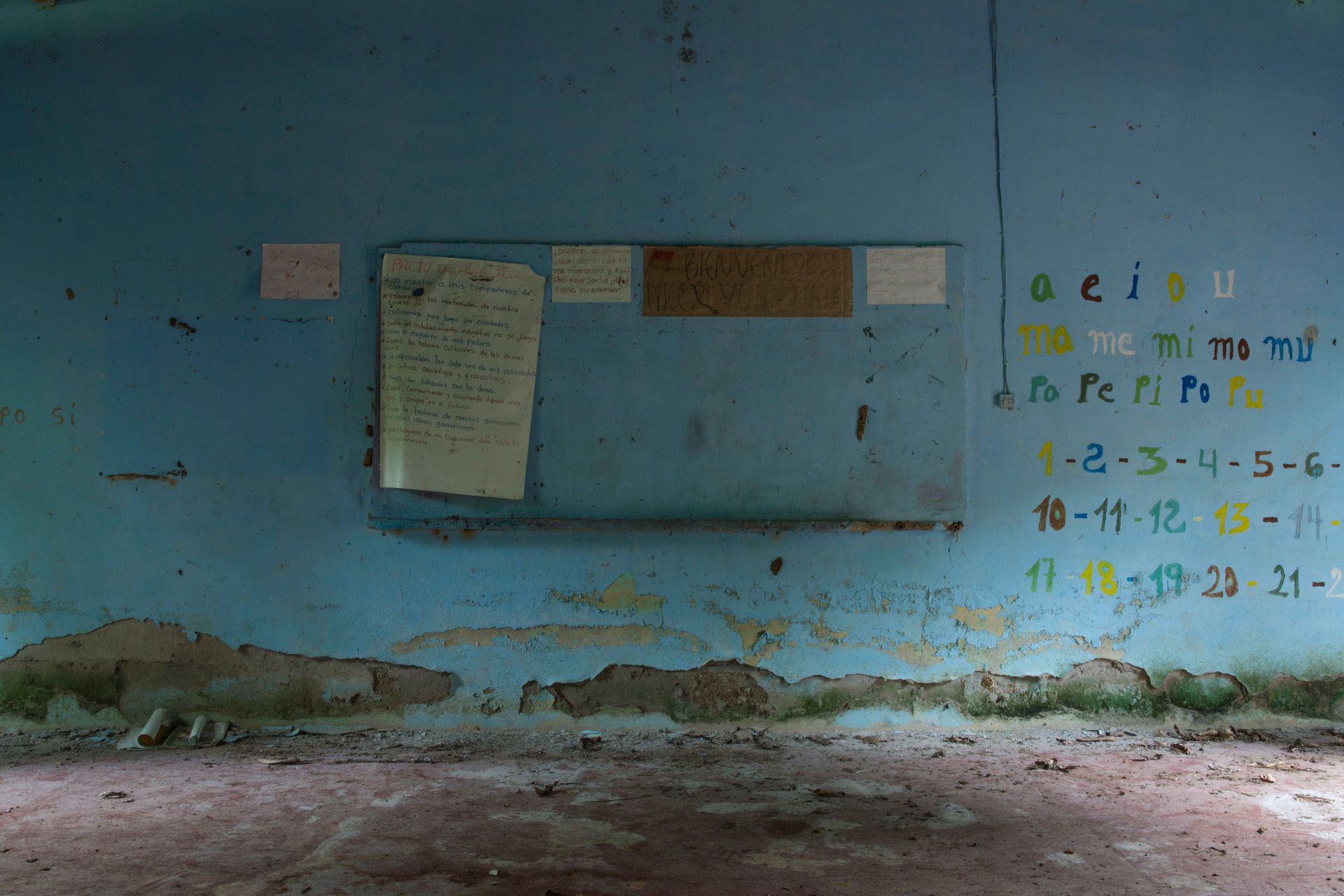
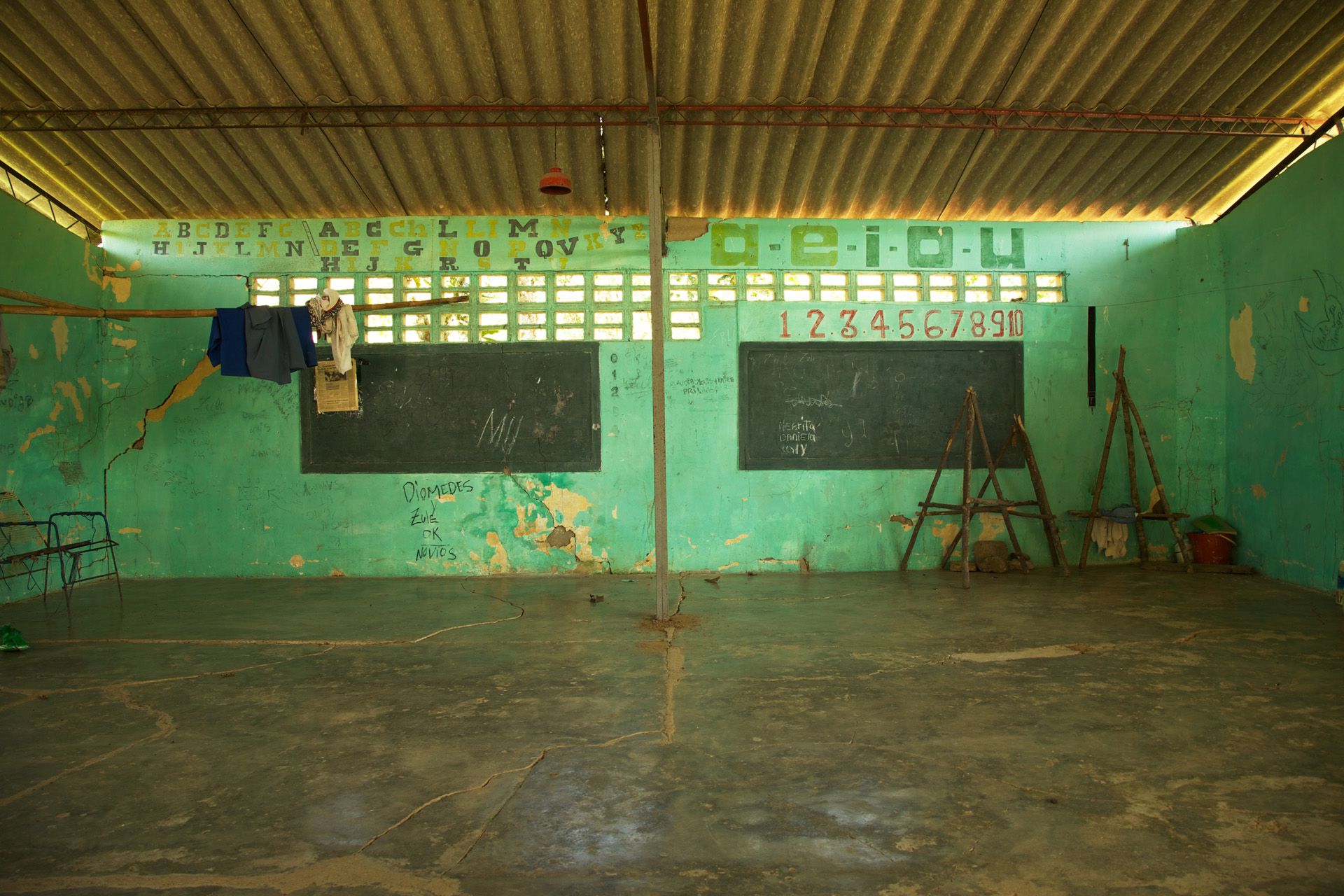
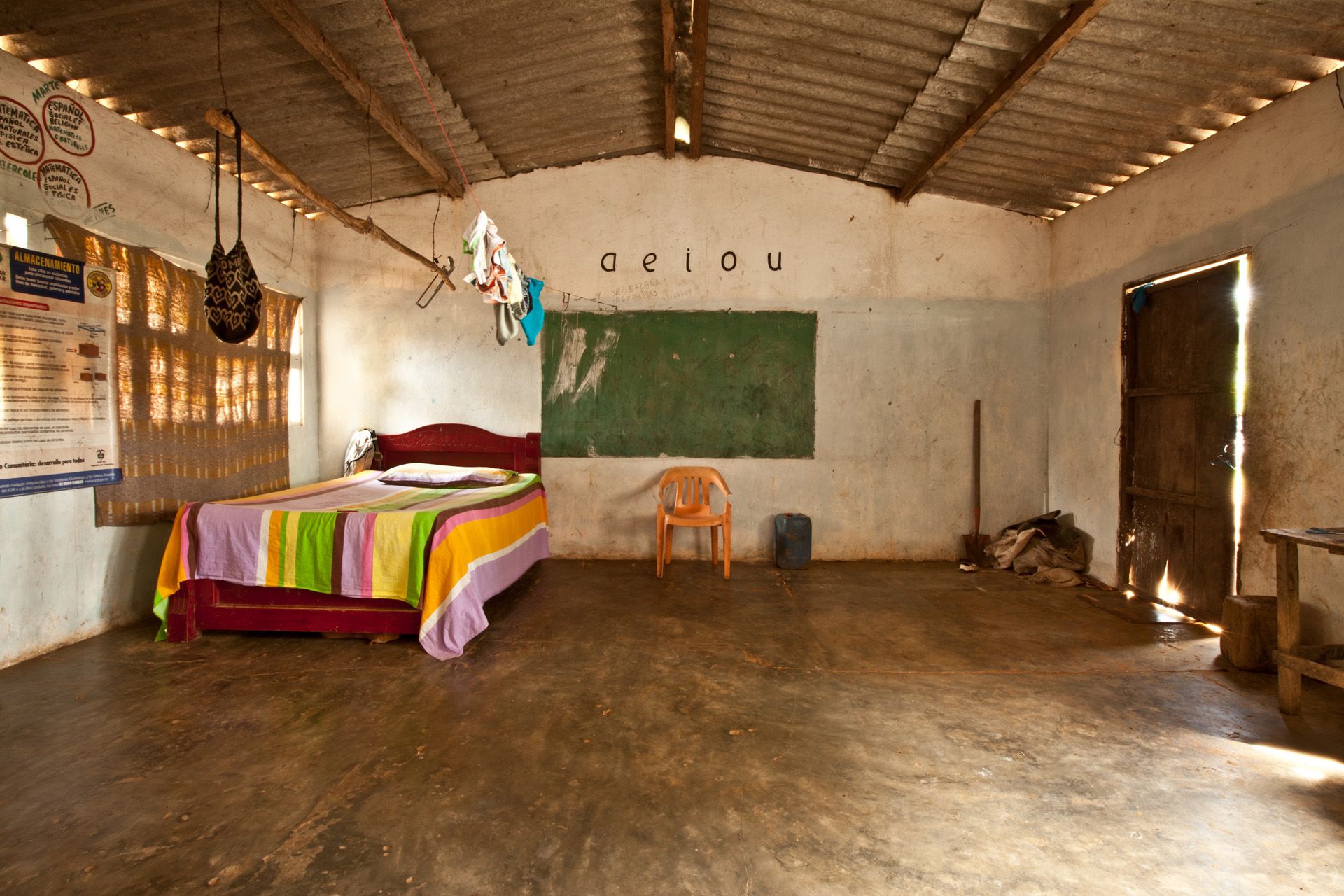
In the abandoned rural school — roofless, its floors overtaken by vegetation — I found, in one of the classrooms, a blackboard and, to one side, the vowels painted on the wall. Their handwriting and colors caught my attention.
They seemed to drift away from the board: a, e, i, u — still legible despite humidity and abandonment… the o, fading.
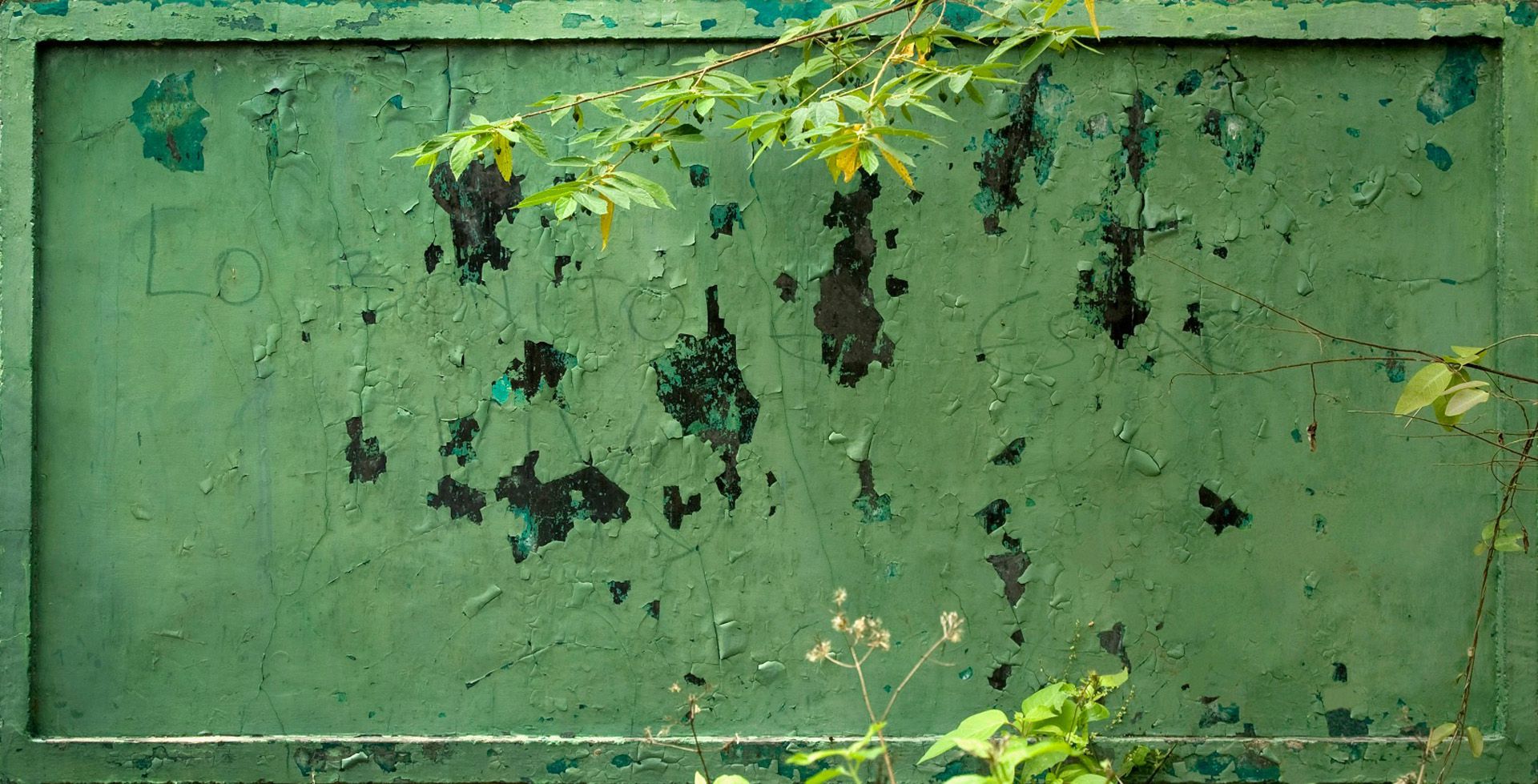
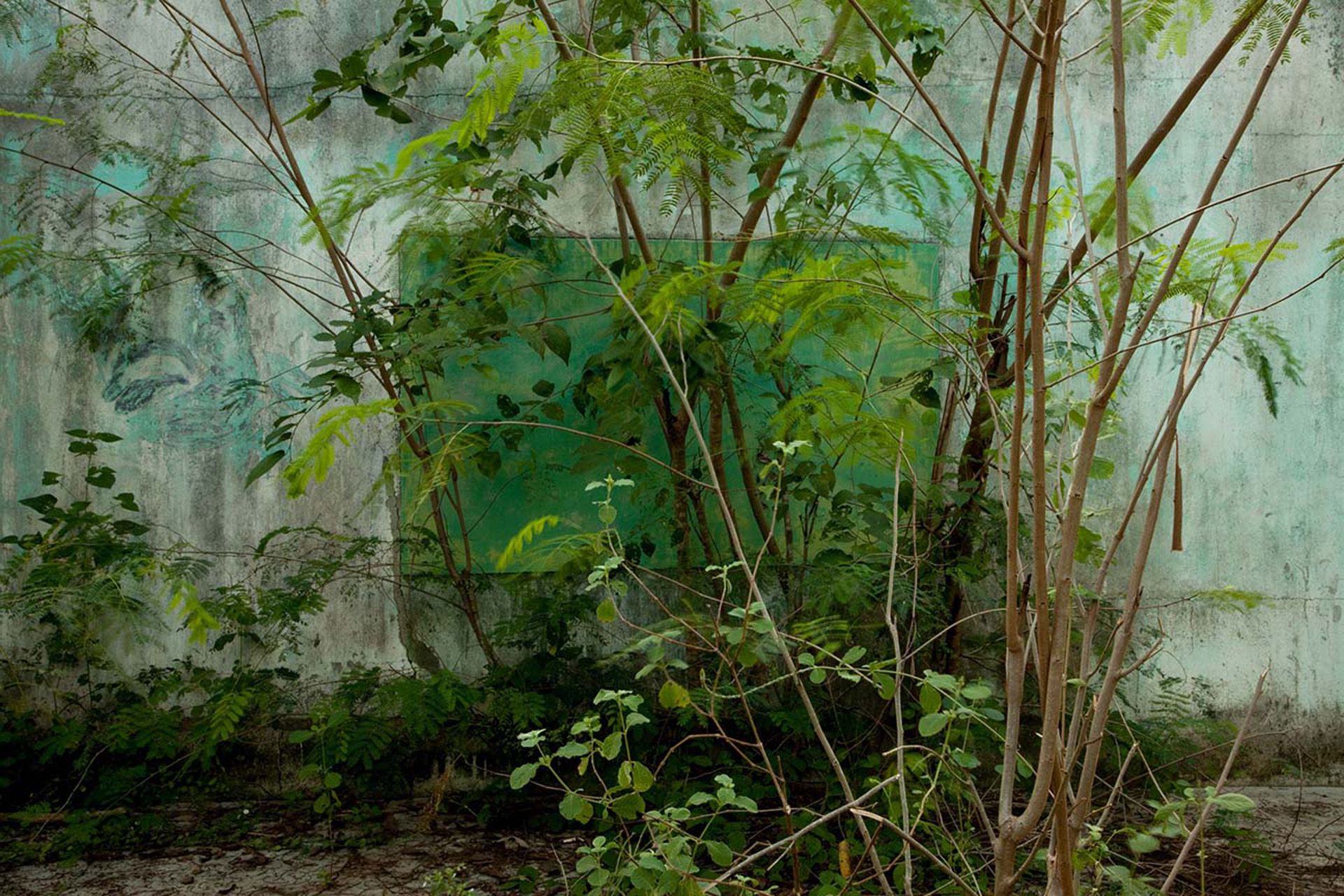
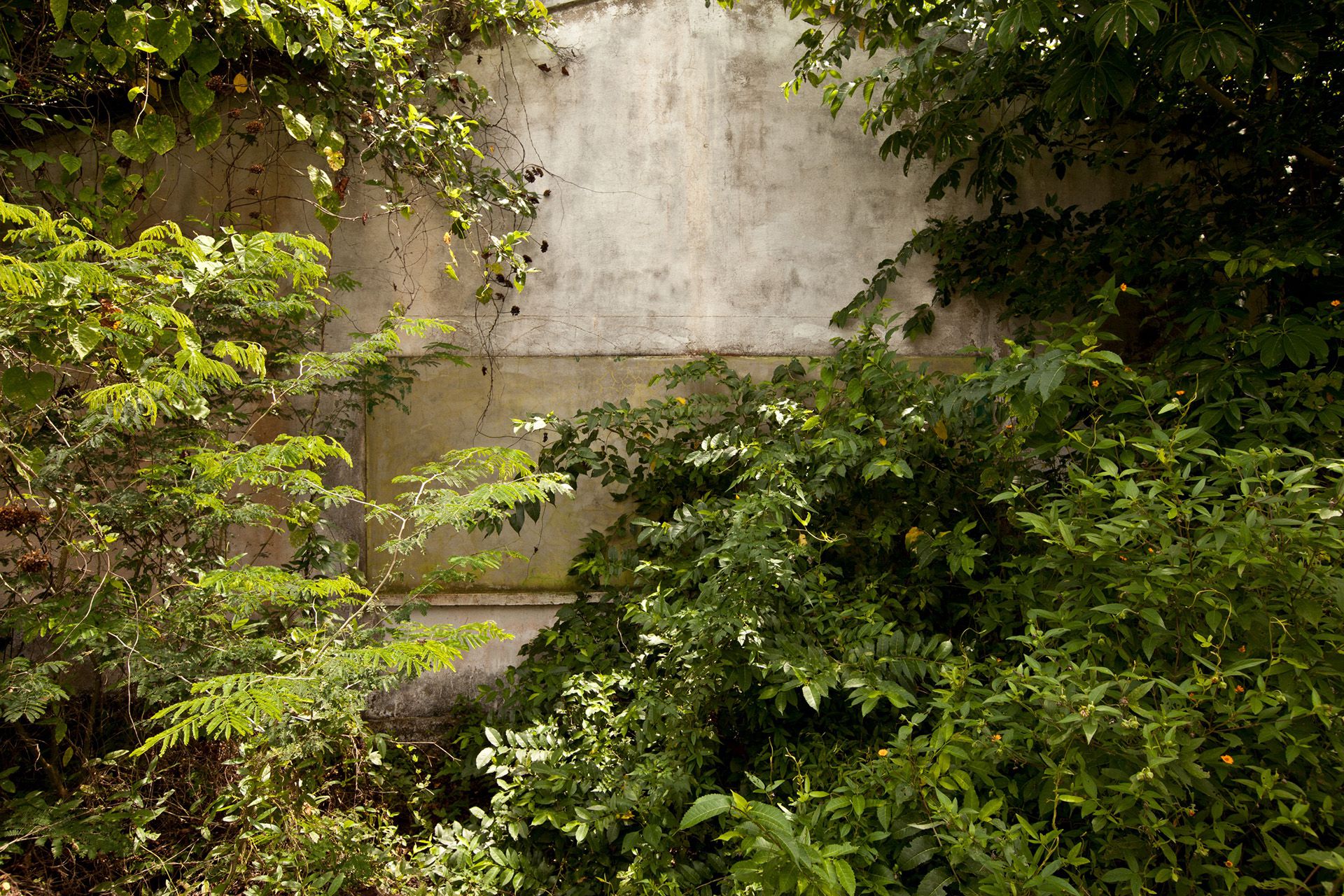
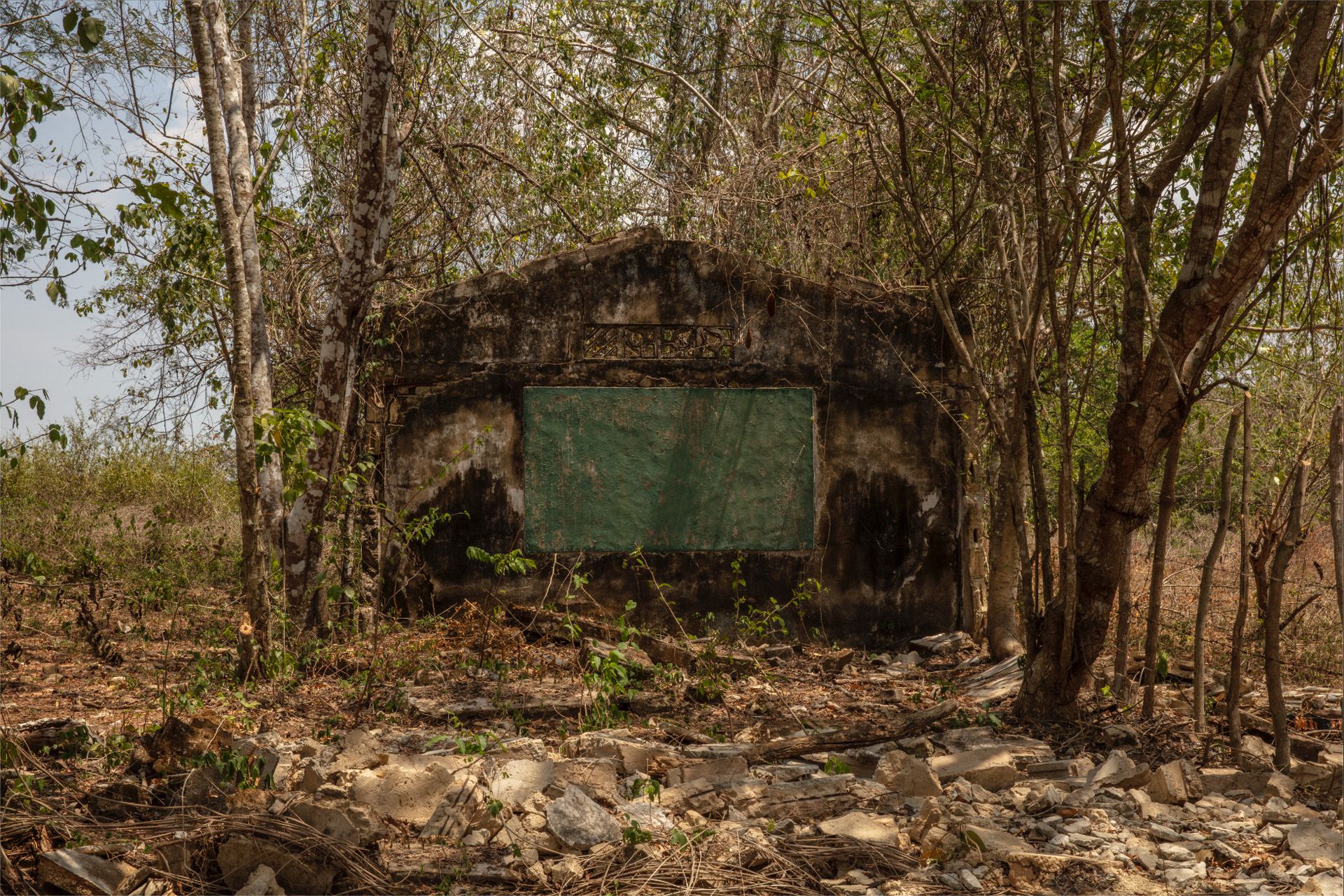
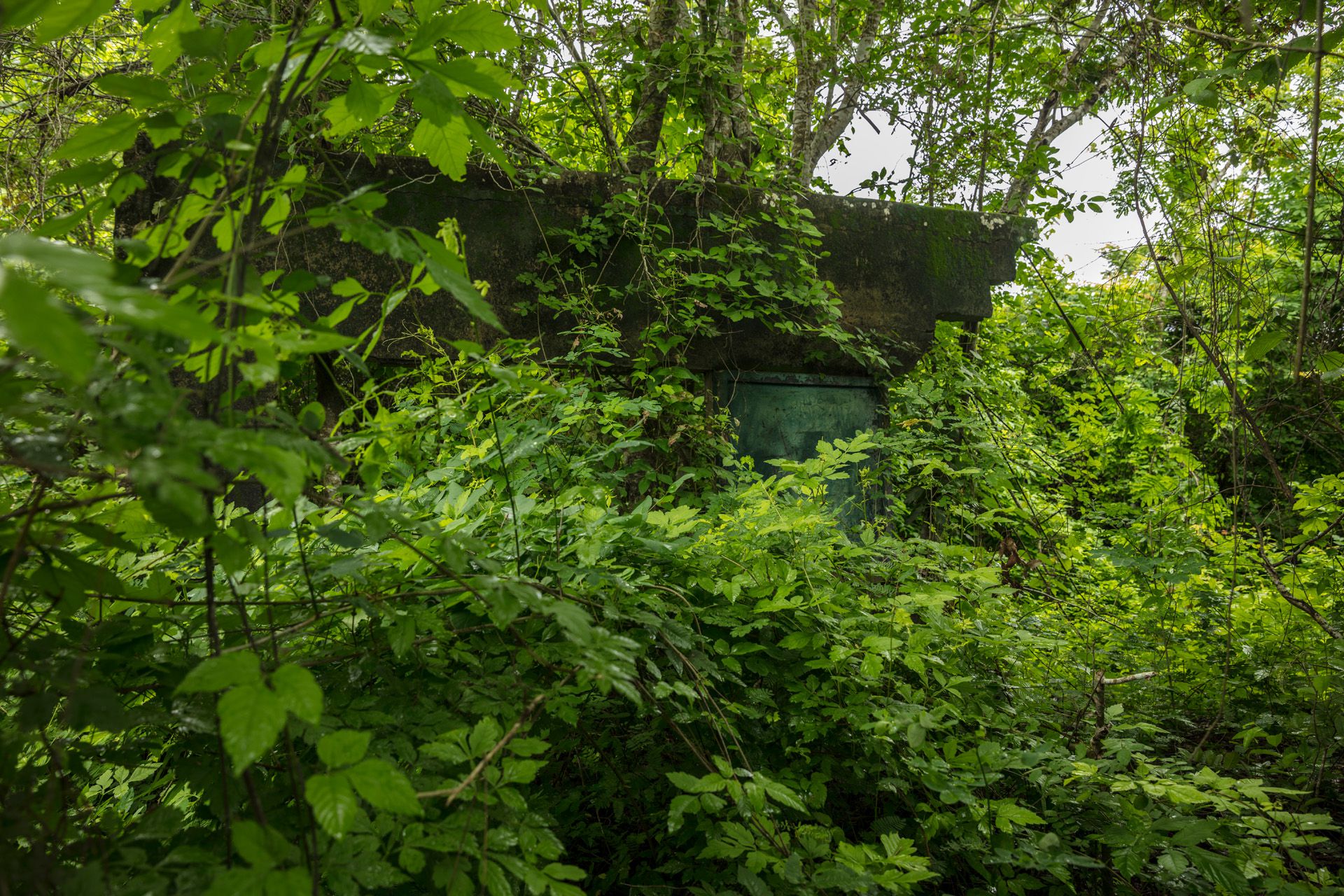
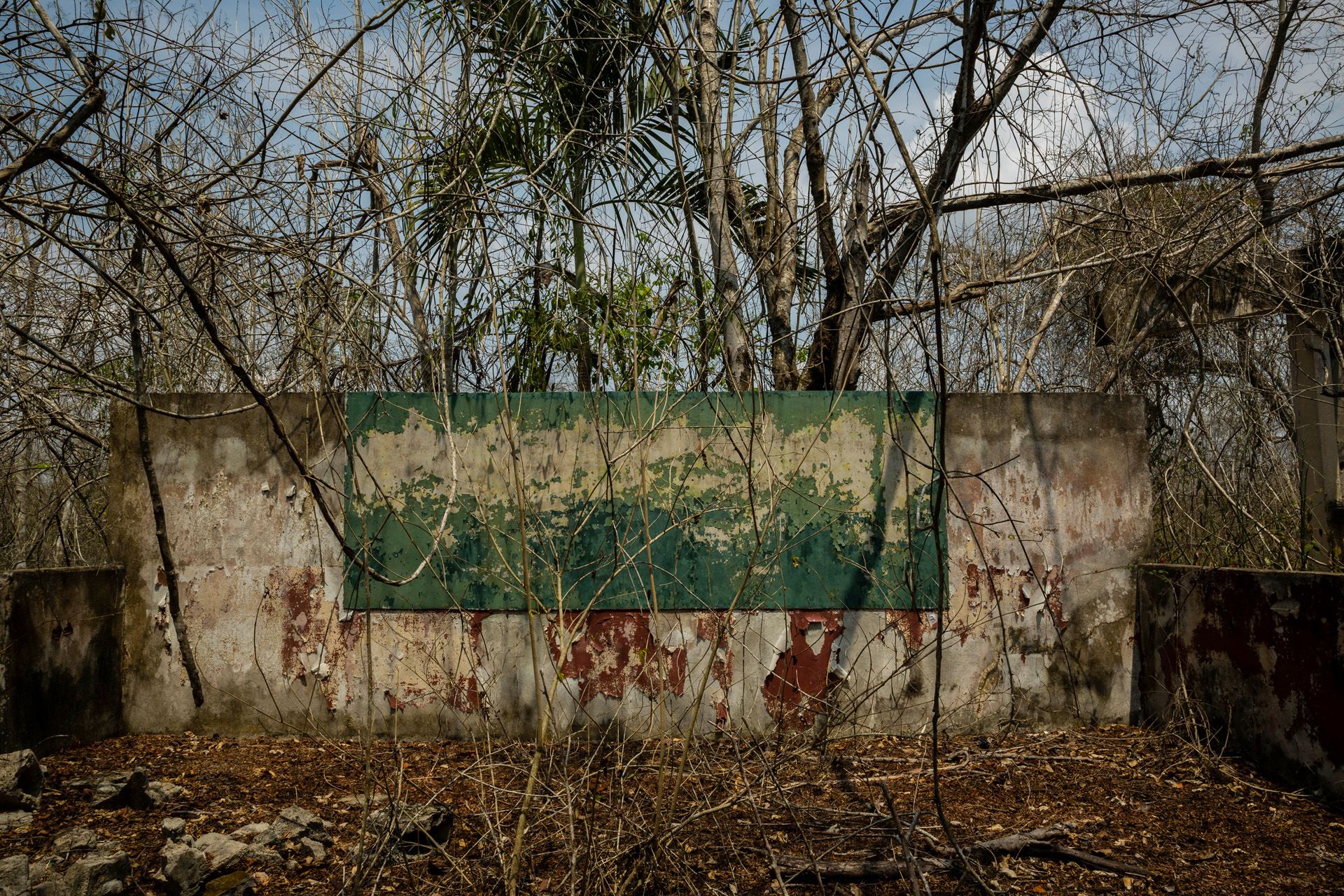
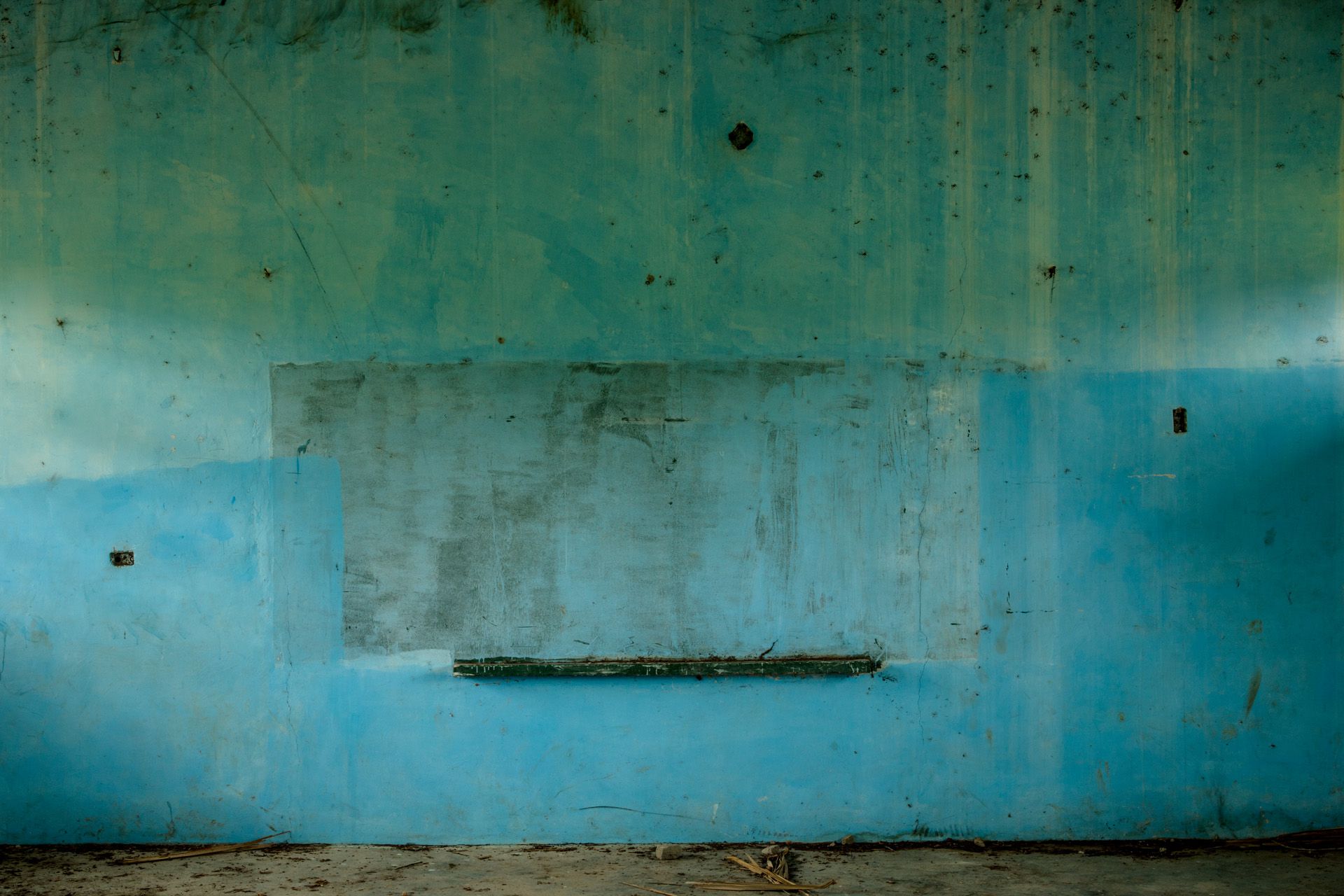
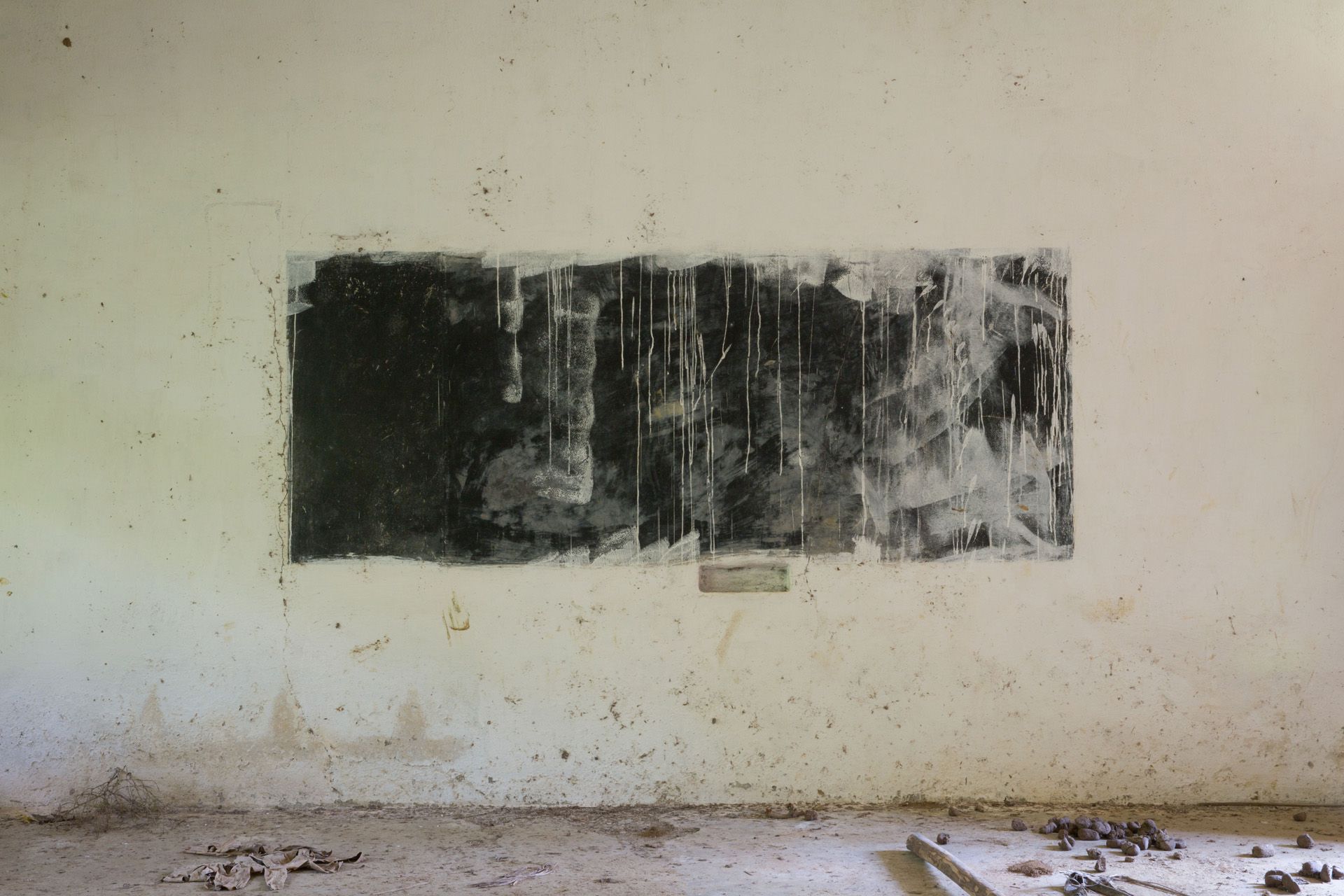
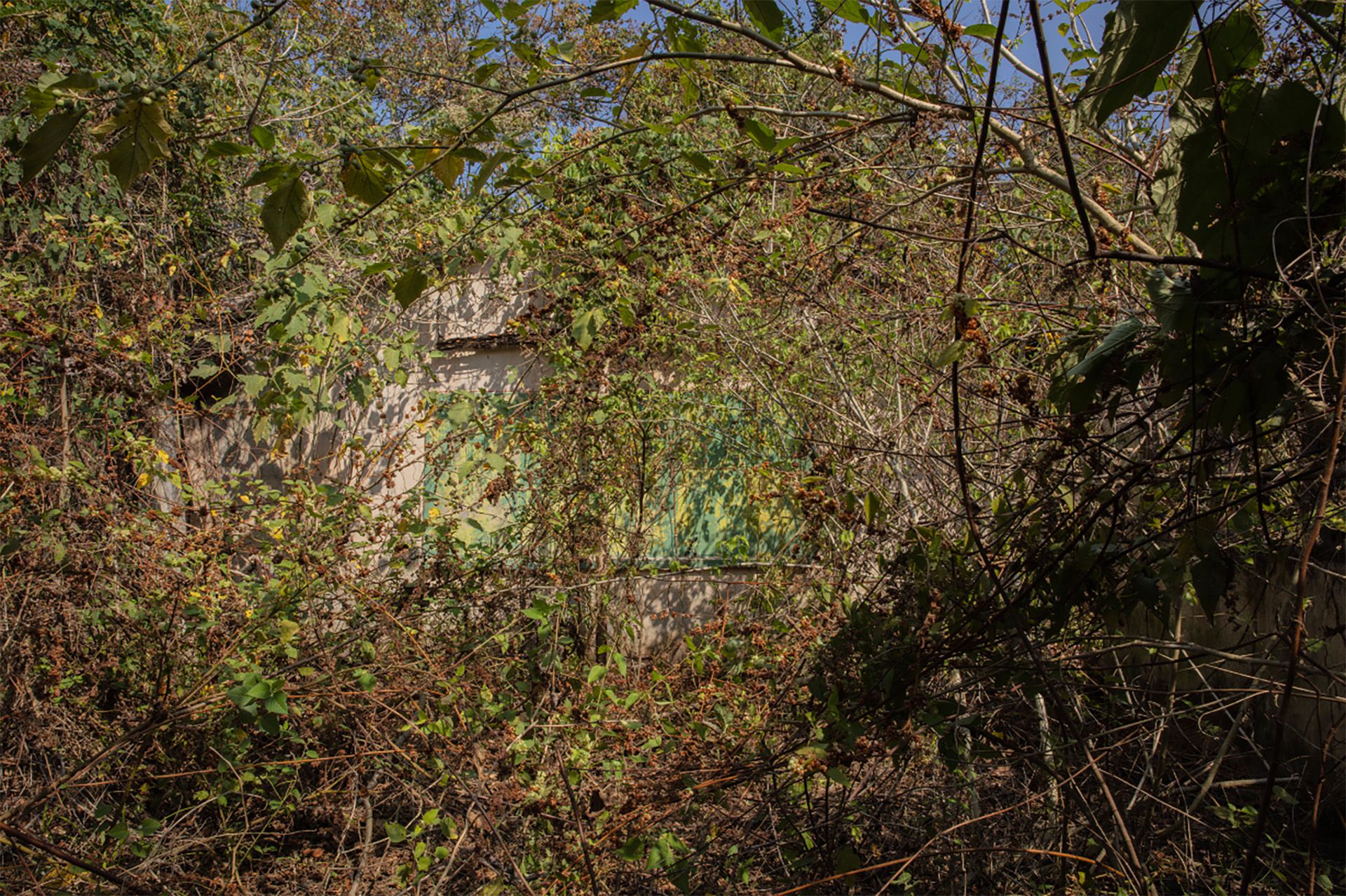
In the second classroom, I saw a blackboard hidden among dense vegetation, worn and in very poor condition. I hesitated to photograph it.
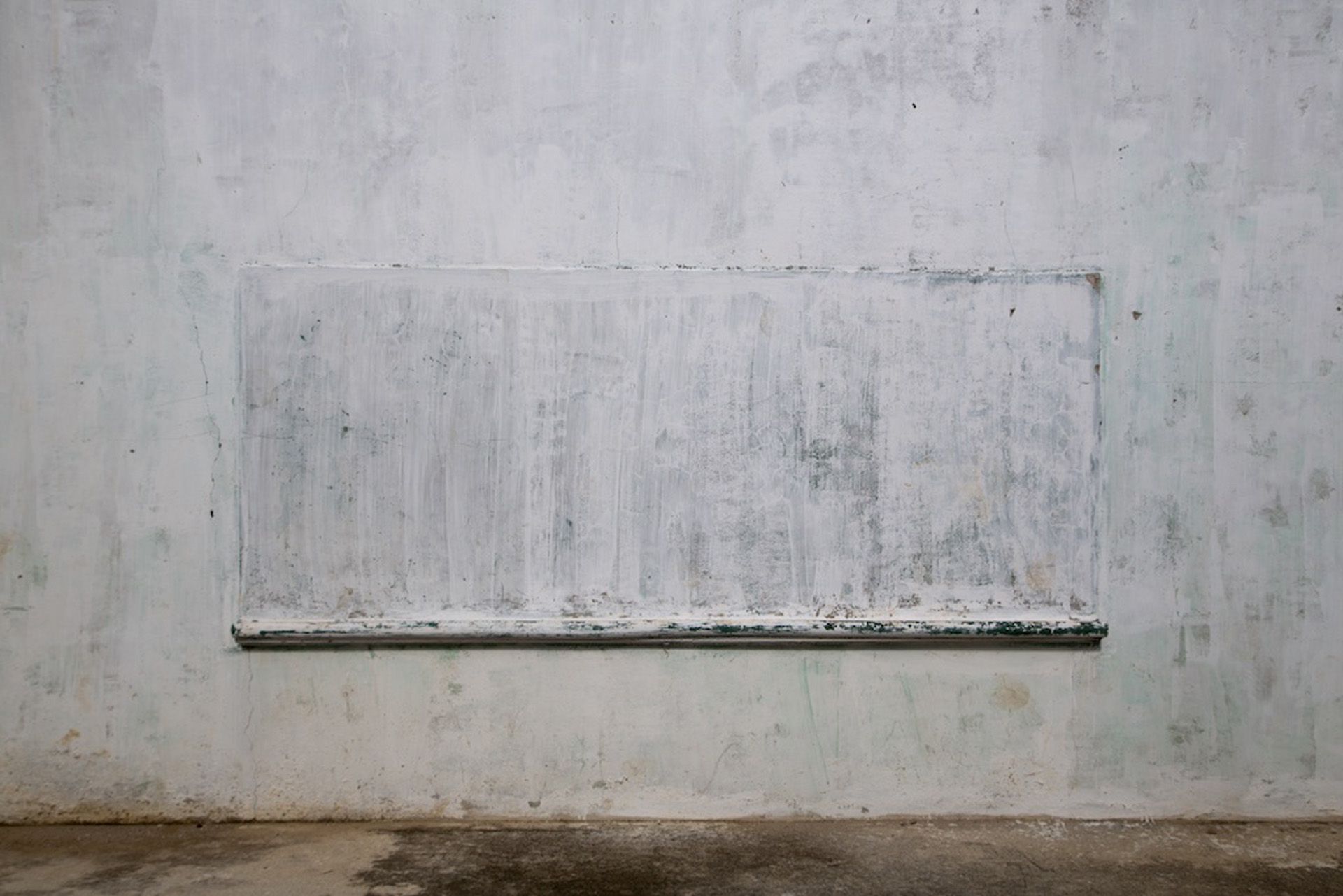
Days later, while looking carefully at the image, I discovered that on that silent board a nearly invisible phrase emerged: “The beautiful thing is to be alive.”
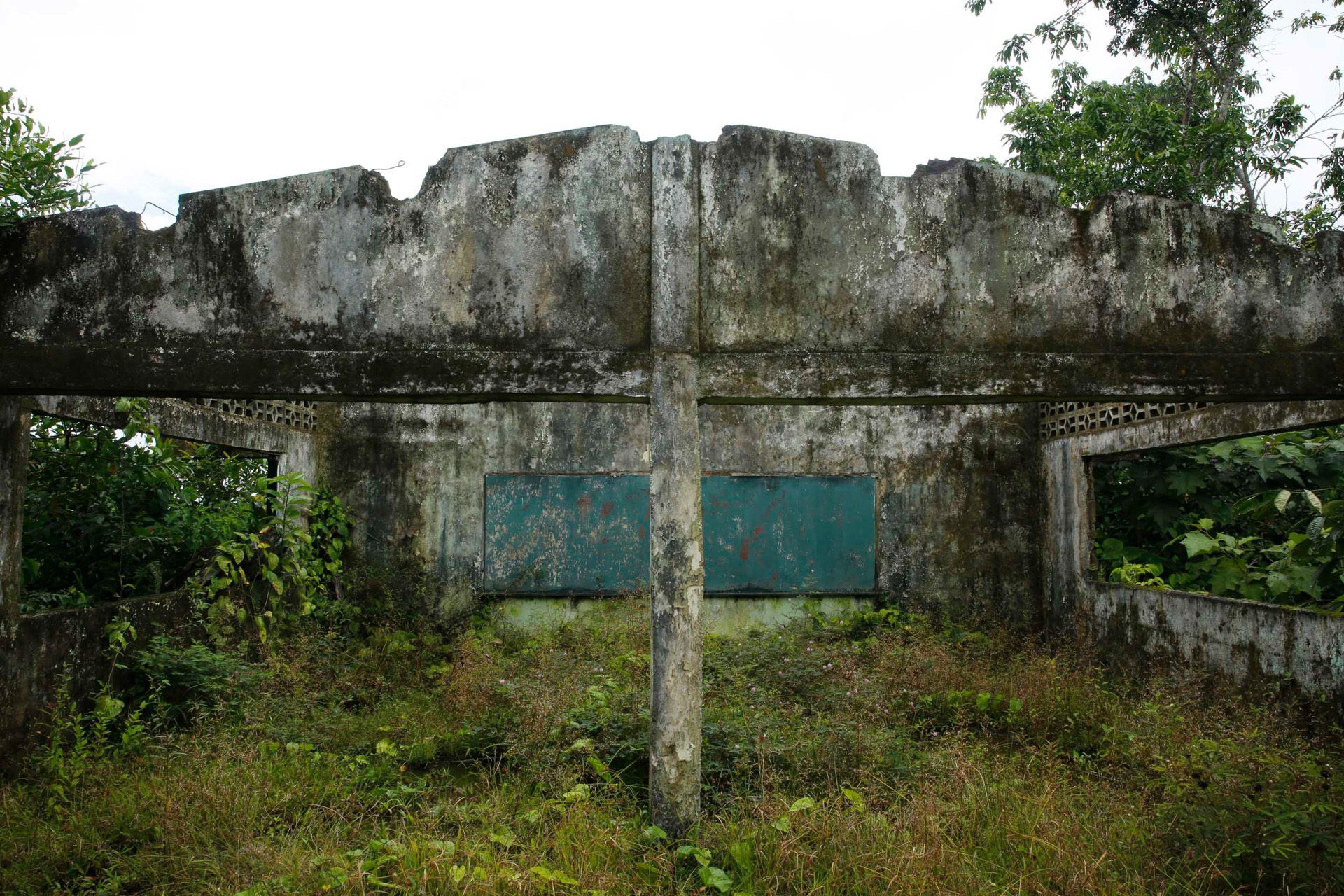
It was these blackboards in the ghost town of Mampuján that led us to search for other schools abandoned by the war in the Montes de María — other memories that might be recovered before they fade forever, like that “o” in the Mampuján school.
Over twelve years, Fernando Grisalez and I have found more than 200 schools which, in their silence, speak to us of education as another victim of our war.
1 / 37
October 14, 2010
Barú
Close to Mampuján is Caño Limón, a place that goes unnoticed, on the side of the road to María La Baja. There, the Weavers of Mampuján2 took me to visit a school abandoned by war.
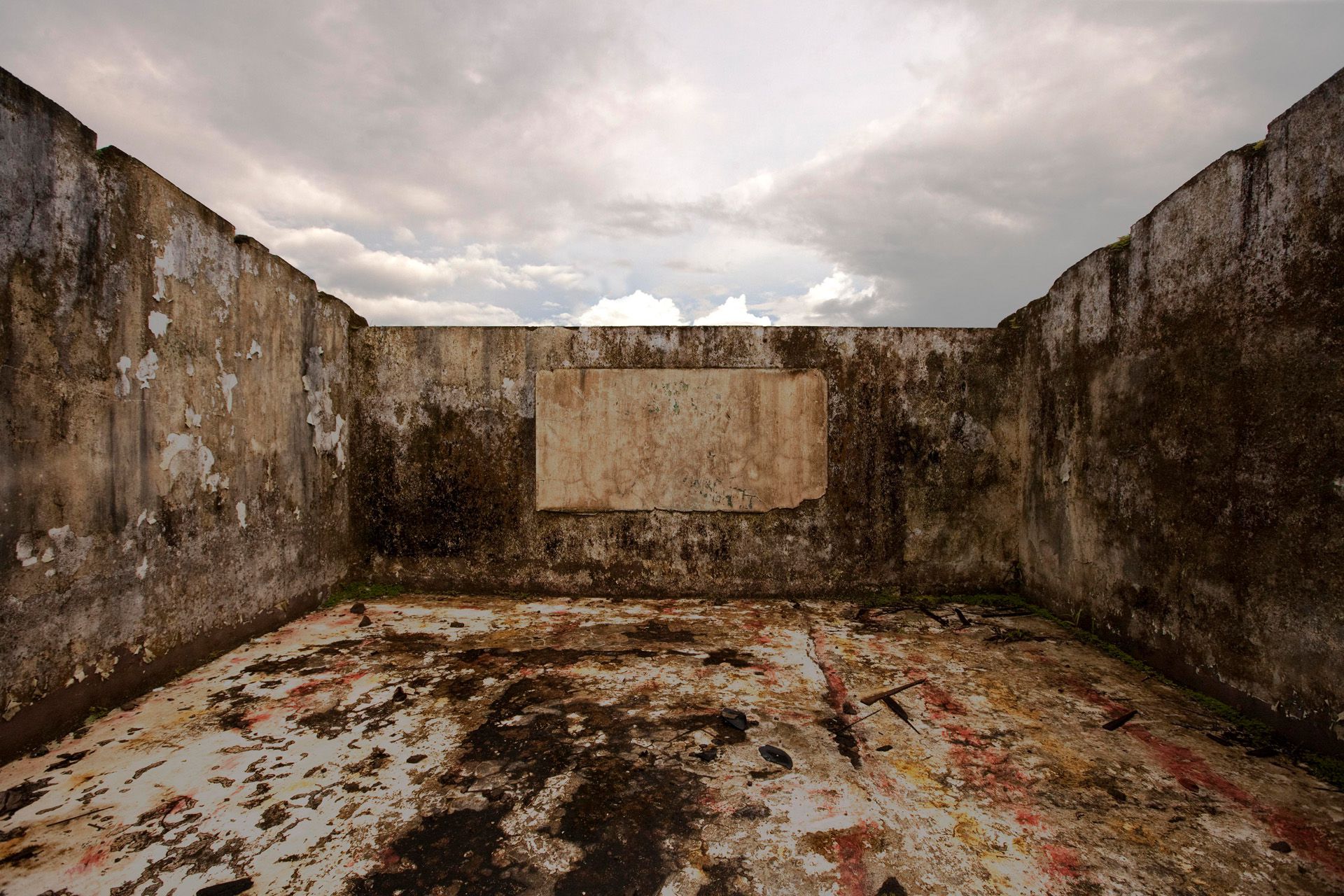
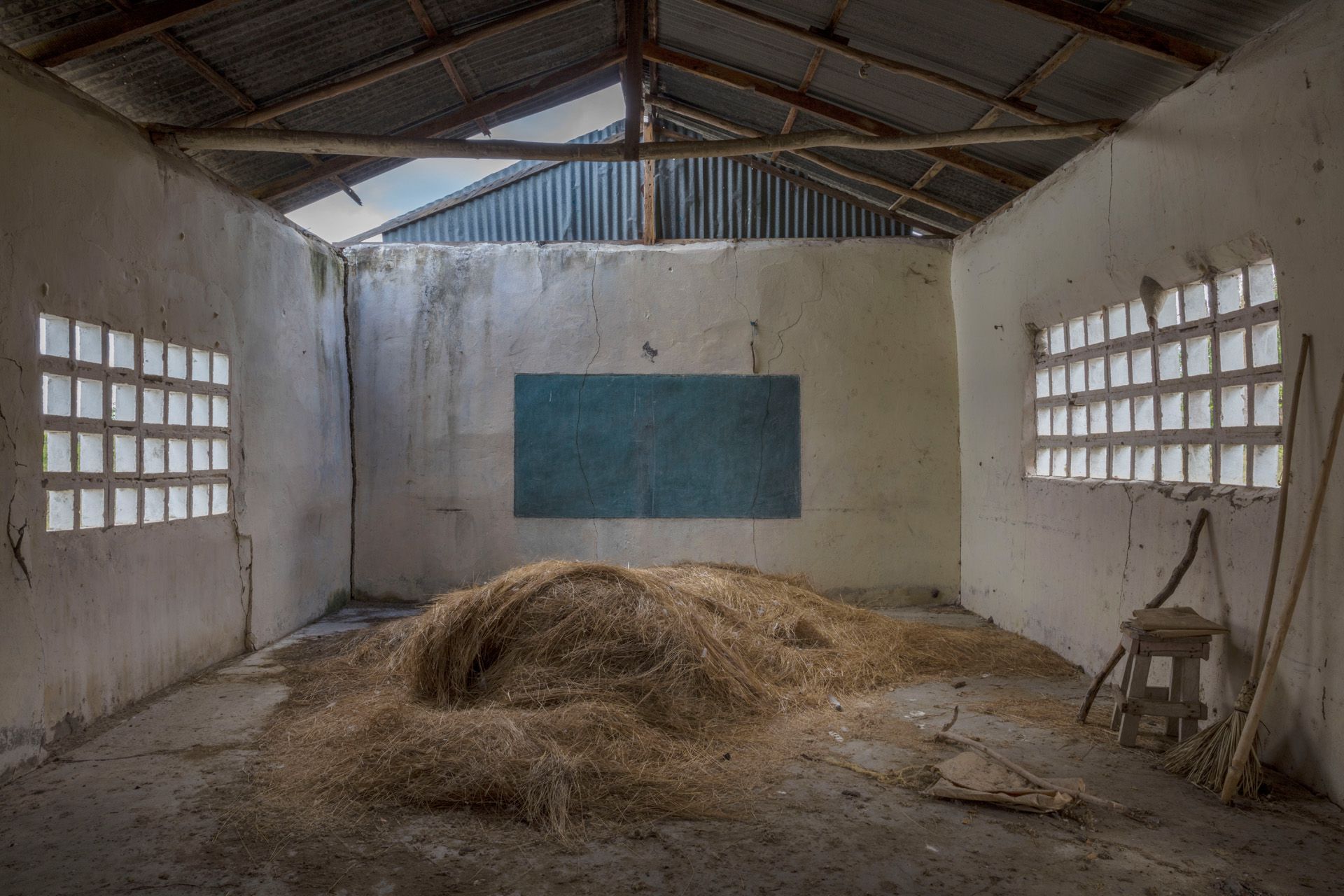
Roofless, with only one classroom; the vowels now faded and its blackboard in silence. A very small classroom, without a single desk. Empty, very empty if it hadn't been for its floor covered with grass and a famished calf which, upon seeing us, approached the blackboard… It slowly looked at us, aching.
2 Tejedoras de Mampuján is a group of women who help communities overcome the traumas of violence through art, more specifically, weaving tapestries.
January 13, 2011
Cartagena
Going to Santa Fe de Icotea, in Montes de María, was overwhelming. Rugged trails battered and rough, pothole after pothole. Along the way we passed a few campesinos on their mules, but up there, in Santa Fe de Icotea, not a single house. It was a breathtaking landscape of solitude, overwhelming in its silence. Far, very far away. We went on foot…
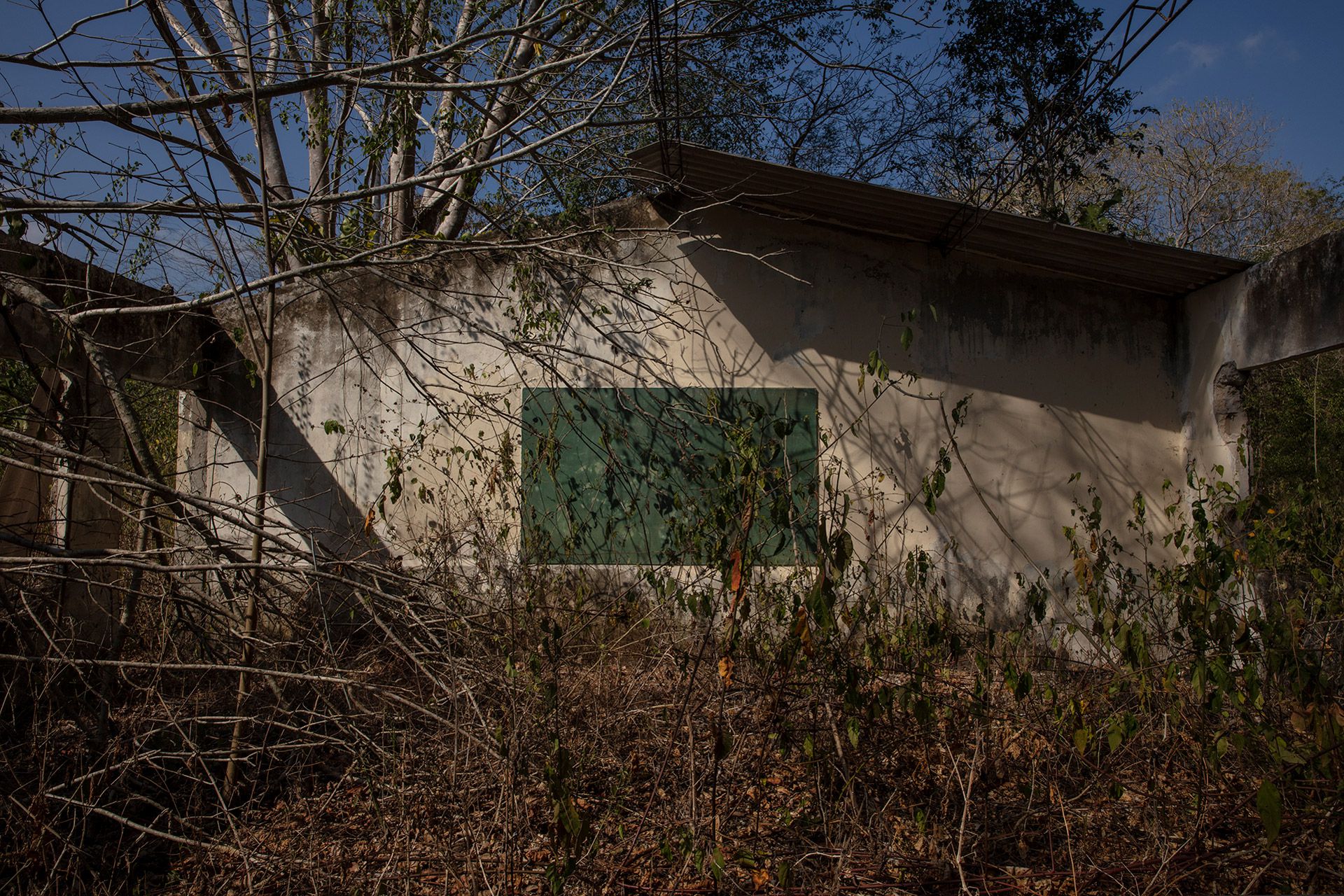
The abandoned school with its two small classrooms was devastating. Its roof had vanished, and the wilderness had moved in, devouring it. The vowels still visible, painted on the walls.
I photographed its two blackboards, the only things that remain—witnesses of the expulsion. It felt as if no one had returned since 2002, when Santa Fe de Icotea was abandoned.
Absence is still present in this school.
February 6, 2011
Carmen de Bolívar
Before reaching the school in the rural community of Nueva Jerusalén, we followed the edge of a stream, its water clear and cool. There we came upon a solitary, majestic caracoli5 tree leaning over as if drinking from the current with its massive, protruding roots. We rested in its vast shade before continuing up a steep, narrow dirt path.
"Along this path, the guerrillas went up and down, the army too, all the armed groups," our guide Germán told us.
The path was bare, desolate, with no trees to protect us from the roaring sun in a deep blue sky.
After more than two hours, we finally arrived—high up in Nueva Jerusalén. The first thing we saw was the school, still standing, with its door and its eternit6 roof.
Exhausted and drenched in sweat, I collapsed in the school's corridor… Beyond, the houses stood scattered, shut and still. Not a soul in sight.
"After the massacre in Las Brisas on March 11, 2000, the campesinos here fled and left their lands behind," Germán told us. He was from Las Brisas.
In the school corridor, scattered across the floor, we found some children's notebooks—dirty, damp, decaying. In one of them, Van Gogh's Sunflowers and his self-portrait. I was stunned—Van Gogh, here, in this remote place, on the withered pages of Lucía's notebook.
Inside the classroom, high on a wall, a simple drawing repeated the image of the school itself. Around it, some family names in pencil: Romero, Ávila, Valenzuela, Castro— slowly fading away.
"In this school, they used to celebrate first communions and weddings," said our other guide, José, who was born here.
We realized then that this school had once been the heart of this rural community—abandoned now for eleven years.
5 Cashew tree
6 Building material also known as asbestos.
May 7, 2011
Montes de María
To reach the school in Chinulito, we had to cross dense brush. I paused. A couple of days earlier, we had seen a dead donkey with a swollen belly next to the trail. Our guide, Jader, told us it had been bitten by a snake.
Slightly afraid, I asked Jader "Do you think there might be snakes here?"
He immediately drew his machete and began clearing a path. I followed. He led me to the entrance of a classroom— with no door, or roof. Carrying only my camera, I stepped in alone.
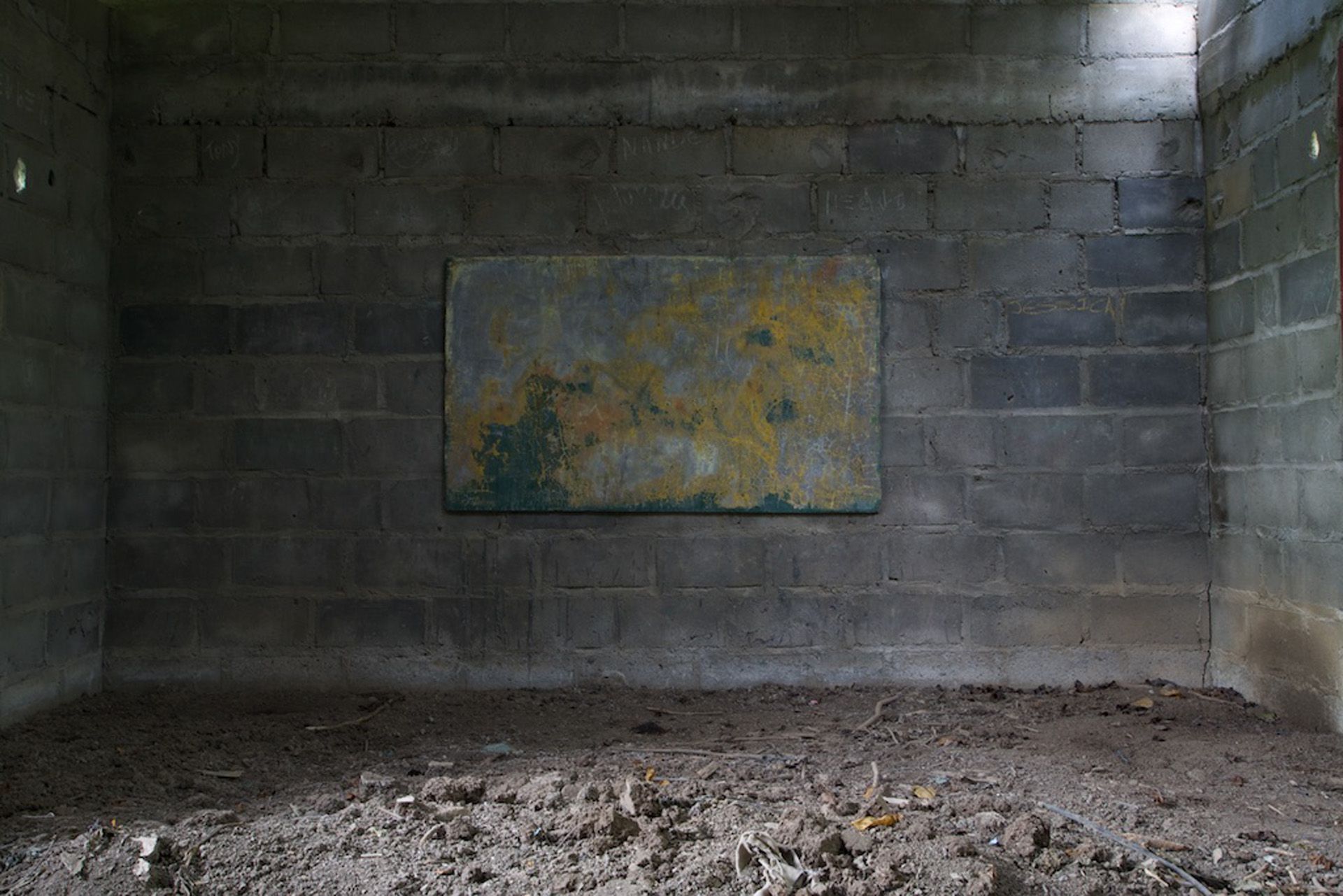
The floor was covered in dry leaves and a tight weave of vines. Its blackboard—now orange. "Time has been painting it," I thought, as I was engulfed by its silence.
As I photographed it, I felt it whisper to me: "I have waited so long for you."
August 1, 2011
Bayano, Bolívar
Bayano was swallowed by the wilderness. When we arrived, there was no one. Another ghost village. In 2001, it was abandoned after the murder of several campesinos.
The road from Arjona to Bayano was long and difficult, muddy and slow. Far—very far. We came by jeep.
Doña Celestina, our guide, born here, couldn't find the school.
"Did they tear it down?," she wondered, as we made our way along the overgrown paths. The heat was brutal, the humidity unbearable.
The school, arrested in time… embalmed in its silence, awaited us.
November 18, 2011
Kilómetro 25
We are at the school of Kilómetro 25, the closest one we've ever reached. It sits along the roadside to Zambrano, in Montes de María.
It was abandoned because of the war and later reinhabited by the Mercado family.
Doña Ana tells me she's lived through four displacements. She's originally from Alto Sinú (Córdoba). An older woman, her skin weathered by the sun of Montes de María. Open and talkative.
Her first displacement was in 1997. "We spent a month sleeping in the bush, digging holes in the ground," she tells me.
Her son was tied up by the guerrilla for three days. They accused him of collaborating with the army. "I dreamed what was going to happen to him. They didn't kill him."
Her husband was captured by the army. Accused of being a guerrillero. He spent eight months in Ternera prison, in Cartagena. "They didn't prove anything, they didn't apologize, they didn't give us anything. Nothing at all," she says.
I'm struck by how the displaced families who reinhabit these abandoned schools open their doors to us, so we can photograph the blackboards. Amid their humble belongings, despite their poverty, there is a deep dignity in their homes.
November 26, 2011
Bogotá
What did I absorb during the four hours I spent in Las Palmas, in the Montes de María of Bolívar?
I saw a town to which only about one hundred and twenty people have returned. It once had five thousand inhabitants. A town struggling to become a living place again.
I saw a town deep in Montes de María. A town with a muddy road, and with a school of seven classrooms. Were they seven, or many more? I saw two that had never been used—the massacre made sure of that.
I saw a plaque bearing the names of those who were killed. It read: "In commemoration of the events that occurred in Las Palmas." I understood that "the events" was a euphemism—naming the horror is still unbearable. The community carries a collective trauma.
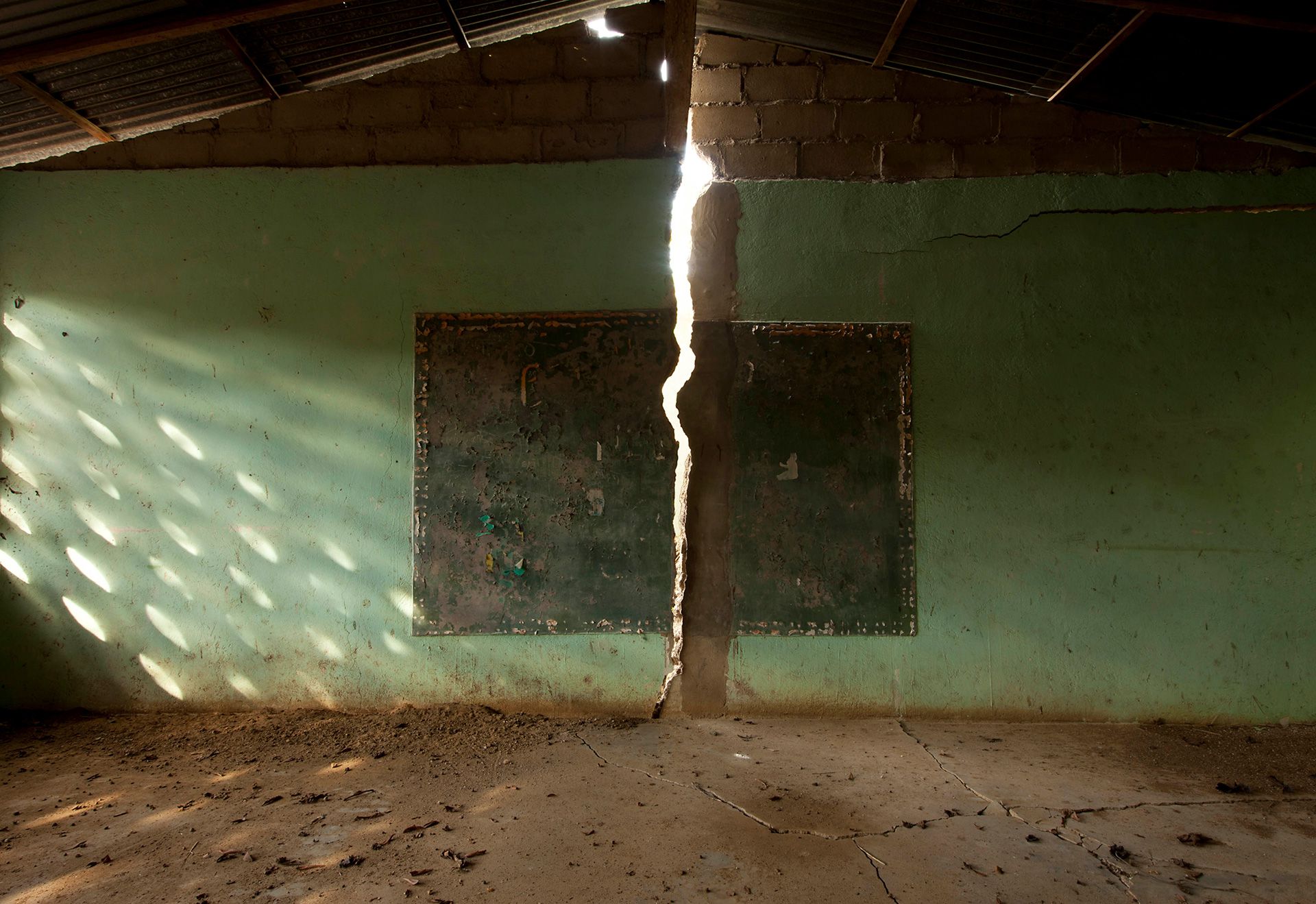
I photographed a blackboard split in two by a crack of light.
I saw the small plaza, where paramilitaries had murdered four members of the community in front of the schoolchildren. They pulled every child from their classroom to witness the slaughter.
I felt the desolation and sadness that war leaves behind.
December 24, 2011
Bogotá
I have just sensed the ghost of war, I felt it, I came across it, it's intangible, elusive.
By the side of the road between Maria La Baja and San Onofre stands this school, now home to a displaced family. The young women who live there, Rosa and Manuela, told me that when they were girls, paramilitaries broke into their home at night and killed their father in front of them. Fifteen years have passed.
Rosa told me that her nine-year-old daughter, Laura, often wakes at night crying and saying: "Don't let them take me, mamá. Don't let them take me."
When I saw the child and asked her something, she immediately clung to her mother's leg like a lock. She began to cry and scream: "Mamá, don't let them take me."
December 21, 2011
Bajo Grande, Bolívar
We reached Bajo Grande in a jeep, along a narrow path that gave way and forced us into the pastures of a cattle farm. We climbed and climbed again, until we rejoined the path. It was a long, long way.
When we arrived, we found abandoned houses and just a few families. No more than twenty people had returned from exile after the massacre of four campesinos, murdered by the paramilitaries in this small village.
Only four women had come back, and in this remote, isolated place someone said to me: "Here, we the macho men are alone."
We went with some campesinos to the school, occupied by the Marine Infantry. Such silent campesinos. Battered, desperately poor.
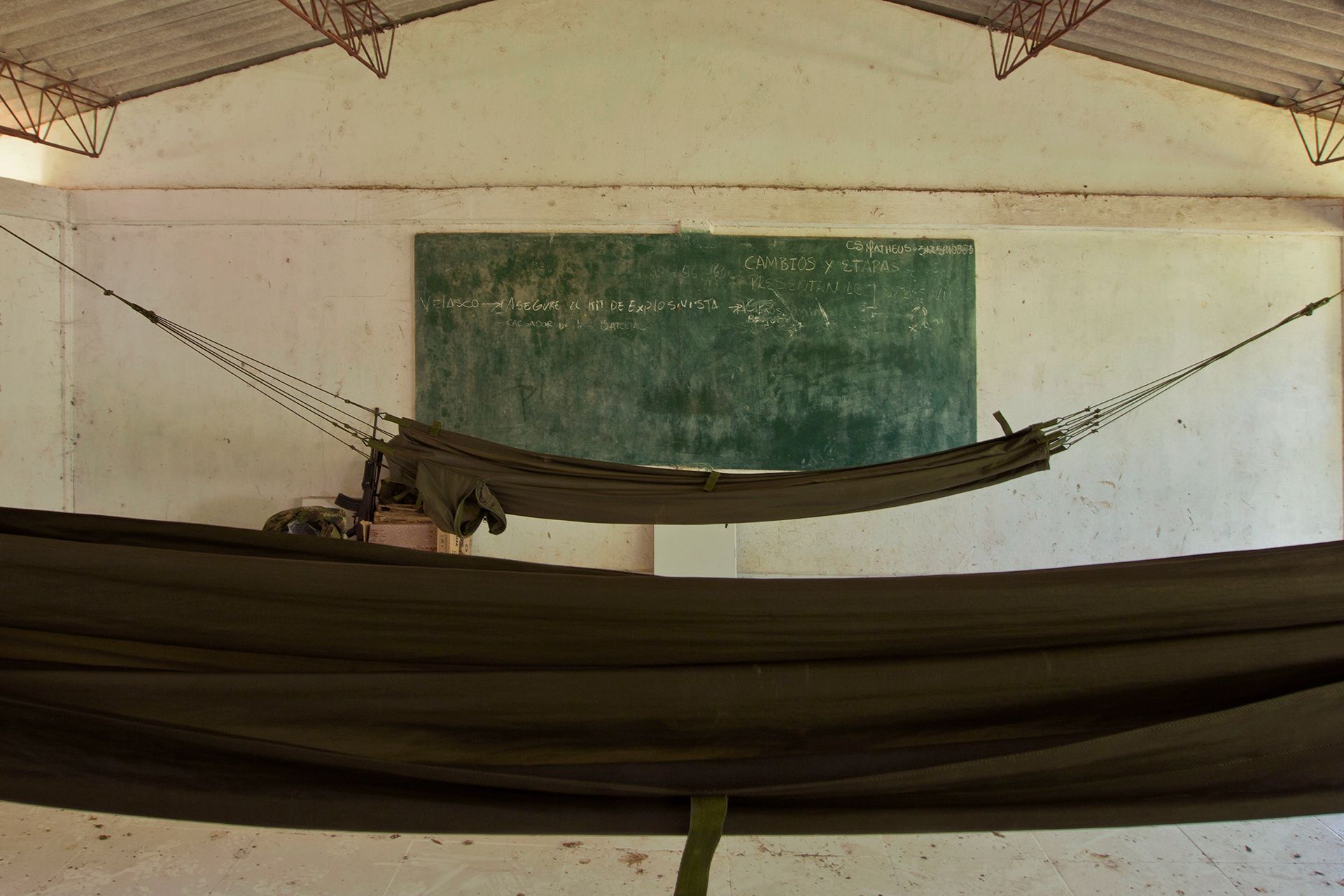
The school was an unforgettable scene: olive-green military hammocks hanging in the classrooms, weapons leaning against the blackboards, military graffiti on the other walls.
All of this confirmed what I had already sensed: war had penetrated the schools in Montes de María. And this realization endures in a photograph—a lesson in warfare scrawled on the blackboard that reads: "Velazco, secure the explosives kit."
Bajo Grande and its surroundings were sown with landmines by the guerrilla.
Bajo Grande, with no music, with no electricity. Orphaned and abused.
Bajo Grande is the saddest place I have ever seen.
October 29, 2012
Carmen de Bolívar
Corralito is far—very far—from San Jacinto, Bolívar, where we began the journey in a jeep called The Blue Lightning.
Along dirt roads, we delved into the heart of Montes de María, until we reached this village, lost in time.
Its school—several classrooms—embalmed in absence. I photographed it carefully. How many years of abandonment?
Very few families have returned to Corralito. A village without electricity, without music…
"There were many dead here," I heard as I sat down to speak with some of the locals. I felt hospitality.
I saw a zaino10 in a pen, I saw freshly hunted deer, I saw hunting dogs—one of them panting, thin, its mouth smeared with blood.
Corralito, so hidden and isolated, that I thought of the days when the bodies lay scattered through the village, unnoticed by the outside world…
"Here, the vultures grew fat," a campesino told me.
10 A wild pig.
October 29, 2012
Las Palmas, Bolívar
We returned to Las Palmas. More than once we got stuck in The Blue Lightning, a jeep from the seventies that roared like a dragon. A town without electricity, forgotten and abandoned. Some of the families who had returned had left once again.
Someone gave me a guanábana,12 the most delicious one I've ever tasted. By now, I know people here. This isn't my first time. It was here that I took a photograph of the commemorative plaque bearing the names of those killed in the massacre. That photograph is now displayed in the church.
"In this town getting sick is forbidden," they told me. There's no medical facility, no nurses, and certainly no doctor.
This time we were joined by Armando, who as a child, witnessed the massacre carried out by paramilitaries in the plaza. "Two of my cousins fell there," he said, and spoke no more. A shy young man, quiet and withdrawn.
It was in Las Palmas that I took that unforgettable photograph I called Silence with Crack.
We visited the school again. It once had a high school. It was a large, well-built school. This was once a prosperous village—now ruined by war. There were some dogs, some chickens, yet desolate, grief-stricken. A town without music… only the cry of a rooster.
12 Soursop fruit.
August 17, 2013
Chengue
It was at dawn when the paramilitary group Héroes de los Montes de María entered Chengue. They cut the power and the phone lines. Then they locked the women and children inside a house so they could hear the horror of the massacre.
Near that house stands the stone where they killed thirty campesinos—all men—with a sledgehammer used for breaking pavement. Not a single shot was fired. They smashed their heads on that stone. After the massacre, they burned the town. It was January 17, 2001.
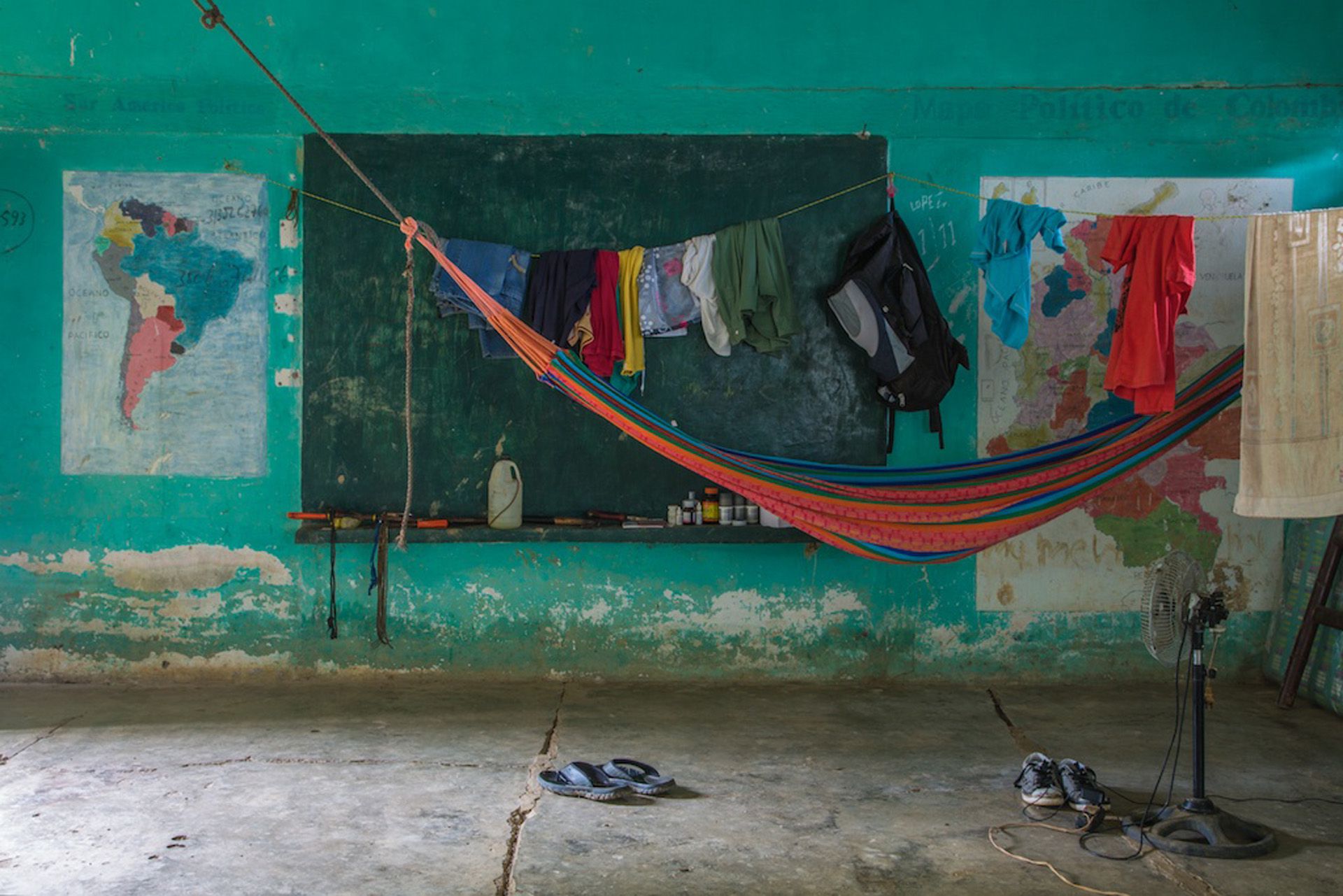
I heard this story inside a classroom of the abandoned school. It was Juan Carlos, a campesino from Chengue, who told it to me—he had survived that day by taking his family through the backyard and into the woods.
He lived in exile for years. When he finally returned, the abandoned school became his new home. One classroom is his storage room, the other is his bedroom, with a hammock, a fan, some clothes, and his sandals.
Juan Carlos spoke to us without fear. He is a kind, solitary man. He must be about thirty-five. In his eyes, he carries a deep sorrow.
Very few campesinos have returned to Chengue. The avocado trees they once lived from are now dead. It is a town hidden high in the mountains of Montes de María, difficult to reach by its muddy trails.
Chengue is one of the saddest places I've ever known. Silent and desolate. A town without music.
August 21, 2013
Bogotá
Elías was the guide who took us to the school in Bajo Grande, Sucre, in Montes de María. A sixty-five-year-old campesino, from this region.
It was a long trail. As we walked along it, Elías would point out different spots in the landscape, "Up there, there was a guerrilla camp… Over there, on that other mountain, they were bombed…"
He also told us about the horrible treatment and abuse against the campesinos, "They forced us to leave this place. They took our land. The guerrilla threatened us."
We crossed streams, entered the jungle; it seemed as if we would never arrive. Very far away, very deep. And suddenly, there was the school, preserved in its solitude. Silent.
Its eternit roof was almost intact. Its green blackboards, devoid of memories: no alphabet, no written numbers, no graffiti on its yellow-painted walls.
Its floor, muddy, slippery. Some light filtered through the holes in the roof. The two classrooms still had doors. Inside, the atmosphere was tight and damp. We were sweating. The silence that embraced us was the sound of birds, of nature.
Next to one of the classrooms, an old ficus tree, like a guardian, with its twisted roots tangled around its trunk.
The mosquitoes were ferocious.
At one point, I saw Fernando covered in mosquitoes—sixty, eighty, a hundred. They pierced through his clothes, devouring him. Yet they didn't bite me; something about my smell must have repelled them.
Without Elías, it would have been impossible to find this school, lost in the jungle.
How long has it been since these classrooms felt the presence of a human being?
October 27, 2013
Carmen de Bolívar
The morning began late, and when we finally set out, we took a dirt path toward Pijiguay, high in the mountains of Montes de María.
Rain and mud! The morning was dark and gray. On foot, through a narrow trail, we climbed—drenched—until we reached the abandoned school of Miramar.
It is inhabited by a local campesino, an older man, small, skin and bones. His last name: Aristizábal. "I was displaced twice." He said.
He offered us watermelon, sliced it open, smiled—warm and hospitable. "Take all the photos you want."
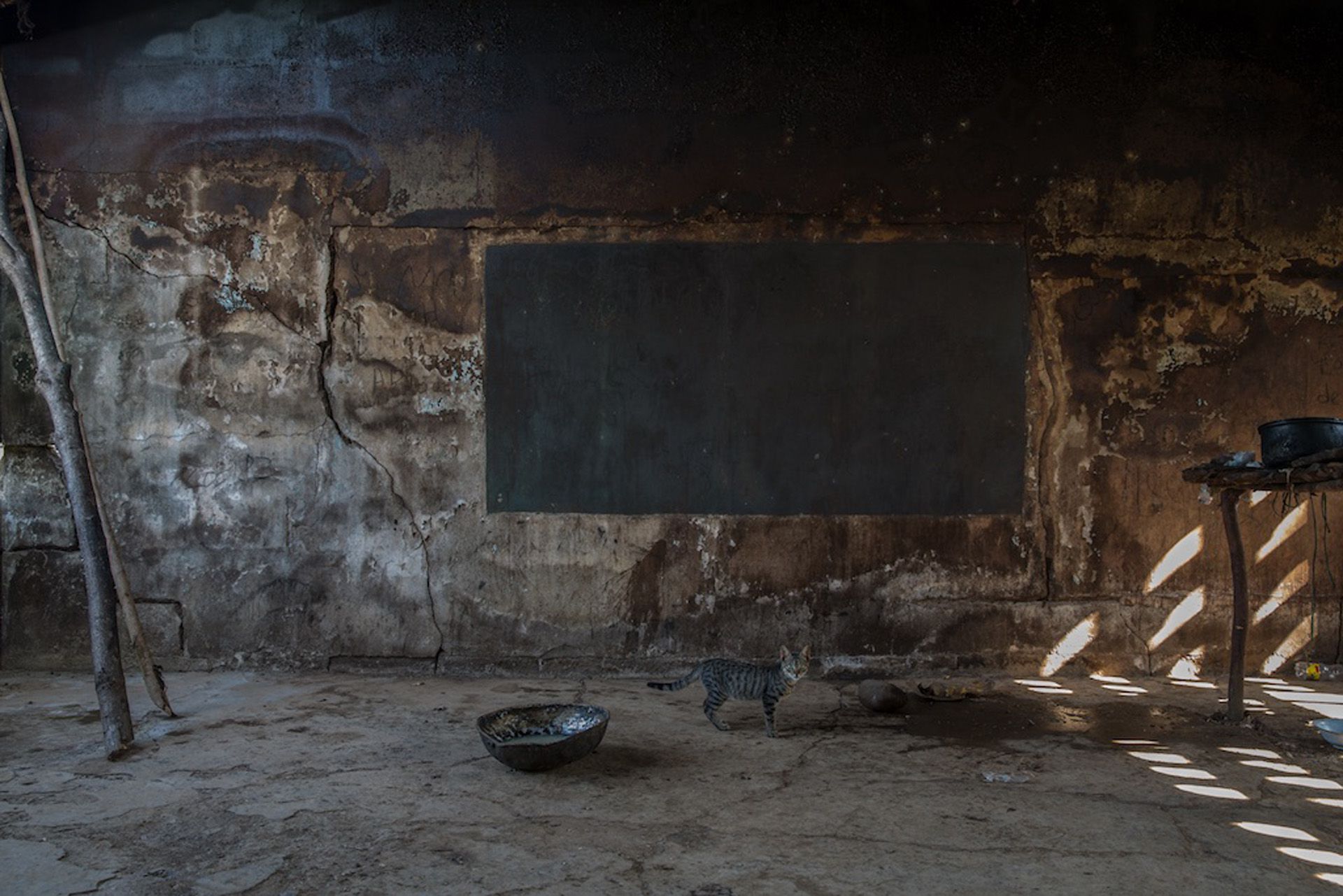
One of the classrooms had been turned into a storage room. There he hangs the tobacco leaves he cultivates.
The other had a dark, smoke-stained blackboard. Today, it's his kitchen, with a wood-burning stove. A small cat approached, walking slowly in front of the blackboard. Then it stopped—so still, it seemed like a stuffed toy. It looked at us. Its gaze flashed like two fireflies.
We didn't speak of the Pijiguay massacre, which we couldn't reach. The sun came out and warmed the day. Getting to Pijiguay would have meant two or more steep hours… Enough.
Descending from Miramar, despite the mud, wasn't hard. A blazing sun painted the landscape. My eyes soared across the vastness of Montes de María.
Resplendent, green, infinite!
December 31, 2013
Bogotá
On this last trip to the Montes de María, I returned to the Mampuján area to revisit the abandoned schools I had photographed in 2010.
I didn't know what I would find. There were surprises.
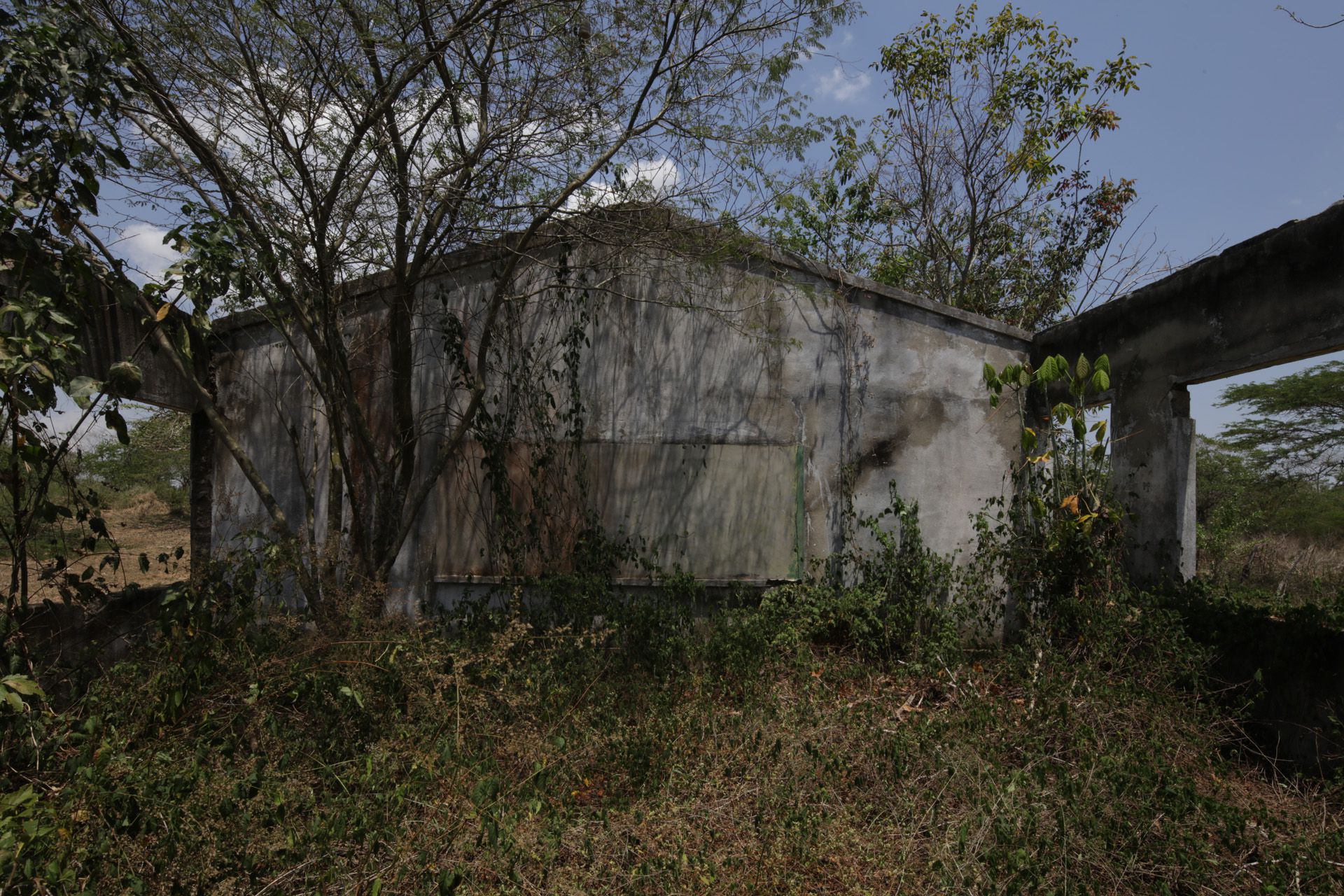
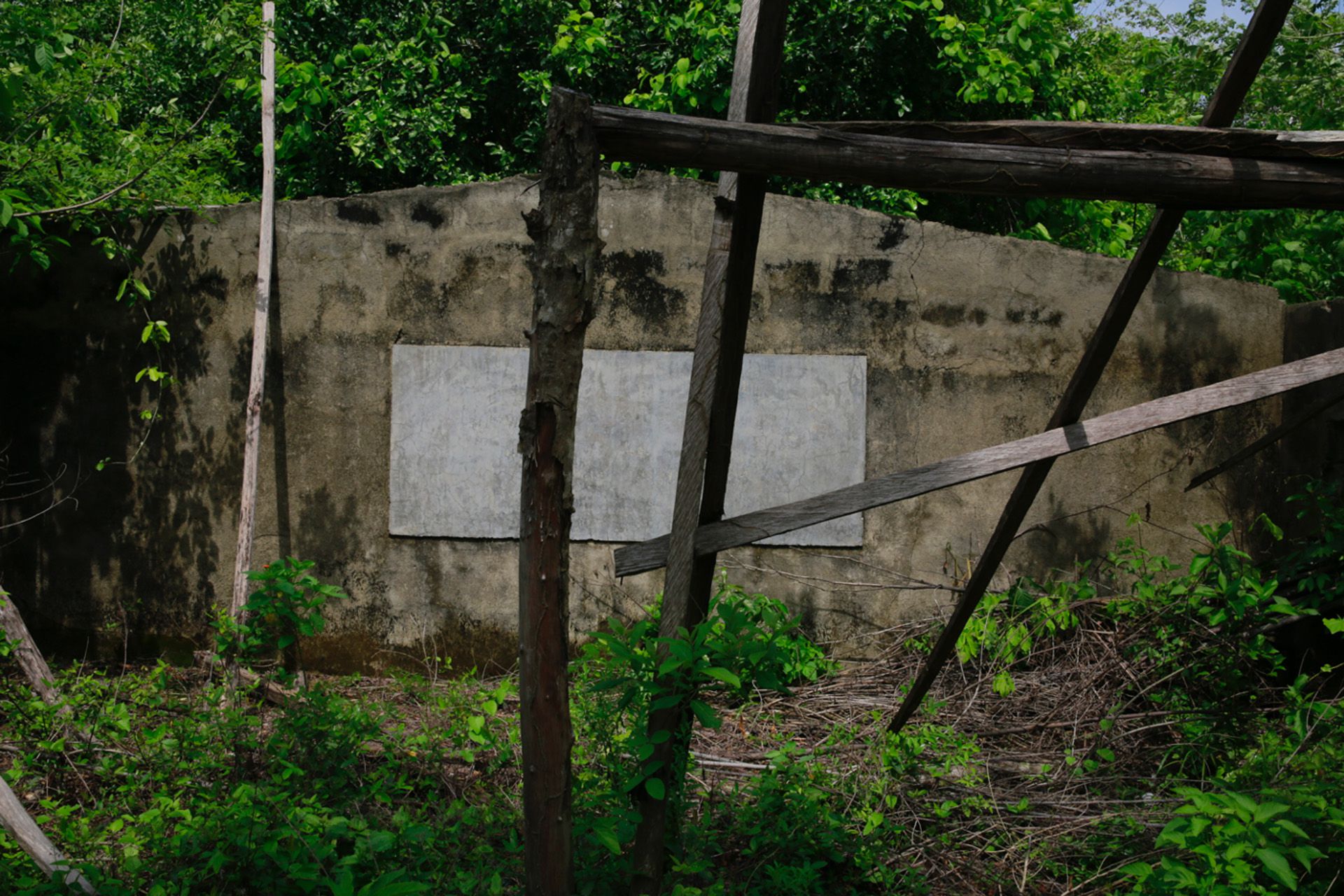
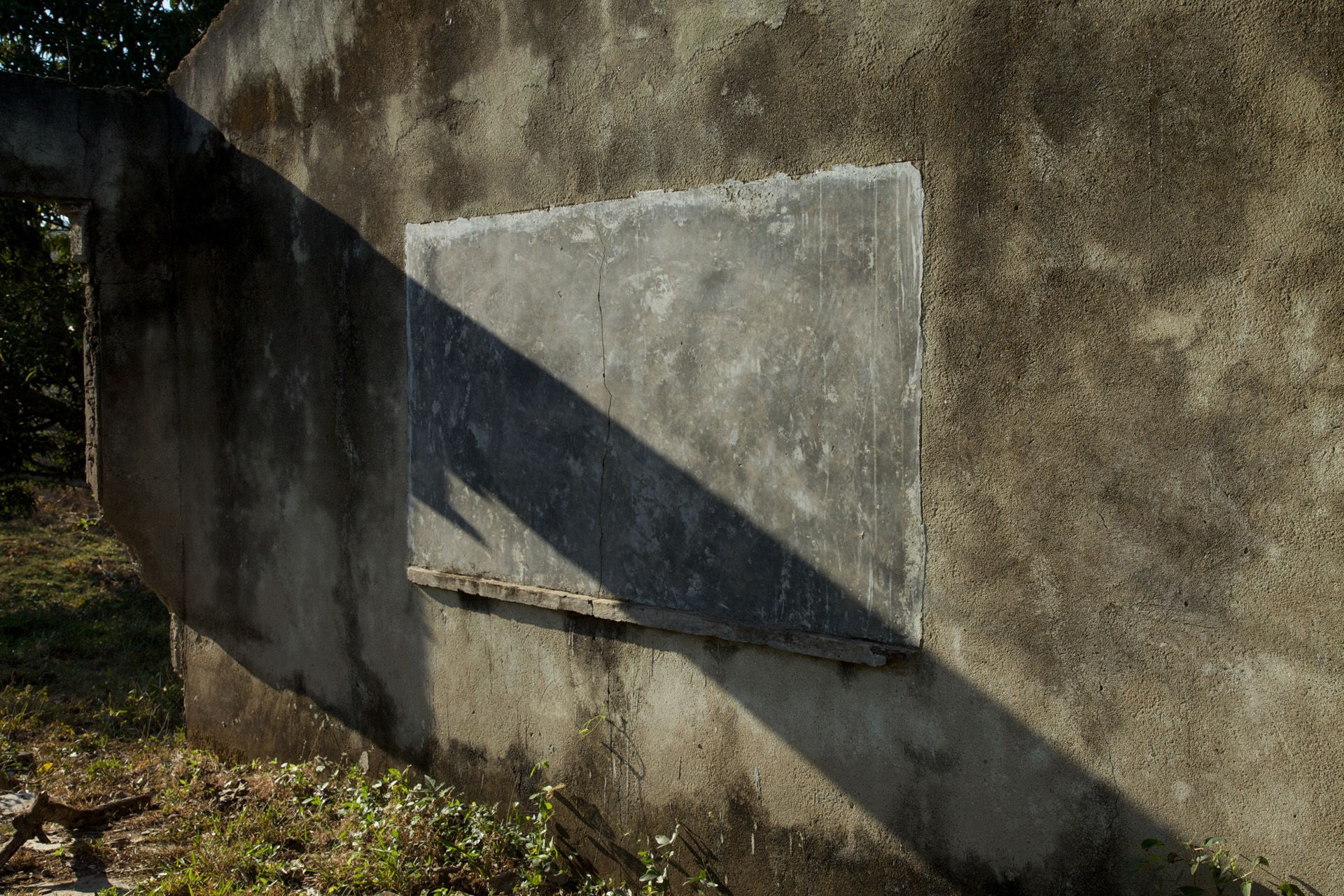
At the school in Munguía, that gray blackboard, crossed by a black shadow—the one I called Dead Silence had already crumbled to pieces.
Now I value that photograph even more, for it preserves the memory of that board, which had long lost the green it once bore.
In 2010, I also took a photograph of the school from the outside, from the back. It shows that the school was already a corpse, roasting under the relentless sun of Montes de María. That corpse no longer exists—it collapsed.
In Munguía, I felt immense sorrow. And I also felt how, through my photograph, that school had been preserved.
Everything passes. Nothing stands still. Heraclitus's water! The water in which, in the end, everything and everyone drowns.
December 31, 2013
Bogotá
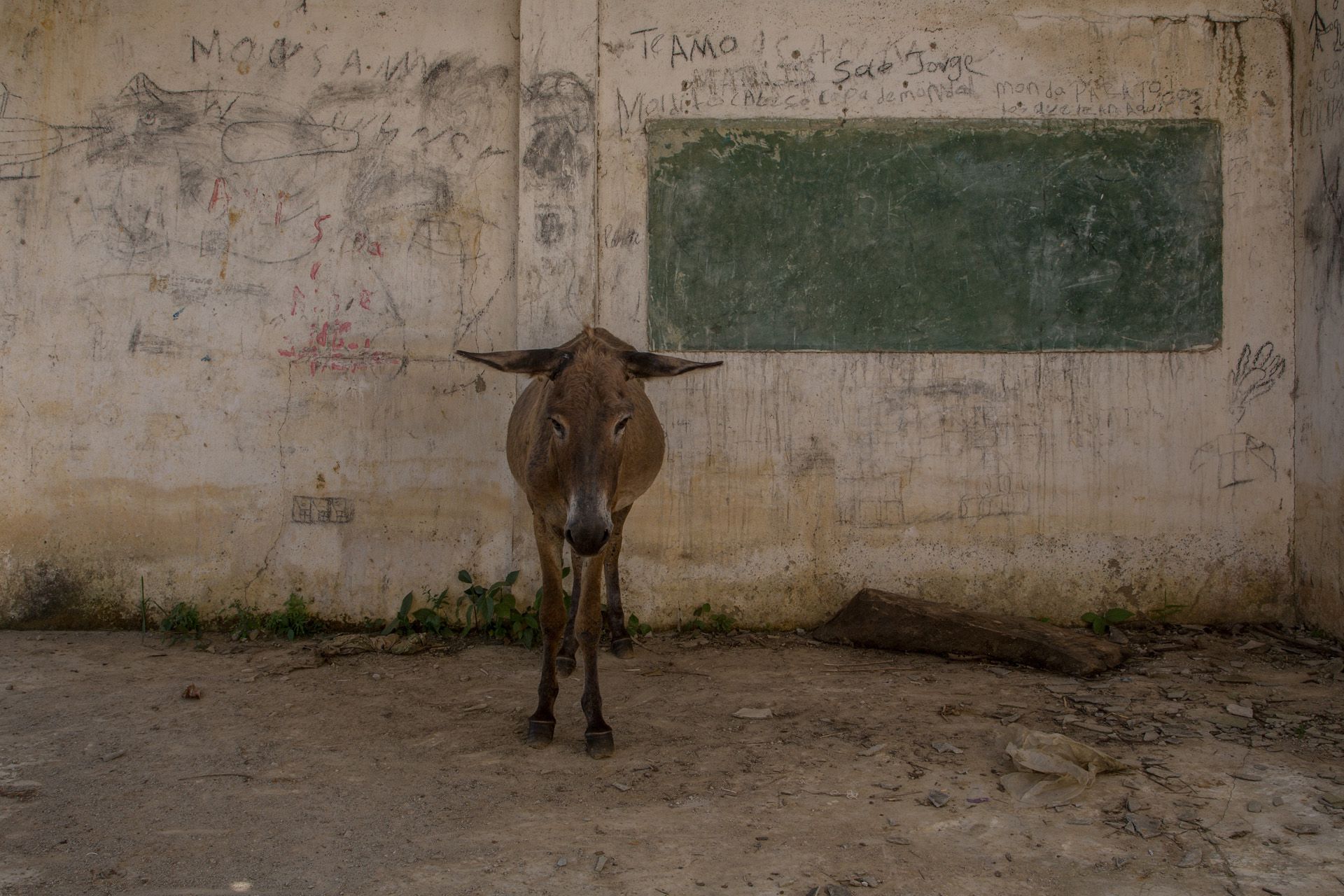
"It's very likely that the donkey took a child to school and back. The donkey came back for the child who is no longer there."
—Gabriel Pulido, campesino from Mampuján.
January 2, 2014
Bogotá
We returned to Santa Fe de Icotea along a steep, winding trail of rock and soil. Remote. Distant.
"The school is across from a big bonga tree,"17 a campesino reminded us as we began to climb.
The undergrowth had swallowed it. So hidden that if it weren't for that majestic tree, we never would have found it.
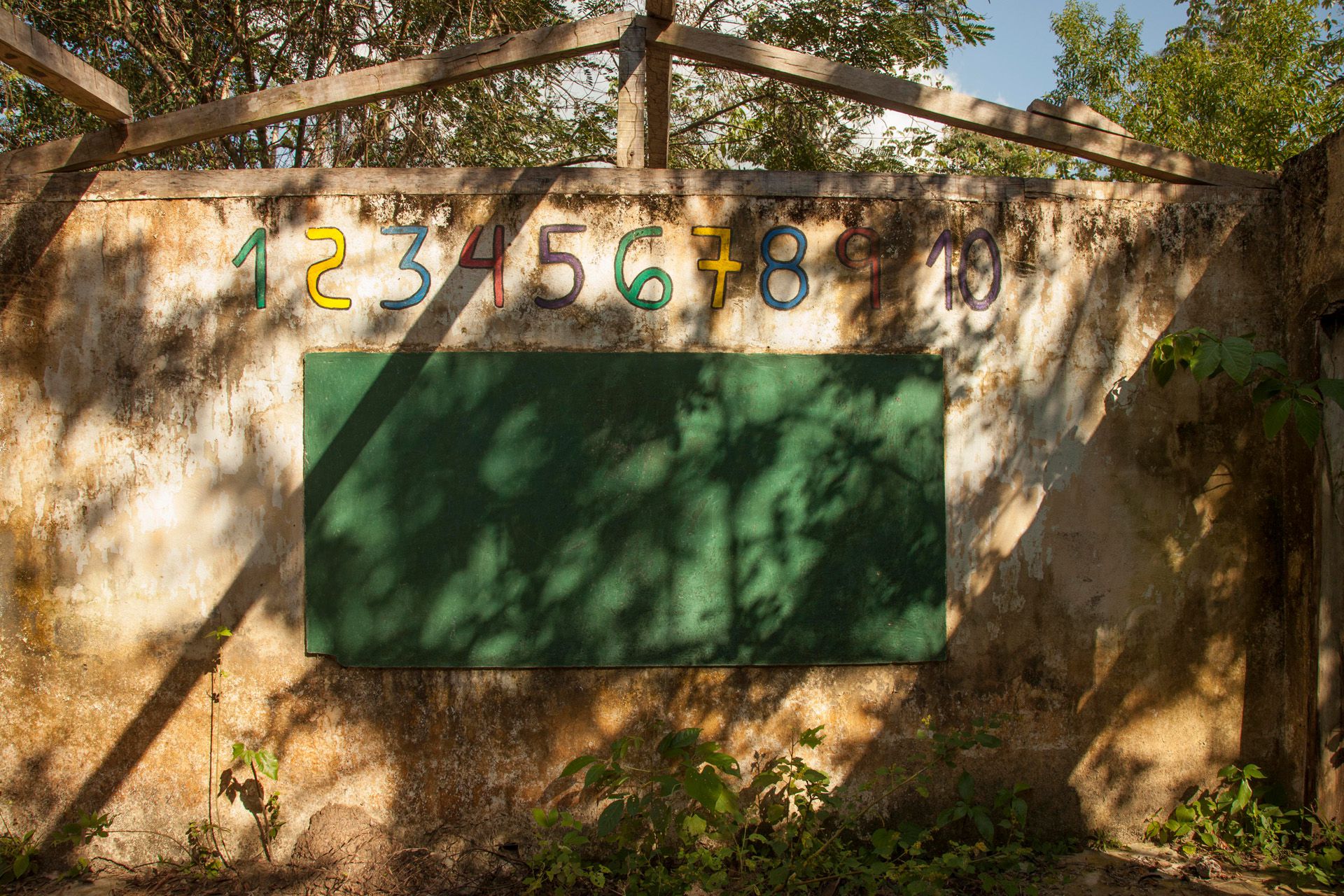
That tree had "seen" it all—the day no child returned, the day the last teacher walked away, the day the families vanished. It "watched" as the school was dismantled: its roof gone, its doors torn away. It "watched" as the brush began to swallow the two small classrooms, once painstakingly decorated with letters, with numbers from one to ten, and the signs for plus and minus. That tree, too, is a witness.
Some teacher must have painted those cheerful details on the school walls—details that still move you the moment you step inside.
Inside, everything was still. Not a single leaf stirred. In that maze of dry and green leaves, the heat, the sweat, the fear of stepping on a snake—but nothing, absolutely nothing stopped me from once again feeling the energy to photograph this school that shattered me all over again.
The intense light, striking the letters and numbers—that light illuminating those dead walls—remains fixed in my photographs. And through my photographs, those walls live again—before the jungle devours them, soon, forever.
17 Kapok tree.
January 21, 2014
Montes de María
The school of Los Aceitunos is far away, lost in the heart of Las Aromeras, in Montes de María. It's the dry season. The narrow dirt road stretched endlessly ahead. We didn't come across a single campesino. And finally, around a bend, the school appeared—in ruins, surrounded by dry brush. Desolate. Alone.
The school was bombed in 2005. Its roof lay in pieces on the ground. Its blackboard—broken—still hung on the back wall: a mutilated board.
Stepping inside felt inhospitable. Thorns had overtaken the classroom. A forgotten silence embalmed the space.
I stood there for a long while, staring at the mutilated board. Close by, I saw a dead spider, hanging by a thread. Swaying in the wind, it seemed to perform a dance of death.
Here, as in so many other schools, war had the final word.
December 20, 2014
Las Palmas, Bolívar
Nowadays, the road to Las Palmas is in better condition, and the town finally has electricity from a generator.
On this visit, I met Carlos Vásquez, a soft-spoken man, around sixty-five years old. He is a true gentleman. He guided us to the school, which is now consumed by solitude.
Silence with Crack is reaching its end. I photographed the blackboard again—a blackboard that leaves me speechless.
Mr. Vásquez told us how he witnessed the paramilitary massacre in the small plaza:
"Before killing anyone, they all sat down to eat chicken stew. After they'd finished, the horror began. They brought the children into the square and started crashing two jeeps together—one belonging to the community, the other from San Jacinto. The drivers were paramilitaries. They rammed the vehicles together, and I helped pick up the children who were fainting from terror. Then they started killing. First a young man, then his mother, then another boy who begged: 'Don't kill me, I'm innocent.' After shooting him, the commander stood over his body and said: 'Innocent or guilty, he's there now.' All of this in front of the community, being forced to watch."
Carlos Vásquez also told us that when he found his son in the street that day, the boy ran up and jumped into his arms and, sobbing, said: "Papi, papi,19 you're alive!"
19 Daddy, daddy.
August 18, 2015
Cartagena
To reach the abandoned school of Santa Cruz de Mula, the path winds through the jungle, crossing various streams. A green path—dense and difficult—rising and falling, falling and rising again, stony and steep, among towering trees. I felt as though I was traveling to the ends of the Earth.
A small bahareque21 house with a palm roof and a dirt floor appears at the edge of the trail. There lives Doña Rosalía, alone. We visited her again—still seated in the same chair, in the same corner of her home. We had met her a year ago, and I remember she had spoken of her husband, who passed away at the age of a hundred and six—still riding his mule at that age.
Doña Rosalía, with her distant gaze, clouded by the years. This time, she didn't recognize us. She feeds her pigs green plantains. She also has chickens, dogs, and a cat. Her animals are her companions.
Sitting in her chair, I can't help but feel she is waiting for her death. She speaks very little. She is cloaked in the lush green of the jungle. A stream can be heard, just beyond. "The guerrilla used to pass through here and cook their meals," she told us when we first met.
The earthen map of her face, her quiet eyes, her stillness… I cannot imagine the weight of her days. Could she be ninety?
No radio, no television—no news beyond her home. Only the pure air of the forest. She lives in a forgotten place, in a remoteness few ever reach…
Doña Rosalía carries an unfathomable sadness that cuts right through me. Who does she speak to in the depths of her solitude?
21 Wattle and daub.
December 29, 2015
Bogotá
I've just returned from the Montes de María, where I explored a new area: Palo Alto, in Sucre.
We left the hotel in Cruz del Vizo at 4:30 a.m. An hour later, we arrived in Palo Alto, where our local guide, José Domingo—a young man of few words, also displaced from his lands—was waiting with the saddled mules. Our group was Palencia, Fernando, Jader, Johnny, and me.
For years, this region was controlled by the guerrilla. Then the paramilitaries came in and, in the rural settlement of El Toro, they murdered five campesinos. The inhabitants fled.
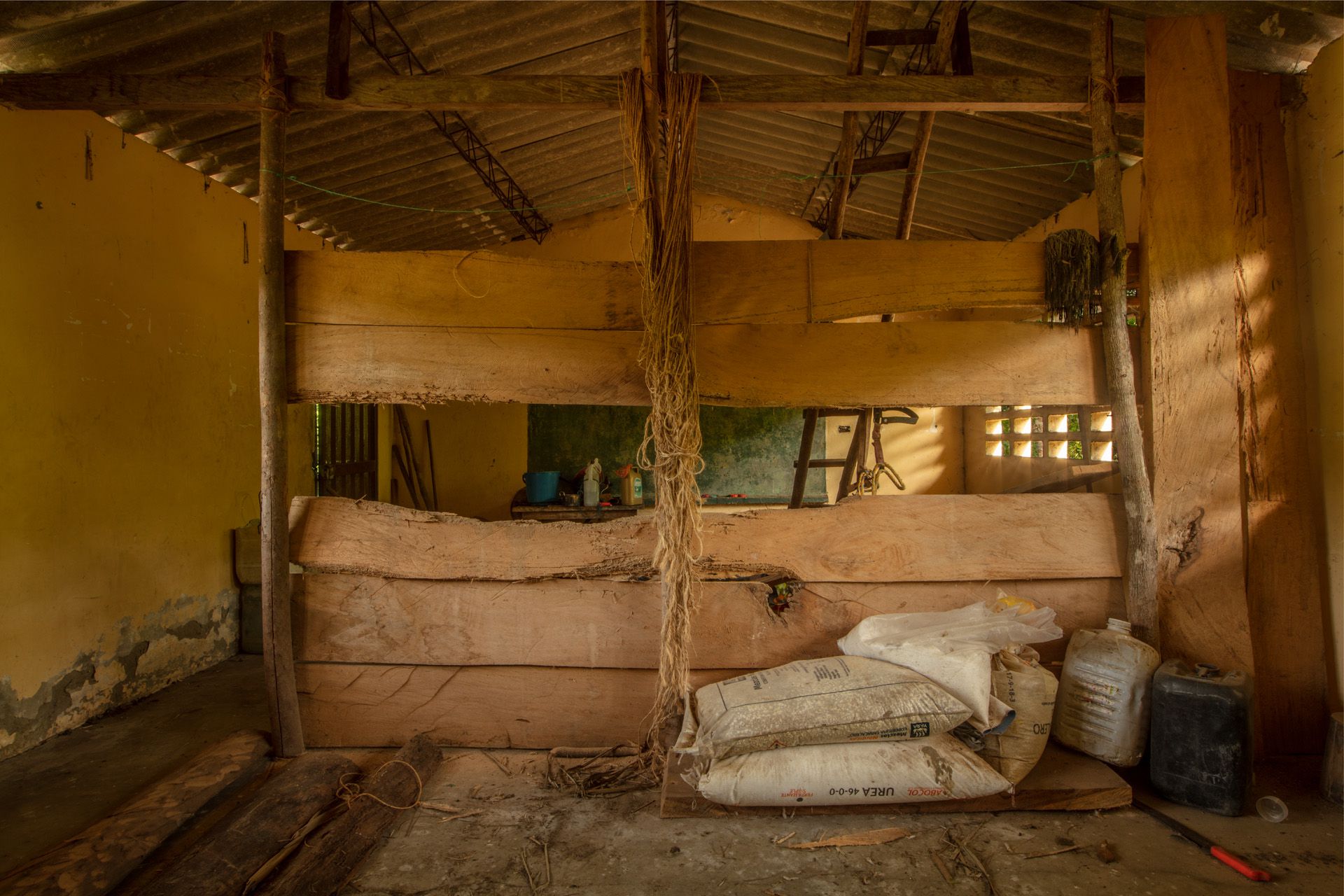
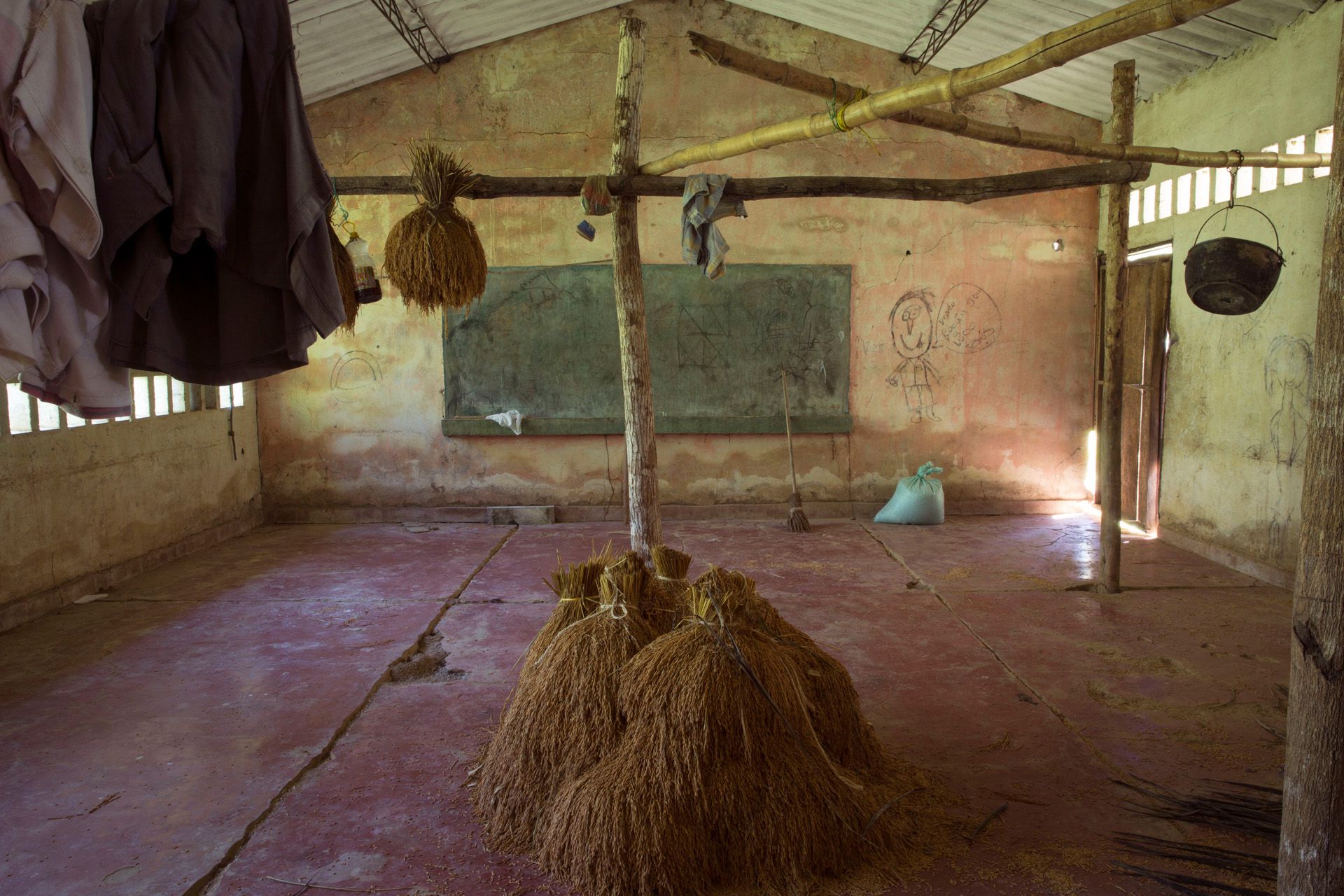
We reached the heart of Palo Alto by mule. My mule was slow—very slow—with a small, hard, uncomfortable saddle. We rode along shaded paths and clear fresh streams—lush trails that led us deep inside the territory, to a school that is now a storage room, where the few campesinos who have returned keep the rice they harvest.
Israel, a sixty-four year-old Black man, lean and smiling, friendly, opened the school for us. It is located in what was once El Algarrobal, a small village where not a single house remained. He returned a few years ago and built a new home with a palm roof. "The paramilitaries displaced and murdered people. They burned my house. I wasn't there that night—or they would've burned it down with me inside," he told us.
Israel led us to a spring with cold, refreshing water. We bathed there. I laid in it, floating. I stayed in the water for a long time. I completely forgot about the mule. I had never ridden a mule before. As a child, I learned to ride on polo horses my father brought from Argentina.
I was a pampered child. Haras Santa Lucía, our thoroughbred horse farm, lay about twenty minutes from our house in El Poblado, Medellín. I often walked there alone, just to see the horses. I would leave my house, pass beneath giant samán23 trees, slip through a thick bamboo fence, and cross a wooden bridge over a stream. Then I'd wander into vast pastures of tall grass—so tall, I was afraid to step through it.
I remember one day, on my way home after visiting Nur U Din, an English stallion brought for breeding. Black, with a glossy coat, gentle and of immense beauty. After a heavy rain, I noticed large puddles in a pasture near the stream, and in one of them, fish were leaping. I stopped. I touched them; the water was warm. The fish jumped as if gasping for air… I couldn't understand why they were there, in the middle of the pasture, away from the stream. I looked up at the sky and saw heavy black clouds. I thought the fish had fallen from those clouds. Was I six years old?
We returned to the hotel in Cruz del Vizo around six in the evening. Exhausted, with our leg muscles sore and stiff… but I didn't care. We had been to a school farther away than the island of Java. And we photographed it!
And the photograph revealed something far beyond… beyond those five slow hours on mule… beyond, lay my childhood with Nur-U-Din—that splendid, gentle, proud horse.
23 A tree in the mimosa family that in natural spaces can grow up to sixty meters tall and have a crown diameter of fifty meters.
February 20, 2016
San Cristóbal
Alexandra was born here, in San Cristóbal, and took us to meet her friend Osnilda, before taking us to a school abandoned by war. As a child, she was taken away from the village by her grandmother, so the guerrilla wouldn't take her.
"When the guerrilleros came into my house and asked for water, my grandmother shook so much that there was hardly any water left in the glasses by the time she reached them," Alexandra told us, standing in the corridor of Osnilda's house—a friend she hadn't seen in years.
"When Alexandra left, we grew apart," Osnilda said. "When we were little girls, we were inseparable."
"Do you remember when a guerrillera killed, in front of everyone, a boy they called El Chue?" Alexandra asked.
"Some women wet themselves, and the commander ordered: 'No one cries!'," replied Osnilda, who had never left the village. "Only now have I overcome the fear I had of the dead. I used to scream when I saw them. Here, our culture vanished—joy vanished—bullerengue28 vanished, the drum and the llamador,29 the marimba,30 the Black folk dances… everything was lost. All that remained was the silence of the cantadoras."31
"Are there no cantadoras left?," I asked. They then took me to meet Mrs. Fernanda Peña, the last cantadora of San Cristóbal.
"It is my pleasure to meet you," she said, pressing my hand tightly in her humble home. She is nearing one hundred, her gaze still vivid. In her fading voice, she recalled a few verses:
I sing these verses, I sing them with candor,
they never leave me— they are always in my mind.
I have no special grace, yet I have verses aplenty,
they come out to the beat, they arrive in rhyme.
I had not sung in years, for I was afraid,
for I was far away, in a land where I did not belong.
San Cristóbal—a sorrowful, desolate village, so still that there was time to observe, time to listen and feel, time to forget time itself…
28 Popular rhythm, a variant of cumbia.
29 Percussion instrument.
30 Percussion instrument, similar to a xylophone.
31 Colombian term for Black, female singers performing verses, accompanied by clapping and drums, that preserve the history of their people.
April 9, 2016
Cartagena
Today we left the hotel in Carmen de Bolívar at 6:00 a.m.
We first went to Naranjal, a small rural community. On the side of the road, we found an abandoned school with a single classroom. On its only remaining wall, the blackboard awaited—small and square. I had never seen one like it, a vibrant green, like an emerald.
Then we continued towards Colosó, but before arriving we stopped at a small home. That was where we met Don Ramón Rivera, eighty-one years old—tall and slender, with a wide, welcoming smile. A smile so wide it was easy to see he had only one tooth left in his mouth.
Don Ramón told us that the cruelest violence in this area took place between 1998 and 2007. "Many people left. No one stayed. Many campesinos were killed. It made you want to cry. I stayed… I didn't leave."
Don Ramón and his son Jorge led us to the abandoned school in their rural community, Asmón. "This is where I studied. Teachers were highly respected. It was a joy to come here. There were about forty students," said Jorge while we photographed the blackboard. He is a strong, smiling campesino with vibrant green eyes, just as vibrant as the emerald green of the first blackboard that had surprised us that morning.
Then we went to his house—a rancho35 with a palm roof and a dirt floor, and impeccably clean. Strips of magazine cut-outs hung inside, swaying in the breeze like colorful mobiles, enlivening the home.
We sat down. They offered us a tinto36 prepared on a wood-burning stove. Oh, how I love it!
These two schools were unknown to our guides. Yet we stumbled upon them, shrouded in silence, beckoning us to not be forgotten.
35 Ranch.
36 Colombian black coffee.
July 13, 2016
Florencia, Caquetá
We left the hotel in Florencia at six in the morning today, headed for the town of Zabaleta, where we boarded Rodolfo's motorboat.
We traveled along the Zabaleta River. On its banks we saw yarumo42 trees, bamboo groves, and massive trees like the higuerón.43 We also passed cattle farms and coca crops. We continued to the mouth of the Fragüita River, where the waters are hard to navigate: rough and rocky. We were searching for the La Bocana del Fragüita school.
Silfredo, a former FARC combatant, painted a picture of this school when he attended the art workshops we organized in 2008.44 The guerrilla had accused the teacher of collaborating with the army. In his painting, she appears in front of the school, bound at the wrists between two guerrilleros. Later, in a small boat called La Peligrosa, and farther on, her body hangs between two dead trees.
How could we not come to this school!
Today, it's a corpse choked by underbrush. A single classroom. No doors, no windows, no roof. Its blackboard wrapped in a mournful silence.
"I studied here as a child… It was the people who lived around here who built this school. There were about forty students. It was still running in the year 2000," Rodolfo tells us.
I write inside the school and wonder about the teacher: What was her name? What happened to her body? Was it thrown into the river? Did someone manage to bury it? Where is she now?
In Silfredo's painting—and in the photograph we took of the blackboard—her story will not be erased.
42 *Guarumo*, a tree that can grow up to twenty meters tall, whose wood is used for arts and crafts.
43 A tree that bears fruit resembling figs.
44 Painting workshops that refer to the work *The War We Have Not Seen* (2007-2009); laguerraquenohemosvisto.com/en/
August 18, 2016
El Respaldo
7:12 a.m.
On the way to the rural community of El Respaldo, we travel with Don Raúl, a local leader.
He recalls his four years as a teacher at the school of El Respaldo.
"Why do the guerrilla recruit children?," I ask him.
"It's easier to indoctrinate them, both militarily and politically," he explains. "Children are naturally drawn to weapons and uniforms. I almost lost one girl—she was about to be taken by them. I had to pull her out of school and bring her to El Carmen."
11:15 a.m.
We arrive at the abandoned school in Madrid, in Las Aromeras of Montes de María. The school is half swallowed by thick undergrowth. As we entered, a vine immediately clung to our clothes—what the locals call cadillo or amor seco.48 "Don't touch that," Jader warns us, then points out other plants:
Túa-túa: for lice in children.
Balsamina: for snake bites.
Anamú: for colds.
Carne asada: used in cooking.
Pela mano: if it grabs you, it causes itchiness.
Ojito de Santa Lucía: for eyesight.
Oreja de mulo: useless.
Then we continue in the jeep along a narrow trail of stone and dirt.
12:09 p.m.
We arrived at El Respaldo. A few abandoned houses, lost among the brush.
The school—now a corpse of bricks. Small. Just a single classroom. No blackboard.
A mute school.
48 Twining climber characteristic of tropical regions.
August 22, 2014
Cartagena
To reach Bongal II, we walked among very tall, thick cardones.50 We couldn't stop looking at them, admiring them. We like to stop and marvel at nature's wonders.
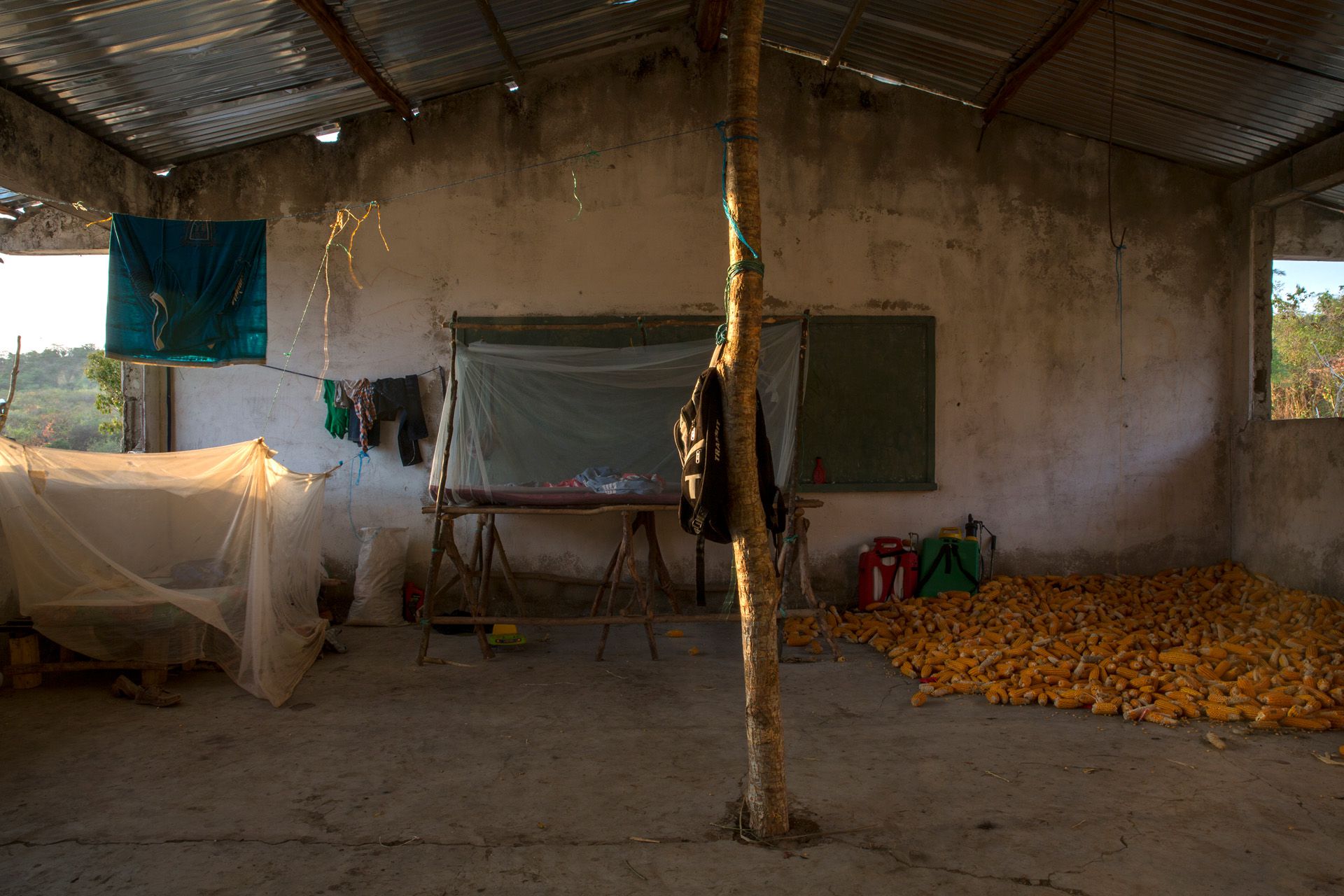
Getting there was easy. We climbed a pleasant trail and at the very top of one of the hills, we found the school reinhabited by some campesinos. They welcomed us and took us to the classroom.
Inside, there were wooden beds they had built themselves. In front of the blackboard, the baby's crib with its mosquito net was unforgettable.
The setting sun suddenly streamed in through a broken window. It lit up a heap of corn in a corner of the classroom.
It was a golden moment. I took the photograph.
50 The *cardón* is a species of giant cactus, *Pachycereus pringlei*.
October 12, 2016
Cruz del Viso, Bolívar
To reach the school in Caña Fría, the journey on horseback took nine hours—there and back from Palo Alto, in Sucre. Narrow dirt paths, full of mud. It's the rainy season. The horses slipped, and several times I had to dismount. I was with Fernando, Emmanuel, and our guide, José Domingo—a quiet man, kind in his silence, attentive. A good guide who knew the few campesinos we met along the way.
This is a remote territory, inhabited by Black communities, crossed by a stream of abundant water, dense and jungle-like, full of towering trees. Very few campesinos have returned here after the paramilitary massacre of five men in the rural community of El Toro in the year 2000.
In Caña Fría, we once again felt hospitality: the tinto, brewed over a wood fire and served in a small tin cup, a pause in our journey—a pause to talk with the campesino and listen to him, a pause that stretches out and in which one might learn something from someone who returns to his land after so many years of exile.
We had that coffee in Danoi's house. His mother offered it to us. Danoi—young, handsome, with a bright smile—said: "Welcome," before guiding us to the school abandoned because of the war.
One of the classrooms lay in ruins. The other had been transformed into the home of a young campesino, with his bed and cooking pots among sacks of rice and corn. "This is where I had my first classes," Danoi told us.
On our way back, we rode again through the same stream, beneath the majesty of its trees—copé, suan, caracolí, jobo—and farther ahead, the sky began to darken. Thunder and lightning. A downpour soaked us. The raindrops were so thick, "they looked like glass," Fernando said.
At one point, Emmanuel's horse sank into the mud and reared. Emmanuel lost his balance and fell. The mud cushioned his fall. Our guide's horse also threw him—its four legs sunken deep. José Domingo struck it with a branch, the horse leapt, and he fell. The thick mud protected him too.
These tropical storms shake me—they make me feel the immense force of nature, they oxygenate me and make me cry out: "I'm alive!"
We reached Palo Alto half-dead. Half-dead. Nine hours on horseback to reach that school, to see it, to photograph it—so that it exists and is not forgotten. So that, in its silence, it might speak of education as a victim of war.
January 19, 2017
Bogotá
At the Resguardo54 Páez school:
After lunch at his home in the small village of Berlín, Caquetá, Rigo took us to a school abandoned by war, hidden behind the portals of the Fragüita River. It was about an hour's walk along a narrow trail swallowed by the jungle. Once again, I stood in awe at the woven nests of the mochilero55 swaying from the high branches. Again, I heard its liquid song, and wished it could nest forever in my ears…
On the edge of the trail, Rigo picked some leaves off a vine clinging to a tree trunk. He opened his hand and said: "This is arnica. Do you know it?"
The school turned out to be part of an indigenous reservation. Small—just a single classroom, with two blackboards facing each other. Scattered across the floor lay children's Spanish and math notebooks, from first to fifth grade. The school's name was Centro Educativo de Los Andes. Just a few steps away, stood the forgotten teacher's house, where we found more notebooks, some eaten away by termites. I read his name on one of them: José Ulcue.
His simple handwriting, in pencil, looked as if it had been written at night, by candlelight—as he reflected on his students, as he planned the next day's lessons:
March 5, 2014. Fourth grade. Language. Students Pablo and Edwin failed the exam. They show no interest in class.
April 11, 2014. Fifth grade. What is a narration? What is a metaphor?
April 23, 2014. Third grade. Yulissa is distracted and doesn't finish her work. I will speak with her mother again.
May 22, 2014. Second–Fifth. Language. Failures: César, Yulissa, Norvey.
May 31, 2014. Third grade. Bring a written myth or legend from the region.
July 2, 2014. Second grade. César often shows up with his shirt dirty.
July 14–16. Fifth grade. Language. What is love?
September 3, 2014. Second grade. Santi always arrives on a donkey, which comes back to fetch him after class.
There were loose pages among the notebooks. One was a letter written by a mother to the teacher. She writes about her son César, explaining that their home is very far away, and during the rainy season the path becomes mud and the streams swell. That's why sometimes, her son cannot make it to school.
Another letter, written in pencil by the teacher, was addressed to the President of the Local Community Council:
"I send this note urgently, because the school is in very poor condition. The cattle leave urine and dung—it's unbearable. I am hoping for a prompt solution. Thank you for your attention."
The last entry in José Ulcue's notebook:
October 15, 2014. No one came to school.
54 In Colombia, *resguardos* are collective property, territories given to indigenous communities for their own use.
55 Shiny cowbird (*Psarocolius*).
March 12, 2017
Las Palmas, Bolívar
After a few years, I return to Las Palmas to visit Silence with Crack.
The blackboard has crumbled into pieces. Its memory lives on in the photograph.
I asked about Mr. Carlos Vásquez, who had once told me stories of the horror the town went through. They told me: "Mr. Vásquez passed away on November 26, 2016."
His neighbors say he was the inspector of Las Palmas. He was deeply loved here. He must have been around seventy.
And here I am, standing in front of his grave, in the earth. On his tombstone I place a small bouquet of purple flowers—La siempreviva.56
56 The everlasting blossom.
November 19, 2017
Carmen de Bolívar
We arrived at the school called La Estrella.
Humble, only one classroom. A school abandoned by war.
Inside, a sorrowful blackboard, immersed in silence. One of the most touching classrooms I've come across in all my journeys through Montes de María.
The dry grass piled on the floor lent the room a different kind of silence—a unique and overwhelming silence. A sacred silence.
That day, across the lowlands by the Magdalena River, a most beautiful tree, a guayacán,58 caught my eye. What dreams might embrace me, beneath its magnificent shade?
We had never been to this area before. Afterwards, we traveled to a very clean town, full of brightly colored house, a well kept and peaceful village—the most beautiful I've seen in Montes de María: San Andrés.
There, a woman sitting in her rocking chair on the front porch of her house told me: "Around this time of day, we used to lock ourselves in—whenever the guerrilla or the paramilitaries came through. We'd shut our doors. That always made them angry."
I looked at my watch. It was almost three in the afternoon.
58 A yellow guaiacum, a tree that can grow up to twenty-five meters tall and has striking deep yellow flowers.
June 7, 2018
Montes de María
I write while sitting in the Fernán Díaz school—another one abandoned by war—now swallowed by wilderness and surrounded by the clamorous chorus of guacharacas.61 An uproar of a thousand voices, at once overwhelming and enchanting.
We're in the rural community of Bajo La Palma, accompanied by two local campesinos: Don Joaquín, seventy-two, and Don Leónidas, seventy-nine—both strong as oaks, warm and smiling.
We arrived at the school by way of a beautiful path surrounded by palma amarga62 that led us to a valley of many shades of green. Bajo La Palma, with its homes of palm roofs, is surrounded with majestic trees like the caracoli. "Here, we protect these trees," Don Joaquín tells me proudly.
The school is small, with three classrooms. "Who was Fernán Díaz?," I ask them upon seeing the name written in blue letters on the façade.
"He was a campesino leader, murdered here around 1985. A tall, dark-skinned man. They killed him in his home, six shots in the back. He was one of our most important leaders."
Don Leónidas and Don Joaquín speak with conviction about the cruelty endured by the campesinos of this region for many, many years. "Here, there has been extreme abuse at the hands of the paramilitary, the army, and the guerrilla," they tell us.
Don Leónidas tells us that here, in Bajo La Palma, the FARC recruited eight young men, "They're all dead. They took my son by force—he was twenty-four. Either he went with them, or they would kill him. A few years later, he was found dead; it was the guerrilla who notified me. I am still waiting for his body."
Suddenly, from within the trees, came one of the most melodic bird songs I had ever heard in Montes de María—a song of sweet notes, as sweet as candy melting in my ear…
Don Leónidas, surprised by my silence, said, "That's the song of the tumba yeguas."63
61 In Colombia and Venezuela, screeching bird in the Galliformes family. Chachalaca (*Ortalis ruficauda*).
62 Bitter palm (*Sabal mauritiiformis*).
63 A bird in the sparrow family, also called black-striped sparrow.
February 1, 2019
Bajo Grande, Sucre
9:27 a.m. I'm writing while sitting on a fallen tree trunk.
Many years later, we returned to this small school with two classrooms. I recognized it by the ficus tree—its thick, twisted trunk still standing like a guardian at the entrance.
We arrived after a two-hour journey by jeep along a clear path surrounded by wilderness. We saw very few rural homes.
It's summer. The sun is scorching.
Fernando and I were surprised. The classrooms, now roofless, with layers and more layers of dead leaves and dry shrubs that with the wind ripped the silence of the school.
We came with Jaime Montes, an old campesino who returned to Bajo Grande after seventeen years of exile.
"In February 2000, after the massacre of Salado, we left with my relatives. Nobody stayed. There was a lot of fighting between the army and the guerrilla here," he tells us with his battered voice, before showing us the bullet holes on the walls of the school.
All of a sudden, the harsh penetrating cawing of a bird…
"That's the yacabó. Its cry announces death. We should make a cross with ash on the path. The cross wards off its song," says señor Montes.
When the yacabó cawed again, I recalled some verses by Edgar Allan Poe that I used to recite in school, during my youth:
Then I went to the window and opened it, and a black shadow slipped in…
Why are you here, raven?
What message do you bring from the night and the wind?
And the raven answered: "Nevermore."
What does that mean…? Why do you say "Nevermore"?
And the raven answered: "Nevermore."
Nevermore… Nevermore… When will we be able to say these words, to say adieu to war in Colombia?
September 12, 2019
Naranjal, Montes de María
We are standing before the school whose photograph we titled Emerald Silence.
Today, we found its blackboard on the ground, in pieces. Only a few green fragments scattered across the floor.
This witness to the war has vanished—but in the photographs from our earlier visits, the blackboard resists death.
October 18, 2019
La Cedro, Caquetá
We reached La Cedro by way of a trail overgrown with lush, dense vegetation. The sun filtered through the leaves, and the greens burst in every shade of light and shadow. We crossed a stream of transparent water, its stones covered in soft layers of moss. In the heart of nature, the gaze expands, takes flight.
The path was so beautiful, we didn't realize it had taken us two and a half hours on mule to get there. To ride a mule is to cross time—to enter another era.
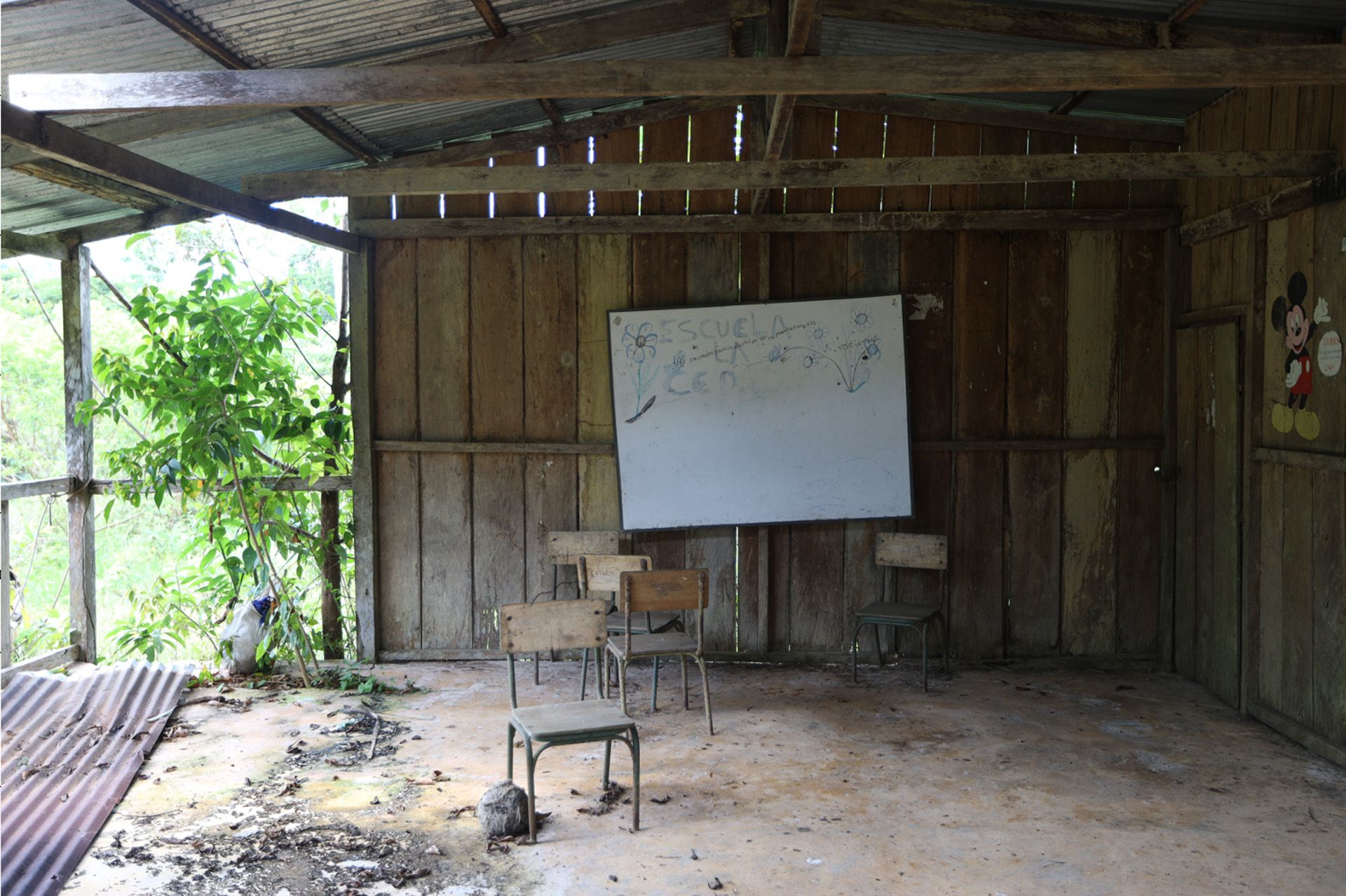
There is not a single house left in La Cedro. Deep in the mountain the small wooden schoolhouse stands alone. A single classroom. Still with a roof. Inside, a few desks. At one of them, I sit and write.
The blackboard, very small, has drawings in blue ink. Above them, some letters are still visible: "Escuela La CED." The R and the O are missing. Everything fades. Everything is forgotten.
We came to these lands with Edinson, who studied here twelve years ago. La Cedro was his first school, before he joined the guerrilla at the age of eleven.
"This small school was built by the community itself. Teacher Yarledis used to sleep here. She had a one-year-old daughter—they lived right here. She was young, deeply committed. She would stay for a whole month at a time. She avoided leaving so as not to run into trouble with the guerrilla," he tells us.
Beneath the chairs' legs lies a crumpled, round rag—all that remains of a soccer ball. Edinson picks it up and remembers his classmates: "Giovanny, Lorena, Dayana, Brian, Robinson, Arvey, Harlison, Jason, Carlos, Hernán, and John Freddy—the most unruly kid in the class."
As I write, sadness pierces my chest. I step into the teacher's room. I see many children's notebooks, a small wooden cabinet with plants growing inside it, broken mugs, and a toilet overtaken by weeds.
La Cedro was, for years, under FARC control. It was abandoned in 2008, Edinson tells me. "When the army came in, they started killing campesinos. They dressed them in camouflage and passed them off as guerrillas."
I never imagined I would find a school so remote, feel it, photograph it… To reveal its silence, its abandonment, its desolation. The deep scar left by war.
March 15, 2021
La Candelaria, Bogotá
In 2011 we visited this rural community to photograph its school, silenced by war. On Thursday 11 March we returned. We wanted to see what we might find ten years later.
A dirt and stone road branching off from the town of Arjona, in Bolívar, took us, an hour later, to Bayano. The landscape had been scorched by a long and fierce summer. We did not pass a single campesino on the way.
Doña Celestina, who had also accompanied us in 2011 was with us again. A small woman, seventy-three years old. Her father, from Palenque. Her mother, from La Guajira. She had been displaced from Bayano in 2003.
"There were two displacements here," she told us. "The first in 2001, and again in 2003. All of us fled on foot, clinging to each other like ticks."
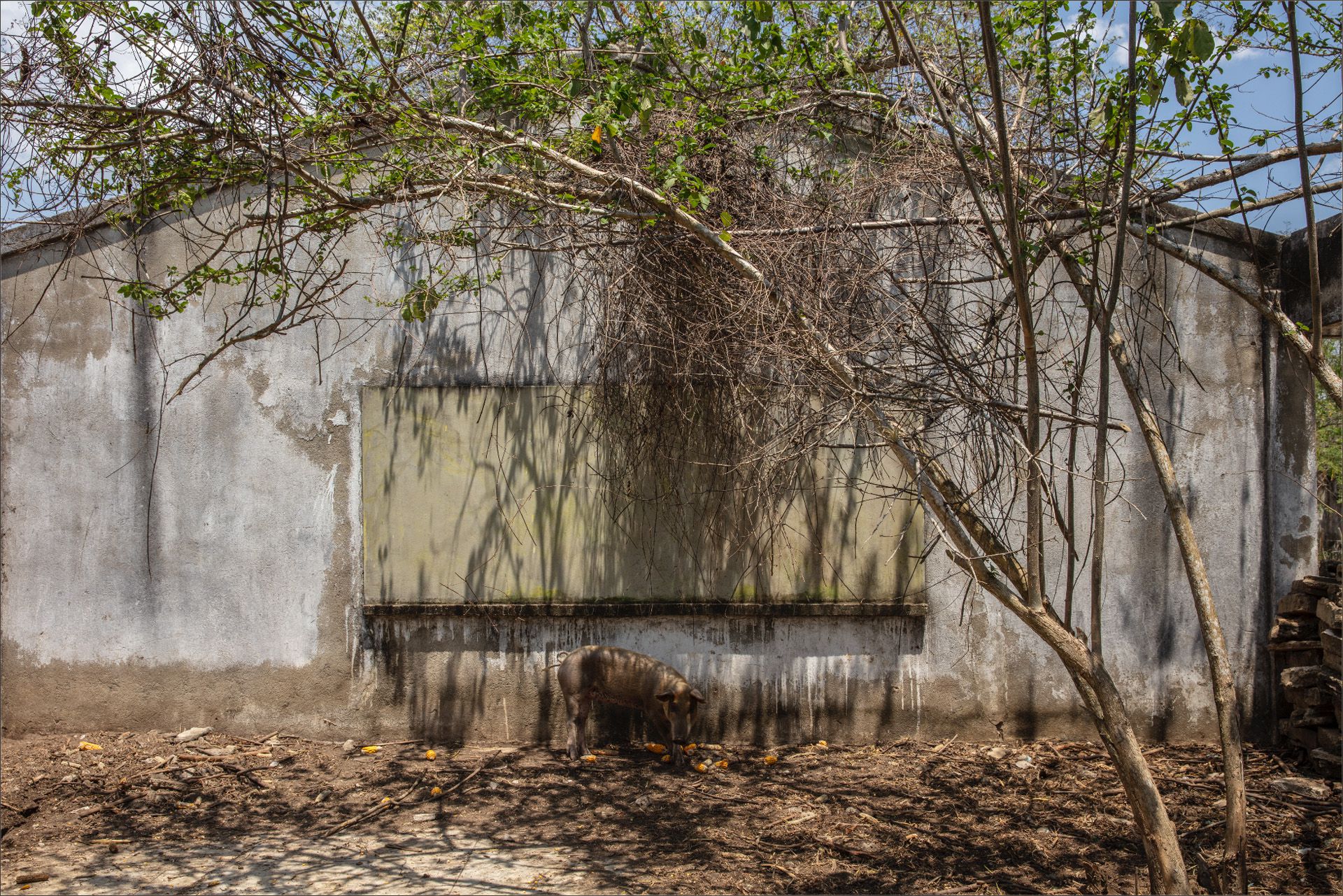
The school's three classrooms, roofless, each with its own blackboard—scorched Silences. One of them had been turned into a pen for three small pigs, left under the burning sun without water, emaciated and orphaned. A few corn cobs lay scattered on the floor. At the sight of us, their squeals sounded like weeping—abandoned and thirsty. It was midday; the sun blazed over the village, burning me through.
On the way back, perhaps noticing how quiet we were, Doña Celestina surprised us with her décimas,65 her rhymes, her sayings:
"I come from Santa Rita
playing my little guitar,
and whoever crosses me
will get my little lance…
Guess this riddle of mine."
Seeing our puzzled faces, she burst into laughter and said: "The mosquito!"
"Venejo once told me,
pulling up a yuca plant,
that when a man grows old,
even his skin shrivels…
Goodbye, Señor Peña
—he has it out, and it swings."
"That, my friend, is to cheer the heart," she said. And along the way she went on with more sayings, more rhymes.
With her torrential laughter, my soul came back to life.
65 Ten-line stanzas.
November 28, 2021
La Florida, Bolívar
The school of Bongal is found not far from the main road between Carmen de Bolívar and Plato. We crossed cow pastures, and beyond them—among tall cacti—its blackboard, split in half, was waiting for us.
We were joined by Don Luis, a campesino from the area. He had been displaced from his community, La Florida, several times, only returning in 2009—ten years after his last displacement.
As we walked, he told me he had once been accused of being a guerrillero. "The soldiers whipped me with a mariangola68 branch." He spent fifty-nine months in Ternera Prison, in Cartagena.
"The government killed my son Carlos," he said. "It was February 8, 2006. He was twenty-eight years old and had served in the army. That same day, that same night, they killed my brother Antonio, thirty-five. The army accused him of being a guerrillero."
After I photographed the school, he invited us to his home for a tinto. There, as he showed me a photograph of his son, he took my hand and wept. After a long, heavy silence, and with his voice trembling, he said: "I came back to my land with nothing but a rooster."
68 Randia, known in English as Marungula, white indigo berry.
March 7, 2023
Bogotá
We arrived in the town of Chalán, Sucre, at six in the morning, and set out on a tractor toward El Limón School.
It was the dry season, and the heat was intense. We had to get ahead of the sun in Montes de María.
Clinging to ropes, we bounced up and down inside the trailer pulled by the tractor. At other times, we were tossed from side to side like bunches of plantains, jolted along the dirt trail full of ruts and rocks.
At first, we crossed fresh streams, under massive trees like the caracolí, with its thick, twisted roots, its ancient trunk, and green arms stretched upward, dissolving into the blue sky. Then the trail became bare, and the sun appeared with its first rays.
An hour later, the tractor could go no further. We jumped off and continued on foot along a narrow trail until we reached a house with a dirt floor and a palm-thatched roof, where Alberto, sixty-five, welcomed us. He would guide us to El Limón School.
The roofless school, with a single classroom, was overrun with bushes and undergrowth. Carrying a tripod and a camera, Fernando and I entered in silence, we carefully separated the underbrush, crouching into the entanglement without tearing it, slowly stepping over the dry leaves until we reached the far wall, where we came face to face with the blackboard, devoured by the sun and by the nights, by storms and by oblivion. Twenty years of abandonment. Twenty years of silence…
"The guerrilla killed the teacher here," Alberto told us. "It was about ten o'clock in the morning. They pulled him out of the classroom and shot him from behind. We had to pick up his body ourselves, carry him in a hammock all the way to Chalán. His family buried him. His name was Algene Barreto. He was the one who together with the mayor of Chalán got the school built. We always supported him. He wanted the best for the kids. He would go to Chalán to pick up the lunch vouchers that provided food for the pupils—rice, sugar and oats. But when we came back with mules loaded with food, the army would take it from us. 'I'll cut off my balls if this food's not for the guerrilla,' they'd say."
"When did you all leave your homes?"
"We left on September 13, 2000, when the paramilitaries carried out the massacre at El Parejo. I fled with my twelve children. We had to go live in Chalán—anywhere someone could take us in. In 2002, the guerrilla buried land mines around the school. They knew the army came and slept inside. The explosion was heard in Chalán. It was around two in the morning. When we returned, the vultures were feeding on the mutilated bodies. Human heads lay scattered everywhere. My skin crawled from heel to scalp. More than twenty soldiers had died."
His words shattered the silence of the school.
Testigo invisible
Darwin
Una lección
Doble silencio
Silencio con balón
Silencio mutilado
Silencio minado
Explore by school
Universidad Nacional de Colombia, Edificio de Posgrados, Facultad de Ciencias Humanas, Bogotá, 2025
Universidad de Nariño, Pasto, 2019
Universidad de Nariño, Pasto, 2019
Museo Universitario Universidad de Antioquia, Medellín, 2023
Museo Universitario Universidad de Antioquia, Medellín, 2023
Universidad Nacional de Colombia, Manizales, Colombia, 2017
Universidad Pedagógica Nacional, Bogotá, 2022
Universidad de Virginia, USA, 2019
Musée d'Aquitaine, Bordeaux, Francia, 2016
Auckland Art Gallery Toi o Tāmaki, New Zealand, 2016